
Key takeaways
- Knees Higher Than Bottom: Their knees should be positioned slightly higher than their buttocks.
- Fabric Support: The fabric of the carrier must stretch from the back of one knee to the back of the other knee.
- Avoid Dangling: Legs hanging straight down without support from knee to knee can place undue stress on the hip joints.
What's inside
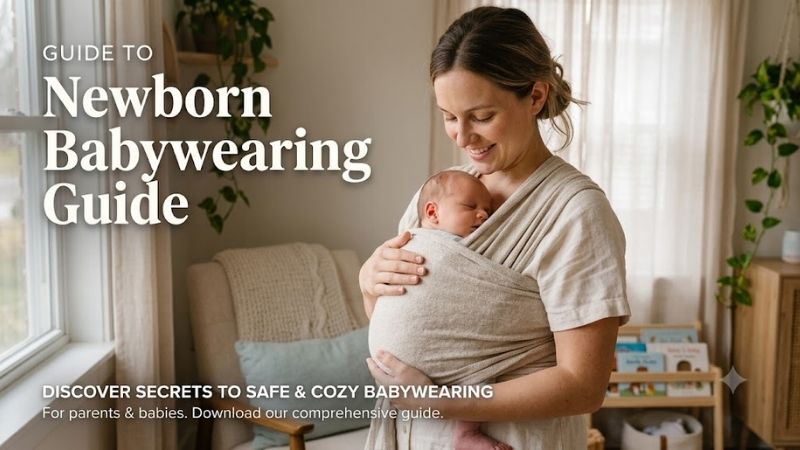
The early days with a newborn are filled with constant snuggles, but sometimes you need your hands back. Babywearing offers a beautiful solution, keeping your little one close while allowing you to move around freely. Our comprehensive newborn babywearing guide will help you navigate safety protocols, choose the right carrier type, and establish a comfortable routine for both you and your baby.
Understanding Newborn Babywearing Safety
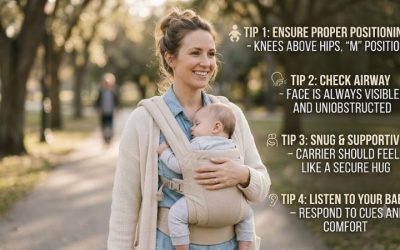
Before you start wearing your newborn, understanding the core safety principles is essential. The “TICKS” rule is the gold standard for safe babywearing, ensuring your baby’s airway remains open and their developing spine and hips are properly supported at all times.
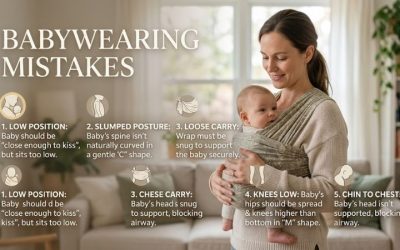
T – Tight: The carrier should be snug enough to hug your baby close to you. Any slack can allow them to slump down, potentially restricting their breathing and causing back strain for you. I – In View at All Times: You should always be able to see your baby’s face by simply glancing down. The fabric of the carrier should not close around them so much that you have to open it to check on them. C – Close Enough to Kiss: Your baby’s head should be as close to your chin as is comfortable.
By tipping your head forward, you should be able to kiss their head or forehead easily. K – Keep Chin Off the Chest: Ensure there is always a gap of at least a finger width under your baby’s chin. A baby should never be curled so their chin is forced onto their chest, as this can restrict breathing. S – Supported Back: In an upright carrier, a baby should be held comfortably close to the wearer so their back is supported in its natural “C” shape, preventing them from slumping.
Proper Hip Positioning: The “M” Shape
Newborns are still developing their hip joints. Proper positioning in a carrier helps prevent hip dysplasia. You want your baby’s legs to form an “M” shape, also known as the “spread-squat” position.
- Knees Higher Than Bottom: Their knees should be positioned slightly higher than their buttocks.
- Fabric Support: The fabric of the carrier must stretch from the back of one knee to the back of the other knee.
- Avoid Dangling: Legs hanging straight down without support from knee to knee can place undue stress on the hip joints.
Types of Newborn Carriers
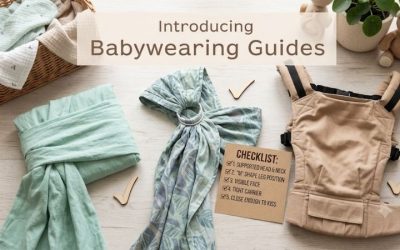
Choosing the right carrier depends on your lifestyle, body type, and personal preference. There are several main types suitable for the newborn stage, each with distinct advantages and learning curves.
Stretchy Wraps
Stretchy wraps are often the first choice for the newborn phase. They consist of a single, long piece of soft, stretchy fabric that you tie around yourself and the baby.
- Best For: Creating a snug, womb-like environment for newborns up to roughly 15 pounds.
- Pros: Extremely soft, customizable fit for all body types, excellent weight distribution across the back and shoulders, can be pre-tied before placing the baby inside.
- Cons: The learning curve for tying can be intimidating, the fabric can feel warm in hot weather, and they become less supportive as the baby gets heavier.
Ring Slings
A ring sling is a length of woven fabric threaded through two rings to create an adjustable pouch for the baby. They are worn over one shoulder.
- Best For: Quick ups and downs, breastfeeding, and parents who prefer a less structured feel.
- Pros: Fast to put on once you learn the threading technique, great for nursing, folds up small for a diaper bag, works from newborn through toddlerhood.
- Cons: The asymmetric design puts the weight on one shoulder, which can be tiring for long periods, and it requires some practice to get the tension right.
Soft Structured Carriers (SSCs)
SSCs are backpack-style carriers with buckles, padded shoulder straps, and a structured waistbelt. Many modern SSCs are adjustable to fit newborns without an insert.
- Best For: Ease of use, sharing between caregivers of different sizes, and extended wearing times.
- Pros: Very quick to put on and take off, excellent ergonomic support for the wearer, highly durable, often suitable from newborn well into toddlerhood.
- Cons: Bulky to store, can be warm, and some models require an additional infant insert for the first few months, which adds bulk.
Meh Dais
A Meh Dai (or Bei Di) is a traditional Asian carrier that combines the feel of a wrap with the ease of a structured carrier. It features a rectangular body panel with four straps that tie around the waist and shoulders.
- Best For: Parents who want the custom fit of a wrap but prefer the structure of a panel.
- Pros: Highly adjustable, comfortable weight distribution, less fabric than a wrap, generally cooler to wear.
- Cons: Long straps can drag on the ground when tying, requires learning a tying method, not as quick as a buckle carrier.
Recommended Newborn Carriers
Selecting the perfect carrier can make all the difference in your babywearing journey. Here are some highly regarded options, categorized by type to help you find the best fit for your needs.
1. Boba Wrap Classic
The Boba Wrap is a staple in the stretchy wrap category, known for its forgiving fabric and comfortable wear during the “fourth trimester.”
- Best For: First-time parents seeking a cozy, custom-fit wrap for the early weeks.
- Key Features: 95% cotton and 5% spandex blend, one size fits all, machine washable, supports up to 35 lbs (though most comfortable under 15 lbs).
- Pros: Extremely soft and supportive, excellent elasticity helps maintain the “M” shape easily, very comfortable for extended wearing at home.
- Cons: The long fabric (over 5 yards) can be difficult to manage outdoors, and it can become quite warm in hot climates.
- Use Case: Ideal for calming a fussy newborn, skin-to-skin contact, and hands-free lounging around the house.
- Who It’s For: Parents wanting maximum closeness and are willing to learn the tying technique.
2. Ergobaby Omni Breeze
The Omni Breeze is a premium soft structured carrier designed for maximum airflow and versatility, adjusting as your baby grows.
- Best For: Parents wanting one carrier from newborn to toddlerhood without needing a separate insert.
- Key Features: SoftFlex Mesh for breathability, adjustable width and height, lumbar support waistbelt, crossable shoulder straps, supports 7-45 lbs.
- Pros: Highly breathable mesh prevents overheating, incredibly easy to adjust for different wearers, excellent ergonomic support for heavier babies.
- Cons: The structure makes it bulkier than a wrap or sling, and the price point is higher than entry-level options.
- Use Case: Perfect for long walks, running errands, and parents who need a quick, reliable carrying solution.
- Who It’s For: Active parents and those who plan to babywear frequently in various climates.
3. Moby Ring Sling
The Moby Ring Sling offers the classic elegance of a sling with the trusted quality of the Moby brand, providing a quick carrying solution.
- Best For: Quick trips, nursing, and parents who prefer a one-shoulder carry style.
- Key Features: Woven cotton fabric, strong aluminum rings, single-layer wear, supports 8-33 lbs.
- Pros: Very quick to put on and adjust, compact enough to toss in a diaper bag, natural breathability of woven cotton, great for discrete nursing.
- Cons: Weight is distributed unevenly, which isn’t ideal for long hikes or parents with back/shoulder issues.
- Use Case: Excellent for navigating crowded spaces where a stroller is impractical, or for soothing a baby while preparing a meal.
- Who It’s For: Caregivers who need a fast, easy carrier for shorter durations and varying environments.
4. Baby Tula Explore
The Baby Tula Explore is known for its stylish patterns and user-friendly design, offering multiple carrying positions including forward-facing.
- Best For: Parents seeking a stylish, easy-to-use structured carrier that allows the baby to face outwards eventually.
- Key Features: Adjustable body panel (width and height), padded neck support pillow, large front pocket, supports 7-45 lbs.
- Pros: No infant insert required, very intuitive to adjust, padded leg openings for baby’s comfort, beautiful design options.
- Cons: Can feel warm due to the thicker cotton canvas material (though mesh versions are available).
- Use Case: Ideal for everyday use, travel, and parents who want a carrier that transitions smoothly as the baby gains head control.
- Who It’s For: Fashion-conscious parents who prioritize ease of use and long-term versatility.
How to Start Wearing Your Newborn
Starting your babywearing journey can feel overwhelming, but with patience and practice, it becomes second nature. Follow these steps to ensure a smooth transition.
- Practice Without the Baby First: Before attempting to put your newborn in the carrier, familiarize yourself with the mechanics. If using a wrap, practice the tying method with a doll or stuffed animal. If using an SSC, adjust the straps to fit your body beforehand.
- Choose the Right Moment: Attempt to put your baby in the carrier when they are well-fed, changed, and generally content. Avoid times when they are overly tired, hungry, or crying.
- Start at Home: Practice walking around your house in short intervals. Let your baby get used to the feeling of being in the carrier while you get used to the weight distribution.
- Use a Mirror: When securing your baby, stand in front of a mirror. This allows you to check their positioning, ensure the fabric is smooth and supportive, and verify that the “TICKS” guidelines are met.
- Keep Moving: Babies are soothed by motion. If your baby fusses slightly when first put in the carrier, try gently bouncing, swaying, or walking around. The movement often calms them down quickly.
Dressing Your Baby for the Carrier
When you wear your baby, the carrier acts as at least one additional layer of clothing, and your body heat will also warm them up. It is crucial to dress them appropriately to prevent overheating.
- Less is More: Dress your baby in light, breathable layers. If it’s warm, a single onesie is often sufficient. If it’s cooler, you can add layers, but remember the carrier provides significant warmth.
- Protect Extremities: Pay attention to the parts of your baby exposed outside the carrier. In sunny weather, use a wide-brimmed hat to protect their head and neck. In colder weather, ensure their head, hands, and feet are covered with warm socks, booties, and a hat.
- Avoid Footed Pajamas: Footed pajamas can restrict your baby’s movement and pull uncomfortably on their toes when their legs are in the “M” position. Opt for footless pants and separate socks instead.
FAQ
When can I start wearing my newborn? You can usually start babywearing right away if your baby is born full-term and weighs at least 7-8 pounds, depending on the carrier’s minimum weight limit. For premature babies or those with medical issues, consult your pediatrician first.
How long can a newborn stay in a carrier? While there is no strict time limit, it is best to take breaks every 1-2 hours for feeding, diaper changes, and giving both you and your baby a chance to stretch. Listen to your baby’s cues.
Can my newborn sleep in the carrier? Yes, carriers are excellent for newborn naps! Just ensure their airway remains clear (chin off the chest) and you monitor them continuously while they sleep.
Conclusion
Babywearing is an incredible tool that fosters connection while giving you the practical freedom you need. By prioritizing safety, choosing a carrier that suits your lifestyle, and taking the time to learn the proper techniques, you and your newborn can enjoy all the wonderful benefits of being close together.







Write Your Review
No reviews yet. Be the first to share your experience!