
Key takeaways
- Feature: Unobstructed airflow with a minimum of two fingers of clear space beneath the baby’s chin.
- Meaning: The infant’s delicate neck remains slightly extended, preventing the heavy head from dropping and resting on their chest.
- Benefit: Eliminates the risk of positional asphyxiation by ensuring the soft windpipe remains fully open for optimal oxygen intake.
- Limitation: Requires relentless visual monitoring by the caregiver, especially when the baby falls asleep and naturally loses all muscle tone.
- Use Case: Continually checking on your newborn while walking through a noisy grocery store to ensure their breathing remains steady and unobstructed.
What's inside
Front carry safety is the foundational element of secure and comfortable babywearing, ensuring your infant remains protected while you enjoy close bonding. When positioning your baby on your chest, maintaining an open airway, supporting proper spinal alignment, and securing healthy hip posture are non-negotiable requirements. This comprehensive guide breaks down the critical mechanics of front inward and outward carrying, providing actionable techniques to prevent positional asphyxiation and hip dysplasia. By mastering these essential guidelines, you can confidently navigate daily tasks, knowing your little one is perfectly supported, visible, and breathing easily in their carrier.
Core Principles of Front Carry Safety
Understanding the fundamental mechanics of front carry safety is essential for preventing accidental injury and ensuring infant comfort. This requires mastering optimal body positioning, recognizing airway hazards, and maintaining strict vigilance over your baby’s physical alignment while using any soft structured carrier or wrap.

Airway Clearance and Vigilance
- Feature: Unobstructed airflow with a minimum of two fingers of clear space beneath the baby’s chin.
- Meaning: The infant’s delicate neck remains slightly extended, preventing the heavy head from dropping and resting on their chest.
- Benefit: Eliminates the risk of positional asphyxiation by ensuring the soft windpipe remains fully open for optimal oxygen intake.
- Limitation: Requires relentless visual monitoring by the caregiver, especially when the baby falls asleep and naturally loses all muscle tone.
- Use Case: Continually checking on your newborn while walking through a noisy grocery store to ensure their breathing remains steady and unobstructed.
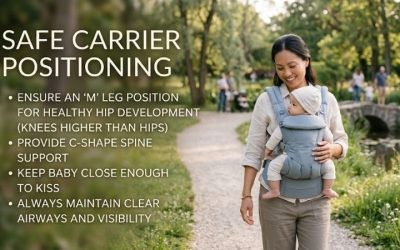
Ergonomic M-Shape Hip Positioning
- Feature: Knees positioned visibly higher than the baby’s bottom, with carrier fabric supporting them fully from thigh to thigh.
- Meaning: The hip joints rest securely in a natural, deep squat position rather than dangling straight down under their own weight.
- Benefit: Actively promotes healthy joint development and significantly reduces the mechanical risk of developing painful hip dysplasia over time.
- Limitation: Older, narrow-based carriers cannot achieve this ergonomic stance without purchasing and installing additional infant inserts or seat extenders.
- Use Case: Adjusting the carrier’s internal seat width when transitioning a rapidly growing infant from a newborn hold to an older baby carry.
C-Curve Spinal Support
- Feature: Gentle, even fabric tension stretching across the infant’s back, actively supporting a naturally rounded, kyphotic posture.
- Meaning: The fragile spine is not forced into a straight, unnatural, or flattened position before the baby develops adequate core strength.
- Benefit: Protects developing vertebrae and prevents the baby from slowly sinking downward into a highly compromised, dangerous breathing position.
- Limitation: Over-tightening stiff carrier panels or adjusting buckles improperly can accidentally flatten the back, causing immediate infant distress and discomfort.
- Use Case: Securing a deeply sleeping infant in a carrier while ensuring they remain positioned high and snug against your chest without slumping.
Inward vs. Outward Front Carrying
Choosing between inward and outward orientations dramatically alters front carry safety protocols and ergonomic requirements. Caregivers must understand the developmental milestones necessary for each position to prevent sensory overstimulation, protect delicate joints, and maintain appropriate head control during daily wear.
Front Inward Facing Rules
This is the universally standard, safest position utilized from birth. The baby faces your chest, a position that naturally supports the developmental C-curve spine and M-shape hips without forced manipulation. Crucially, it allows for immediate, real-time monitoring of respiration rates, facial coloration, and body temperature. The primary safety check in this orientation is ensuring the carrier fabric never covers the baby’s face and that they remain positioned high enough on your torso to be “close enough to kiss.”
Front Outward Facing Rules
This advanced position is strictly reserved for older babies who have developed strong, entirely independent head and neck control, typically occurring around four to six months of age. Safety protocols shift dramatically in this stance. The baby’s chin must clear the top edge of the carrier panel completely to avoid immediate airway obstruction. Outward facing should always be limited to short 15 to 20-minute sessions to prevent hip joint strain and overwhelming sensory overload. Never allow a baby to sleep in an outward-facing position, as their heavy head will loll forward dangerously without chest support.
Top Safety-Approved Front Carriers
Selecting equipment engineered with front carry safety in mind is crucial for maintaining proper biomechanics. The following carefully evaluated carriers feature specialized adjustable components designed to support healthy hip development, secure spinal alignment, and provide safe, customizable fits for growing infants.
1. Ergobaby Omni 360 All-Position Baby Carrier
- Best For: Comprehensive ergonomic support across all carrying positions from the newborn phase straight through to heavy toddler stages.
- Key Features: Adjustable bucket seat, dedicated lumbar support waistbelt, UPF 50+ privacy hood, and heavily padded crossable shoulder straps.
- Pros: Officially acknowledged by the International Hip Dysplasia Institute as “hip-healthy,” requires absolutely no infant insert, and is highly adjustable.
- Cons: The bulky, multi-layered material can feel overly warm in hot climates, and managing multiple adjustment buckles has a noticeable learning curve.
- Use Case: Taking long weekend hikes or enduring prolonged carrying sessions where superior lumbar support actively prevents severe lower back pain.
- Who It’s For: Parents seeking a single, highly durable, structurally robust carrier they can rely on heavily from birth through the toddler years.
2. BabyBjörn Baby Carrier Free
- Best For: Quick, highly intuitive securing and exceptional airflow for active parents living in heavily warm, humid, or summer environments.
- Key Features: 3D mesh fabric construction, simplified front-fastening design, built-in structural back support, and an adjustable, sturdy head support panel.
- Pros: Extremely breathable, practically effortless to put on unassisted, and provides excellent, immediate upper back pressure relief for the caregiver.
- Cons: The maximum weight limit is lower than rugged competitors, and the seat base is slightly narrower, which may feel restrictive for larger babies.
- Use Case: Navigating chaotic, crowded airports or running quick daily errands where rapid, unassisted carrier application and removal are absolutely essential.
- Who It’s For: Caregivers who heavily prioritize exceptional ventilation, minimalist design, and straightforward, user-friendly buckling systems over heavy-duty hauling capacity.
Front Carrier Buying Guide
Navigating the marketplace requires a clear understanding of which features directly impact front carry safety. Evaluating hardware durability, fabric breathability, and structural ergonomics ensures you invest in a carrier that protects your infant’s physical development while delivering essential comfort for daily use.
Adjustable Seat Width
- What: A dynamic, modifiable lower panel base that can be physically widened or narrowed using hidden Velcro, heavy-duty snaps, or sliding tracks.
- Why: A dynamic seat guarantees the carrier actively grows with your child, ensuring the fabric always stretches seamlessly from knee to knee to support the crucial M-shape.
- Who: Forward-thinking parents planning to utilize the exact same piece of gear from the fragile newborn phase well into the active toddler years.
- Trade-off: Carriers boasting highly adjustable, dynamic seats inherently feature bulkier mechanisms and thicker fabrics, adding noticeable overall weight compared to fixed-panel designs.
Dedicated Head and Neck Support
- What: A heavily padded, structurally reinforced upper panel or foldable cushion designed to cradle the back of an infant’s head securely.
- Why: Newborns utterly lack the required muscle tone to stabilize their own heavy heads. This support prevents the neck from violently snapping backward or slumping forward.
- Who: Caregivers primarily carrying infants under four months old or parents dealing with older babies who frequently and predictably nap inside the carrier.
- Trade-off: Highly rigid, thick neck supports can sometimes physically obstruct the caregiver’s direct downward line of sight, requiring more active physical effort to monitor breathing.
Frequently Asked Questions
Addressing common concerns regarding front carry safety helps caregivers confidently manage real-world babywearing challenges. These carefully verified answers provide clear guidance on critical safety transitions, seasonal adjustments, and troubleshooting common ergonomic issues faced during routine daily carrying.
When can I safely start front outward carrying?
You can safely transition to an outward-facing position only when your baby consistently demonstrates completely independent head and neck control, which typically occurs around four to six months of age. Furthermore, they must be physically tall enough that their chin clearly and easily rests completely above the carrier’s top structural panel to guarantee entirely unobstructed breathing.
How do I safely dress my baby for a front carry?
Because the carrier acts as a thick, extra layer of clothing and forces the baby to share your ambient body heat, you must dress them lightly to prevent dangerous hyperthermia. Specifically avoid footed pajamas, as the required M-shape seated position can pull the fabric tightly against their toes, causing severe discomfort and restricting healthy blood circulation to the feet.
Is it safe for my baby to sleep while front inward facing?
Yes, it is entirely safe, provided you maintain strict, uncompromising airway monitoring. Ensure their head is gently turned to the side, their cheek rests flat against your bare chest, and their chin remains elevated off their own chest. Never allow excess fabric, thick coats, or weather covers to entirely obscure their face while they are deeply sleeping inside the carrier.
Conclusion
Mastering front carry safety transforms daily babywearing from a potential source of anxiety into a completely secure, profoundly bonding experience. By consistently enforcing strict airway checks, prioritizing the ergonomic M-shape and C-curve, and deliberately choosing a carrier engineered for optimal structural support, you actively protect your infant’s physiological development. Whether you are navigating a bustling grocery store with an inward-facing newborn or exploring a sunny park with an outward-facing older baby, strict adherence to these established safety protocols guarantees their absolute well-being. Invest the necessary time in learning your specific carrier’s adjustments, remain relentlessly vigilant about breathing clearance, and embrace the unparalleled, hands-free convenience of holding your child safely against your heart.









Write Your Review
No reviews yet. Be the first to share your experience!