
Key takeaways
- Tight: The fabric must hug your infant firmly against your chest to prevent hazardous slumping that restricts their breathing.
- In view at all times: You must be able to see their face and nose clearly just by glancing downward without moving fabric.
- Close enough to kiss: Their head should rest comfortably high on your chest, allowing you to easily kiss their forehead.
- Keep chin off chest: Ensure at least a two-finger gap exists under their chin to keep their tiny airway completely open.
- Supported back: The carrier should support their spine in its natural C-curve while maintaining the ergonomic M-shape leg posture.
What's inside
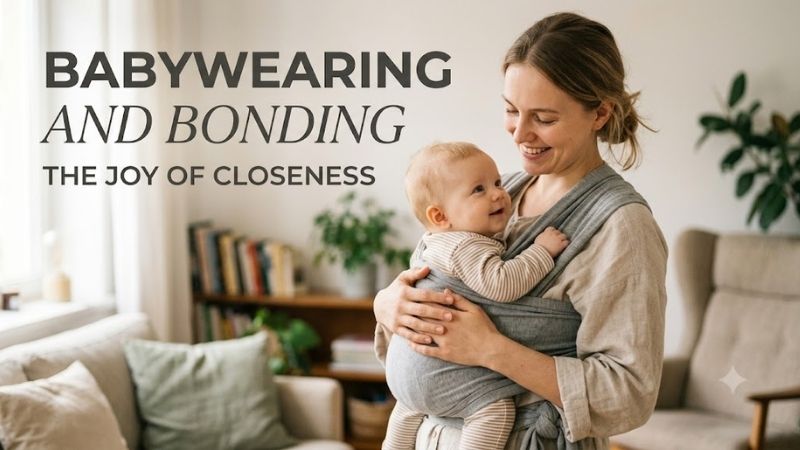
The journey into parenthood introduces countless new experiences, but mastering babywearing and bonding stands out as a truly magical milestone. Keeping your newborn securely against your chest perfectly mirrors the comforting environment of the womb. This guide teaches safe carrying methods and helps you choose the perfect wrap for deep connection.
The Science Behind Babywearing And Bonding
Understanding the biological connection between parent and child highlights why physical closeness is vital during the fourth trimester. When you hold your infant in a carrier, both bodies release oxytocin, widely known as the love hormone. This chemical reaction reduces postpartum stress while building an unbreakable foundation of trust and security.
Research consistently shows that infants who spend significant time in ergonomic carriers cry much less frequently. The gentle, rhythmic movement of your walking, combined with the soothing sound of your heartbeat, actively regulates their delicate nervous system. Consequently, securely attached babies sleep far more soundly and learn efficiently.
Practicing Safe Closeness With The T.I.C.K.S. Rule
Achieving the incredible benefits of early attachment requires strict adherence to safety guidelines that protect vulnerable airways. The internationally recognized T.I.C.K.S. rule provides a foolproof checklist for parents to utilize every time they secure their newborn. Following these steps guarantees a secure and comfortable carrying experience.
- Tight: The fabric must hug your infant firmly against your chest to prevent hazardous slumping that restricts their breathing.
- In view at all times: You must be able to see their face and nose clearly just by glancing downward without moving fabric.
- Close enough to kiss: Their head should rest comfortably high on your chest, allowing you to easily kiss their forehead.
- Keep chin off chest: Ensure at least a two-finger gap exists under their chin to keep their tiny airway completely open.
- Supported back: The carrier should support their spine in its natural C-curve while maintaining the ergonomic M-shape leg posture.
How To Tie A Stretchy Wrap For Newborn Bonding
Many first-time caregivers feel slightly intimidated by the long fabric of a wrap, but mastering the technique simply requires practice. Stretchy materials offer the most intimate, womb-like environment for infants, making them the absolute best choice for early bonding. By following a structured tying method, you create a very safe baby pocket.
- Step 1: Find the center marker of the fabric and place it flat across your stomach, wrapping the ends securely around your back.
- Step 2: Cross the fabric pieces behind your back, bringing each end up and over your opposite shoulders to form an “X” shape.
- Step 3: Tuck both ends under the front panel on your stomach, cross them again to form a second “X”, and tie a double knot.
- Step 4: Gently stretch the shoulder pieces to slide your baby’s legs through, spreading the fabric from knee to knee for support.
Top Carriers For Babywearing And Bonding
Selecting the appropriate equipment plays a monumental role in your overall comfort and your infant’s physical development. While stretchy fabrics excel during the newborn phase, soft structured carriers provide exceptional longevity as your child gains weight. These highly rated models strictly adhere to hip-healthy standards for maximum safety.
1. Solly Baby Wrap
- Best For: Ultimate newborn bonding and wearing in warm climates.
- Key Features: 100% certified Lenzing modal fabric, ultra-lightweight profile, built-in storage pouch, securely fits infants up to 25 lbs.
- Pros: Incredibly breathable material prevents overheating; perfectly contours to the baby’s body; officially acknowledged by the IHDI.
- Cons: Lower weight limit means it is outgrown faster than cotton blends; the initial wrapping process presents a steep learning curve.
- Use Case: Skin-to-skin snuggling at home, calming a colicky newborn, and taking leisurely outdoor walks during the hot summer months.
- Who It’s For: Eco-conscious parents who want the absolute softest, most breathable natural fabric for their delicate newborn’s skin.
2. Boba Classic Baby Wrap
- Best For: Budget-conscious parents wanting a highly snug and stretchy fit.
- Key Features: 95% French Terry cotton and 5% spandex blend, easily machine washable, reliably fits growing babies up to 35 lbs.
- Pros: The spandex adds the perfect amount of stretch for a secure hold; highly affordable; comfortably supports older and heavier infants.
- Cons: The thicker cotton blend fabric can easily become uncomfortably warm during the peak of summer or in naturally hot environments.
- Use Case: Hands-free multitasking around the house while keeping a fussy, teething baby comfortably asleep against your warm chest.
- Who It’s For: First-time parents who need an easy-to-care-for, reliable wrap that maintains its shape and elasticity beautifully over time.
3. Ergobaby Embrace Cozy Newborn Carrier
- Best For: Parents seeking an intuitive hybrid between a traditional wrap and a buckle carrier.
- Key Features: Soft knit fabric, simple buckle waistbelt, spreadable cross straps, Oeko-Tex Standard 100 certified, fits up to 25 lbs.
- Pros: Eliminates the frustration of tying long fabrics; incredibly soft against the skin; quickly rolls up compactly for diaper bags.
- Cons: Limited usability for only the first year; lacks the heavy lumbar support found in larger, standard backpack-style carriers.
- Use Case: Quick grocery store runs or navigating busy airports where you absolutely need to get the baby in and out with zero hassle.
- Who It’s For: Caregivers who desire the intimate closeness of a stretchy wrap but demand the swift, reliable convenience of simple buckles.
Buying Guide: Selecting The Best Bonding Gear
Navigating the baby carrier market requires careful consideration of your specific lifestyle, climate, and personal physical requirements. A wrap that feels comfortable for one parent might feel very restrictive to another. By evaluating these core elements before purchasing, you ensure a truly beautiful bonding experience for you and your newborn.
- What to Look For: Always prioritize carriers bearing the official “IHDI Acknowledged” seal to guarantee safe and proper hip support.
- Why It Matters: Certified wide-base designs sustain the ergonomic M-shape, preventing hip dysplasia and long-term painful joint damage.
- Who Needs What: Parents in hot climates need modal or linen blends, while those in cooler areas benefit from thicker French Terry cotton.
- The Trade-off: Traditional wraps offer unmatched intimate closeness but take longer to put on. Structured carriers are fast but lack softness.
Frequently Asked Questions
Parents embarking on their baby carrying journey frequently encounter confusing advice regarding age limits, fabric choices, and safety protocols. Clearing up these common misconceptions heavily empowers caregivers to make confident decisions. The following expert answers will help you master safe attachment practices and keep your infant comfortable.
Can babywearing spoil my newborn? Absolutely not. You simply cannot spoil a newborn baby by holding them too much. Extensive physical contact during the vital fourth trimester directly meets their biological need for comfort and security. This constant reassurance actually fosters much greater independence and emotional resilience as they naturally grow older and explore the world.
Is a wrap or structured carrier better for bonding? Stretchy woven materials are generally considered superior for early newborn bonding due to their highly customized, skin-to-skin fit. However, modern hybrid carriers offer a truly wonderful compromise for new parents who find wrapping techniques too complicated but still deeply desire that incredibly soft, womb-like closeness with their child.
When can I face my baby outward? Infants should always remain facing inward for optimal bonding and spine support until they demonstrate consistently strong head and neck control, which typically occurs around six months of age. Facing inward actively minimizes environmental overstimulation and keeps their heavy, developing head resting safely against your chest while walking.
Conclusion
Integrating babywearing into your daily routine is the most powerful method for establishing a secure attachment with your infant. Whether you choose a breathable Solly wrap or the buckled convenience of the Ergobaby Embrace, prioritizing safety rules ensures their protection. Embrace this fleeting season of parenthood and keep your baby very close.









Write Your Review
No reviews yet. Be the first to share your experience!