
Key takeaways
- Excess Diapers & Wipes: Newborns go through 8 to 12 diapers daily. Pack at least 5 to 6 diapers for even a brief 3-hour outing, as bowel movements occur unexpectedly during or immediately after feeds.
- Multiple Layered Onesies: Bring 2 to 3 spare kimono-style or double-zipper footie sleepers. Avoid over-the-head garments to prevent spreading diaper leaks across baby’s face during emergency roadside wardrobe changes.
- Swaddle Blankets & Burp Cloths: Pack two lightweight, breathable muslin swaddles. These serve quadruple duty as nursing covers, wind deflectors, burp rags, and emergency clean surfaces.
- Feeding Hardware: For formula feeding, pre-measure water inside clean bottles and carry powdered formula in a stacked dispenser to prevent clumping. For nursing, pack reusable organic bamboo nursing pads and nipple balm.
What's inside
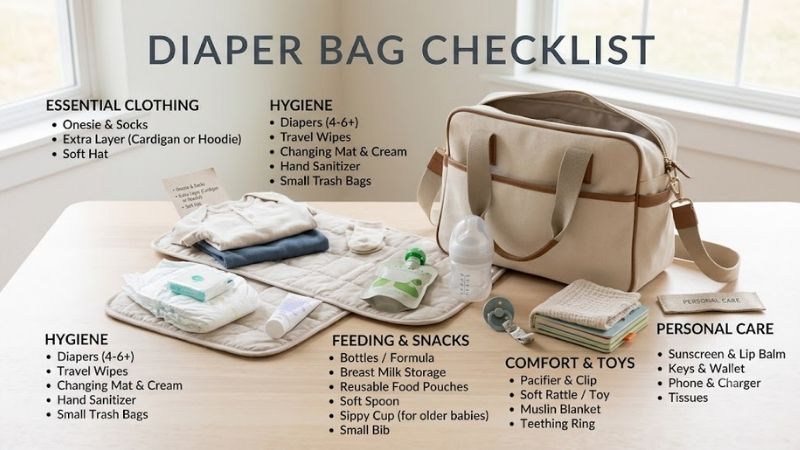
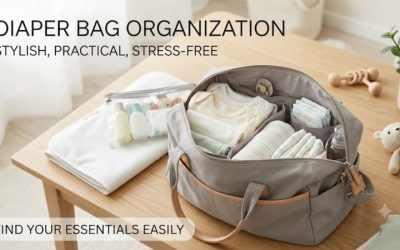
Building a dependable diaper bag checklist means packing the exact gear required to handle diaper blowouts, feeding demands, sudden temperature changes, and minor medical issues without overfilling your carrier into a heavy, disorganized sack. At minimum, a foolproof diaper bag setup contains one diaper for every two hours of planned travel (plus two emergency spares), a full travel pouch of unscented wipes, a sanitized wipeable changing mat, two changes of clothes inside leakproof bags, targeted milk or formula supplies, soothing pacifiers, and a compact adult essentials pouch. By categorizing your essentials into dedicated modular pouches, you streamline every diaper change and eliminate frantic searching whether you are running errands or flying across the country.
The Master Diaper Bag Checklist at a Glance
Organizing your daily baby gear requires a clear breakdown of foundational hygiene essentials, nutrition supplies, comfort items, and emergency tools. The structured matrix below provides a complete reference guide detailing mandatory quantities and targeted storage locations so you never leave crucial gear behind.
| Category | Essential Item | Recommended Quantity | Primary Storage Zone | Purpose & Protection |
|---|---|---|---|---|
| Hygiene | Disposable or cloth diapers | 1 per 2 hours + 2 backup | Main interior pocket | Core diapering protection |
| Hygiene | Water-based baby wipes | 1 full travel pack (50+ ct) | Exterior quick-grab slot | Sanitation and cleanup |
| Hygiene | Portable changing pad | 1 fold-out padded mat | Dedicated back flat pocket | Clean barrier on public surfaces |
| Hygiene | Diaper rash balm | 1 travel tube (2–4 oz) | Front interior mesh pocket | Barrier against skin friction |
| Hygiene | Scented waste bags / Wet bag | 3–5 disposable or 1 wet bag | Side slip pocket | Odor and moisture containment |
| Apparel | Complete clothing changes | 2 full outfits + socks | Water-resistant packing cube | Protection against blowouts |
| Feeding | Breastmilk or prepared formula | 2 measured bottles | Thermal insulated pocket | Feeding freshness & temperature |
| Feeding | Burp cloths & silicone bibs | 2 cloths + 1 easy-wipe bib | Main cavity upper zone | Reflux and drool management |
| Wellness | Baby first aid & thermometer | 1 compact kit + infant drops | Zippered security compartment | Emergency health care |
| Parent | Keys, phone, wallet, sanitizer | 1 set of daily necessities | Exterior front parent pocket | Hands-free adult access |
Age-Stage Packing Breakdown: Newborns to Toddlers
Children’s needs evolve rapidly across developmental stages, transforming how you allocate space inside your carrier. Adjusting your packing strategy to match your child’s precise nutritional and mobility phase prevents packing obsolete newborn tools while keeping developmentally vital gear readily accessible.
1. The Newborn Stage (0–3 Months): Frequent Feeds & Maximum Blowouts
- Excess Diapers & Wipes: Newborns go through 8 to 12 diapers daily. Pack at least 5 to 6 diapers for even a brief 3-hour outing, as bowel movements occur unexpectedly during or immediately after feeds.
- Multiple Layered Onesies: Bring 2 to 3 spare kimono-style or double-zipper footie sleepers. Avoid over-the-head garments to prevent spreading diaper leaks across baby’s face during emergency roadside wardrobe changes.
- Swaddle Blankets & Burp Cloths: Pack two lightweight, breathable muslin swaddles. These serve quadruple duty as nursing covers, wind deflectors, burp rags, and emergency clean surfaces.
- Feeding Hardware: For formula feeding, pre-measure water inside clean bottles and carry powdered formula in a stacked dispenser to prevent clumping. For nursing, pack reusable organic bamboo nursing pads and nipple balm.
2. The Infant Stage (4–12 Months): Teething, Solids & Floor Play
- Teething Relief & Drool Bibs: Teething begins in earnest; pack 2 to 3 absorbent bandana bibs with waterproof inner membranes and a sanitized silicone teether clipped to an interior lanyard.
- Weaning & Snack Supplies: Include two pre-portioned squeeze pouches, baby puffs, a silicone catch-all bib, and baby-safe spoon utensils inside a washable zip pouch.
- Straw Cup or Water Bottle: A leakproof 5-to-7 oz training straw cup filled with fresh water to maintain proper infant hydration during outdoor play.
- Sun & Weather Defense: Pack a broad-brim UPF 50+ sun hat, infant-safe mineral sunscreen (zinc oxide-based, for babies 6 months and older), and a light cardigan or windbreaker.
3. The Toddler Stage (1–3+ Years): High Mobility & Mess Management
- Potty Training Essentials: If potty training, pack 3 pairs of training undies, 2 pairs of elastic-waist pants, and travel-sized flushable wipes alongside a foldable toilet seat adapter.
- Substantial Finger Foods: High-energy finger snacks like freeze-dried fruits, cheese sticks, pretzels, and oat bars kept inside crash-proof snack cups prevent temper tantrums on the go.
- Screen-Free Distraction Toys: Pack 2 compact, mess-free activities such as reusable water-coloring books (Water Wow), silicone pop-it sensory boards, or mini board books.
- Heavy-Duty Stain Remover & Adhesive Bandages: Toddlers fall and spill frequently; pack a travel-sized laundry stain stick, antiseptic spray, and playful adhesive bandages for scraped knees.
Packing Strategy: The “Zone” Organization System
Throwing baby gear loosely into an open cavity guarantees panic when you need wipes immediately during an active blowout. Utilizing a disciplined zone packing structure isolates clean nourishment from soiled laundry while keeping urgent items within reach of a single hand.
Zone 1: Exterior & Quick-Grab Access (Urgent Response)
- Where: Exterior side slots, magnetic front pockets, and outer top zippers.
- What to Pack: Full pack of wipes, pocket hand sanitizer, two backup pacifiers in a sanitized pod, parent car keys, and phone.
- Why: When your baby spits up in a car seat or drops a soother onto a public grocery store floor, you must retrieve a clean replacement without setting down your infant or unzipping the main cavity.
Zone 2: Main Cavity (Apparel & Bulk Gear)
- Where: The central structural compartment.
- What to Pack: Two complete outfits folded tightly into a compression cube, roll-up changing pad, extra swaddle, and dirty-diaper wet bag.
- Why: These items represent moderate-frequency gear. Keeping them packed inside modular fabric cubes leaves open space in the bag center, preventing the bag from bulging outward.
Zone 3: Insulated Thermal Zone (Nutrition Management)
- Where: Front zippered thermal pockets lined with silver foil insulation or a standalone bottle cooler bag.
- What to Pack: Prepared formula bottles, breastmilk storage bags, cold teething rings, and perishable toddler yogurt pouches with a slim ice pack.
- Why: Perishable dairy and milk spoil within two hours at room temperature. Foil-insulated pockets preserve safe temperatures for up to four hours without leaking onto dry clothes.
Zone 4: Security & Parent Pocket (Caregiver Essentials)
- Where: Hidden rear zipper pocket (against your back) or high internal zippered pouch.
- What to Pack: Wallet, passport, prescription medication, lip balm, sunglasses, compact power bank, and charging cord.
- Why: Placing high-value personal effects against your body prevents opportunistic theft in crowded venues and stops adult items from getting covered in baby powder or formula dust.
Top Diaper Bag Organizers & Accessories: Expert Reviews
Executing an organized diaper bag checklist requires reliable tactical storage accessories that prevent spills, separate damp fabrics, and protect fragile bottles. We evaluated leading organizational tools based on seam sealing, zipper durability, textile washability, and real-world utility to help you pack efficiently.
1. Itzy Ritzy Travel Happens Sealed Wet Bag
The Gold Standard for Containing Wet Blowouts & Soiled Clothes
- Best For: Parents dealing with heavy infant spit-up, soiled cloth diapers, or muddy toddler park clothes.
- Key Features: 100% cotton exterior lined with heat-sealed water-resistant polyurethane laminate (PUL); sturdy lead-free zipper closure; snap-open webbing handle; dimensions of 11″ x 14″.
- Pros:
- Completely traps foul odors and wet liquids without leaking through to surrounding bag contents.
- Machine-washable design allows you to toss it directly into the laundry with soiled baby clothes.
- Generous interior holds up to two full toddler outfits or 4 to 5 cloth diapers.
- Cons:
- Cotton outer weave takes longer to air-dry after a machine wash cycle.
- Bulkier than ultra-thin disposable plastic disposal sacks.
- Use Case: Wet swimming lessons, restaurant sauce spills, messy park sandboxes, and explosive diaper blowouts.
- Who It’s For: Caregivers who want an eco-friendly, reusable, leakproof barrier that eliminates single-use plastic grocery bags.
2. Skip Hop Pronto Baby Changing Station
The Ultimate Compact All-in-One Portable Diapering Kit
- Best For: Quick diaper runs into public restrooms, car trunk diaper changes, and minimalist errands.
- Key Features: Extra-wide wipe-clean changing mat with cushioned head pillow; zip-off pad for independent use; translucent wipes case with easy-access moisture seal; mesh pocket holding up to 4 large diapers.
- Pros:
- Unfolds in seconds with one hand while holding your baby safely on your opposite hip.
- Built-in front zipper pocket holds personal keys and phone for quick diaper runs without carrying the full backpack.
- Fits smoothly inside any standard backpack, tote, or stroller basket.
- Cons:
- Included translucent wipes case can snap open if overpacked beyond 25 wipes.
- Changing pad length becomes snug for taller toddlers over 24 months.
- Use Case: Public airport restrooms, park benches, vehicle cargo areas, and rapid restaurant changing table visits.
- Who It’s For: Practical parents who desire a self-contained diaper changing clutch that slips seamlessly into any larger diaper bag.
3. Bumkins Waterproof Clear Travel Pouches (3-Pack)
The Best Modular Organization for TSA Compliance and High Visibility
- Best For: Visual organizers, airport travel, and isolating medicines, purees, or small baby toys.
- Key Features: Heavy-duty clear PVC material paired with Bumkins signature waterproof fabric; set of three tiered sizes (large, medium, small); sturdy zipper pulls; TSA-compliant clear panel design.
- Pros:
- Transparent clear face allows you to identify specific creams, pacifiers, or snacks instantly.
- Heavy-duty perimeter stitching resists splitting when crammed with odd-shaped teethers and dropper bottles.
- Wipes clean of leaky lotion or fruit purees with a single antibacterial wipe.
- Cons:
- PVC face can become slightly stiff when exposed to sub-freezing outdoor winter temperatures.
- Zippers are water-resistant but not 100% submersible waterproof.
- Use Case: Organizing infant fever medicine, storing baby sunscreen, sorting teething toys, and TSA security checkpoints.
- Who It’s For: Parents tired of blindly digging through dark bag corners who want immediate visibility of small essential accessories.
4. Munchkin Arm and Hammer Diaper Bag Dispenser
The Most Reliable On-the-Go Odor Control Solution
- Best For: Road trips, car changes, and disposing of dirty diapers in homes without diaper pails.
- Key Features: Compact twist-dispenser canister; infused with natural baking soda for active odor elimination; lavender-scented durable plastic bags; integrated swivel carabiner clip.
- Pros:
- Baking soda infusion effectively neutralizes harsh diaper odors in hot cars or enclosed rooms.
- Clips effortlessly to bag exterior straps or stroller handlebars for rapid one-handed bag retrieval.
- Inexpensive replacement refill rolls widely available nationwide.
- Cons:
- Scented plastic can smell overpowering to parents sensitive to synthetic fragrances.
- Bags require manual tying and lack integrated easy-tie handles.
- Use Case: Outdoor playdates, visits to friends’ houses without nursery trash cans, and emergency road-trip trunk changes.
- Who It’s For: Mobile caregivers who prioritize sanitary disposal and want to prevent offensive diaper smells from lingering in public areas.
Diaper Bag Organizer Buying Guide: How to Choose
Selecting storage accessories to complete your diaper bag checklist requires evaluating how textile water resistance, fastener mechanisms, and pocket modularity perform under pressure. Understanding these product criteria guarantees you choose organizers that protect your primary carrier and speed up daily care routines.
1. Waterproofing Technology & Seam Construction
- What: Heat-sealed Polyurethane Laminate (PUL), coated polyester, or clear PVC linings.
- Why: Uncontained breastmilk or diaper moisture destroys expensive diaper bag leather and breeds harmful mold in hidden seams.
- Who: Newborn parents managing liquid blowouts and pumping mothers require certified PUL waterproof barriers.
- Trade-off: Fully waterproof materials add slight structural stiffness and require air-drying, unlike standard breathable nylon pouches.
2. Fastener Hardware & Closure Speed
- What: Magnetic latches, self-healing coil zippers, or quick-release hook-and-loop velcro strips.
- Why: Caregivers rarely have two free hands during a diaper crisis. Zippers must slide effortlessly without snagging on excess fabric.
- Who: Solo parents handling wriggling infants on elevated changing tables need one-handed magnetic or oversized loop closures.
- Trade-off: Magnetic clasps open swiftly with one hand but cannot withstand the high internal blowout containment pressures of heavy-duty zippers.
3. Modularity & Transferability
- What: Standalone pouches, modular packing cubes, and clip-on pods that transfer across bags.
- Why: Parenting involves switching carriers between large backpacks, compact stroller caddies, and small car organizers regularly.
- Who: Families who share caregiving between parents, grandparents, or babysitters benefit from self-contained modular kits.
- Trade-off: Stacking multiple modular pouches adds marginal empty weight and takes up slightly more interior volume than loose packing.
Frequently Asked Questions
Parents frequently encounter practical dilemmas when managing bag weight, selecting travel gear, and restocking supplies between daily outings. Below are clear, expert answers to the most common packing questions to help you maintain hygiene, pack efficiently, and navigate daily excursions with zero stress.
How heavy should a fully packed diaper bag be?
A fully loaded diaper bag should never exceed 10% of your total body weight, ideally staying between 5 and 8 pounds. Overpacking your carrier places severe compressive strain on your neck and trapezius muscles when using backpack straps or causes spinal rotation when carried as a tote. If your bag exceeds 9 pounds, eliminate duplicate clothing layers, switch to travel-sized ointments, and store backup diapers inside your vehicle trunk rather than carrying them on your back.
How often should you restock a diaper bag?
Restock your diaper bag immediately upon returning home from an outing, or make it an established evening habit before the next day. Refill depleted diaper stocks to your baseline rule (one per two hours plus two extras), restock low wipe counts, replace used changes of clothes, and throw soiled bibs into the laundry hamper. Replenishing gear immediately guarantees you never sprint out the door during an emergency with an empty diaper compartment.
What should stay inside your car trunk instead of the diaper bag?
Keep a secondary “mobile nursery” backup kit permanently inside your car trunk to lighten your daily backpack load. Store an extra box of 10 diapers, a full unopened wipe tub, a gallon of distilled nursery water, two extra outfits, a thick emergency blanket, and a roll of heavy trash bags inside a plastic trunk bin. Having deep vehicular reserves allows you to carry a lean, lightweight diaper bag into stores, knowing heavy reinforcements sit right in your parking spot.
Conclusion
Mastering your daily diaper bag checklist comes down to strategic compartmentalization, packing appropriate supplies for your child’s age, and eliminating heavy clutter before walking out the door. By organizing gear into dedicated functional zones and keeping emergency car reserves, you maintain calm, coordinated confidence through every unexpected diaper blowout and daily family adventure.
Write Your Review
No reviews yet. Be the first to share your experience!