
Key takeaways
- Table of Contents 4 sections 8 min read 1 How to Choose the Safest Summer Baby Carrier 1.1 Breathable Open Weaves and Moisture Control 1.2 Clear Airway Alignment and Head Support 1.3 Ergonomic M-Positioning for Infant Hips 1.4 Ultraviolet Defense…
What's inside
Babywearing In Summer prevents dangerous overheating and sweaty fabric bunching that exhaust parents during warm neighborhood walks. Many caregivers struggle with stifling wraps that trap heat against newborn skin. This guide shares breezy fabric secrets and certified carrier models to keep your baby safe, cool, and happy all day long.
How to Choose the Safest Summer Baby Carrier
Selecting an ideal carrier requires balancing featherlight fabrics against dependable ergonomic support. Caregivers frequently encounter stuffy materials that trap bodily warmth and irritate delicate infant skin during sunny outings. Embracing babywearing in summer allows active families to explore outdoors while protecting infant airways.
Breathable Open Weaves and Moisture Control
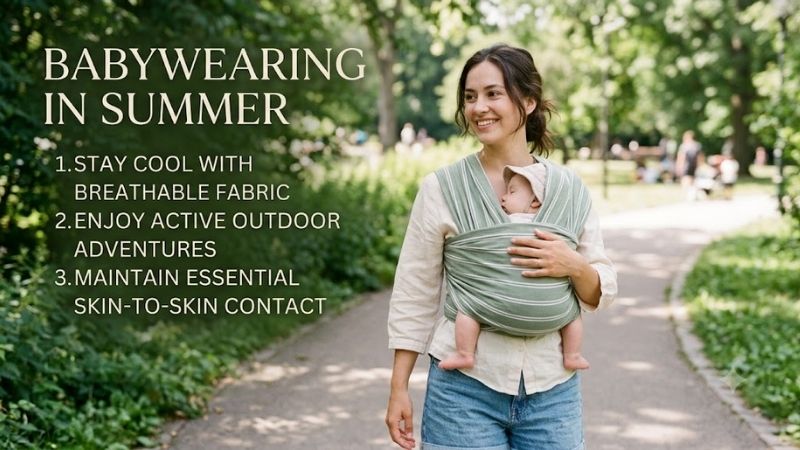
Textile composition determines how comfortably your child rests during warm afternoon strolls through local parks. Dense synthetic blends seal inside parental body heat and trigger painful heat rashes across infant chests. Choosing natural weaves like open linen, bamboo viscose, and modal creates airflow that keeps both parent and infant dry.
Moisture wicking properties stop heavy perspiration from soaking through fabric panels and chilling infants in breezy areas. Plant fibers pull humidity away from delicate newborn skin while maintaining sufficient tensile strength for all day wear. Investing in airy textiles guarantees refreshing comfort without sacrificing structural security.
Clear Airway Alignment and Head Support
High temperatures can cause small infants to tire rapidly, making head control droop during quiet outdoor naps. Maintaining continuous safety requires keeping your baby chin elevated completely clear of their chest at all times. Open airways prevent positional asphyxiation while your baby rests snugly against your sternum during daily walks.
Fabric panels must never cover your little one mouth or nose during peaceful outdoor slumbers in hot weather. Caregivers need constant visual confirmation of calm breathing without shifting cumbersome layers aside. Positioning your infant head high upon your collarbone guarantees effortless observation and loving forehead kisses on every path.
Ergonomic M-Positioning for Infant Hips
Proper orthopedic alignment shields fragile hip sockets from unnatural mechanical strain during warm excursions. Certified ergonomic carriers support infant thighs in a spread squat position where knees sit higher than the bottom. This anatomical shape cradles developing joints and fosters healthy pelvic development throughout early growth stages.
Carriers that allow infant legs to dangle straight downward create harmful localized pressure across vulnerable femoral heads. Look for supportive fabric panels that extend cleanly from knee pit to knee pit without restrictive bunching. Consistent ergonomic seating keeps your baby relaxed and physically supported through every bright afternoon walk.
Ultraviolet Defense and Sun Protection
Delicate infant skin burns easily under intense solar radiation during humid midday neighborhood adventures. While lightweight wraps improve ventilation, caregivers must ensure exposed limbs remain protected from direct glare. Broad brimmed hats and lightweight carrier hoods offer great protection without trapping stagnant warm air around your child.
Never drape thick blankets or dark towels over your sling to create artificial shade for sleeping infants. Covering carriers traps stifling air, which completely undermines safe babywearing in summer practices. Rely instead on dedicated breathable sunshades and seek shaded woodland pathways whenever the afternoon sun reaches its maximum daily peak.
Top Picks for Warm Weather Infant Babywearing
Finding a reliable warm weather wrap becomes simple when evaluating thermal regulation alongside durable structural support. Top rated designs provide peace of mind by maintaining babywearing in summer safety benchmarks across humid climates. Review our comparative table below to discover the ideal match for your family outdoor lifestyle.
| Product Model | Best Target User | Primary Fabric Type | Summer Feature |
|---|---|---|---|
| Solly Baby Wrap | Warm weather walkers | Certified Lenzing modal | Featherlight breathability |
| Boba Air Carrier | Traveling beach families | Ultralight ripstop nylon | Quick dry packable design |
| Baby Ktan Breeze | Parents wanting quickness | Half mesh cotton weave | Maximum heat ventilation |
| Moby Wrap Evolution | Newborn heat protection | Viscose bamboo blend | Natural thermal regulating |
Solly Baby Breathable Modal Wrap
The Solly Baby wrap is ideal for caregivers taking morning walks in humid southern climates with small infants. Spun from certified Austrian modal, it provides exceptional airflow that keeps both parent and infant remarkably cool. However, heavier babies over fifteen pounds may cause the lightweight weave to sag slightly during longer excursions.
Parents appreciate that the ultra thin profile folds neatly into compact diaper bags without consuming space. Its featherlight construction makes babywearing in summer effortless for new parents wanting intimate bonding. Gentle hand washing helps preserve the elastic memory of delicate modal yarns and prevents premature fabric edge wear over time.
Boba Air Ultralight Packable Carrier
The Boba Air is tailored for vacationing families who need a durable, water resistant carrier for beach walks. Its ultralight nylon ripstop material brushes clean instantly and dries within minutes after unexpected ocean splashing. Padded knee support keeps infant legs comfortable without adding heavy thermal padding across your personal torso.
On the downside, unpadded shoulder straps can dig uncomfortably into adult shoulders when carrying heavier toddlers for hours. Still, it packs entirely into its own zippered pocket, making it the premier compact option for crowded theme parks. Families seeking low maintenance outdoor gear will appreciate its resilience during demanding adventures.
Baby Ktan Breeze Mesh Carrier
Parents intimidated by complicated wrapping will appreciate the patented double loop design of the Baby Ktan Breeze. Combining half breathable mesh with soft cotton jersey, it increases airflow while sliding on easily like a standard t-shirt. Hurried caretakers can achieve safe ergonomic hip positioning in seconds without fiddling with knots.
Because this wrap relies on fixed garment sizes, partners with differing physical frames cannot share one single unit. Caregivers must consult manufacturer sizing guidelines carefully to avoid purchasing an uncomfortably snug carrier. Despite fixed dimensions, the alternating mesh panels dramatically reduce chest perspiration during sunny walks.
Moby Wrap Evolution Bamboo Blend
The Moby Wrap Evolution is perfect for newborn parents desiring buttery soft closeness without intense tropical heat buildup. Its breathable blend of natural cotton and bamboo viscose delivers gentle contouring support that cushions fragile joints. The lightweight textile breathes far better than heavy traditional cotton knit carrier options.
Nevertheless, mastering the generous five meter wrapping length requires dedicated practice before achieving rapid setups. Excess tail yardage can accidentally drag across dusty park pathways during initial tying adjustments outdoors. Once secured, it distributes growing infant weight smoothly across parental shoulders and lower back areas.
Frequently Asked Questions About Summer Babywearing
Venturing outdoors during humid sunny months brings forward important questions regarding infant thermal health and fabric care. Caregivers often wonder how to maintain babywearing in summer standards while preventing heat buildup. Explore our detailed answers below to enjoy outdoor park strolls with complete peace of mind and comfort.
How Do You Prevent Dangerous Summer Overheating?
Preventing excessive heat buildup begins with recognizing that your carrier counts as an extra layer of snug clothing. Dressing both yourself and your child in thin, natural cotton garments stops core body heat from becoming trapped. Selecting airy wraps ensures babywearing in summer remains pleasant and refreshing during long morning excursions.
Monitor your baby closely for subtle warning signs of heat distress like flushed cheeks, lethargy, or warm, damp nape hair. Place a thin muslin washcloth between your chest and infant forehead to absorb perspiration and avoid friction rashes. Taking regular breaks in air conditioned cafes lets parent and infant cool down safely and comfortably.
What Does the TICKS Rule Mean for Hot Days?
The universal TICKS acronym serves as a reliable checklist that safeguards everyday infant carrying in warm weather. It reminds parents to keep slings tight, in view at all times, close enough to kiss, chin off chest, and back supported. Adhering strictly to these five points prevents dangerous slumping whenever babies grow tired in the heat.
Hot weather causes infants to relax their muscles deeply, increasing the risk of airway obstruction against sweaty chests. Verify that fabric panels stay tight enough to hold your sleeping baby upright without slipping toward your abdomen. A quick downward glance should confirm an open airway, clear nostrils, and a lifted infant chin at all times.
How Should You Dress an Infant for Warm Walks?
Dressing infants for warm weather babywearing requires simplicity and breathable textiles that minimize thermal retention. A lightweight short-sleeved cotton bodysuit or simple diaper often provides ample protection under snug wrap panels. Proper dressing ensures babywearing in summer never exposes your child to unnecessary thermal discomfort.
Protect exposed infant limbs with lightweight wide brimmed hats that shade delicate ears, necks, and cheeks from sunlight. You can also apply pediatrician approved sunscreen to exposed ankles and arms if your infant is older than six months. Dressing lightly ensures comfortable airflow while keeping sensitive baby skin safe on sunny afternoons.
How Frequently Should Caregivers Take Cooling Breaks?
Pediatricians recommend unbuckling or untying your wrap every sixty to ninety minutes during warm outdoor excursions. Pausing allows trapped heat between your bodies to dissipate quickly while letting your infant stretch their limbs freely. These pauses offer ideal opportunities to offer hydration, inspect diapers, and check overall skin comfort.
If outdoor temperatures climb into extreme afternoon heat, shorten your continuous carrying sessions to thirty minutes. Seek shaded park benches or air conditioned indoor spaces to cool down whenever you notice infant fussiness or heavy sweating. Prioritizing regular cooling stops ensures pleasant outings without risking heat related exhaustion.
Final Thoughts on Babywearing in Summer
Embracing mindful babywearing in summer habits allows growing families to explore sunny outdoor parks with confidence and joy. As you choose your carrier, prioritize featherlight breathability, certified hip ergonomics, and quick cooling breaks. Select a dependable lightweight wrap today to enjoy blissful bonding on every sunny outdoor adventure.
Write Your Review
No reviews yet. Be the first to share your experience!