
Key takeaways
- T – Tight: The carrier must be secured closely against your torso. Loose fabric allows your infant to slump downward, a position that can restrict their breathing capabilities while pulling uncomfortably on the wearer’s lower back.
- I – In View at All Times: You should be able to clearly see your baby’s face by glancing down. The fabric of any sling, wrap, or carrier should never close around their head, allowing you to easily monitor their physical status.
- C – Close Enough to Kiss: Your baby’s head should be positioned close to your chin. By simply tipping your head forward, you should be able to kiss their forehead. If they sit lower than this, the waistbelt needs adjustment.
- K – Keep Chin Off the Chest: A baby must never be curled so tightly that their chin touches their own chest, as this restricts their airway. Ensure there is a clear space of at least two fingers’ width beneath your baby’s chin.
- S – Supported Back: In an upright carrier, an infant should be held comfortably close. Their back must be supported in its natural curve so their tummy and chest rest against you, preventing them from slumping forward or sideways.
What's inside
Learning essential babywearing tips helps you bond with your infant while keeping your hands free for daily tasks. For new parents, navigating carriers can feel overwhelming initially. However, prioritizing proper ergonomic support ensures your baby breathes easily and helps minimize back strain during your everyday routines.
Mastering the TICKS Rule for Babywearing Safety
Understanding core safety guidelines helps your child stay secure against your chest. The globally recognized TICKS acronym provides a practical checklist parents should memorize before stepping out, ensuring optimal airway clearance and helping to prevent accidental slips during your daily walks.
- T – Tight: The carrier must be secured closely against your torso. Loose fabric allows your infant to slump downward, a position that can restrict their breathing capabilities while pulling uncomfortably on the wearer’s lower back.
- I – In View at All Times: You should be able to clearly see your baby’s face by glancing down. The fabric of any sling, wrap, or carrier should never close around their head, allowing you to easily monitor their physical status.
- C – Close Enough to Kiss: Your baby’s head should be positioned close to your chin. By simply tipping your head forward, you should be able to kiss their forehead. If they sit lower than this, the waistbelt needs adjustment.
- K – Keep Chin Off the Chest: A baby must never be curled so tightly that their chin touches their own chest, as this restricts their airway. Ensure there is a clear space of at least two fingers’ width beneath your baby’s chin.
- S – Supported Back: In an upright carrier, an infant should be held comfortably close. Their back must be supported in its natural curve so their tummy and chest rest against you, preventing them from slumping forward or sideways.
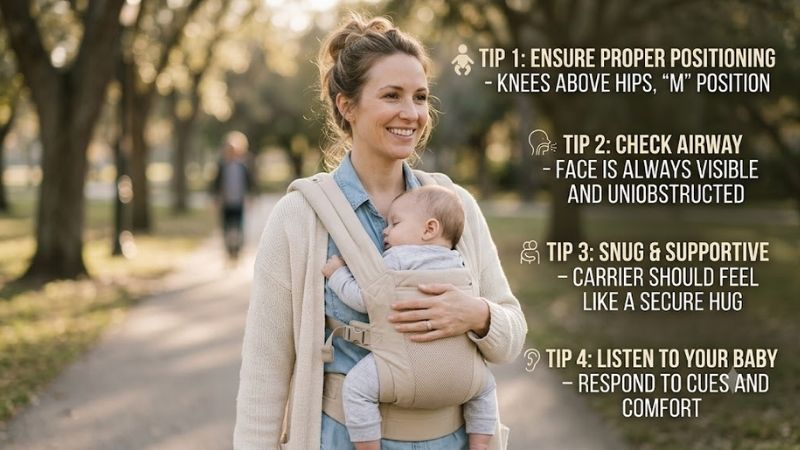
Proper Ergonomic Positioning and The M-Shape
Proper positioning supports healthy hip development and avoids placing unnecessary stress on your growing infant’s joints. Positioning your baby correctly also distributes their weight evenly across your torso, reducing shoulder strain while mirroring their natural resting posture as they grow.
- The M-Shape Position: When placed in the carrier, your baby’s knees should rest higher than their bottom, creating an “M” shape with their lower body. This alignment supports their thighs and keeps the hip joints centered.
- The C-Curve Spine: Newborns lack the muscular strength to hold their spines straight. A supportive carrier fabric accommodates their natural “C” curve rather than forcing their developing back into a rigid, upright posture.
- The Pelvic Tuck Technique: To achieve the desired M-shape, perform a gentle pelvic tuck. Reach your hands inside the carrier, cup your baby’s calves, and gently lift their knees upward while slightly rotating their pelvis toward you.
Expert Babywearing Tips for Parent Comfort
Maintaining your own physical comfort ensures you can utilize your carrier safely throughout the early years. Implementing strategic adjustments to your straps and being mindful of seasonal wardrobe choices prevents unnecessary friction and keeps your core properly supported during extended carrying.
- Wear the Waistbelt Higher: A common mistake is wearing the waistbelt too low. Fasten it near your natural waistline or beneath your ribs. This prevents lower back pain and ensures the baby sits high enough on your chest.
- Spread the Fabric Evenly: If utilizing a stretchy wrap or a woven sling, consistently spread the fabric widely across your back and shoulders. Flatly spread fabric distributes the load efficiently compared to bunched material.
- Dress Appropriately: The carrier itself acts as an extra layer of clothing. Dress your baby appropriately for the weather, remembering that the carrier material and your shared body heat will add significant warmth during walks.
- Alternate Shoulders Consistently: When deploying asymmetrical carriers like ring slings, remember to switch the weight-bearing shoulder periodically. This habit helps prevent muscle imbalances and general fatigue on one side.
Choosing the Right Baby Carrier Type
Selecting a suitable carrier depends heavily on your daily lifestyle, local climate, and your baby’s current developmental stage. Evaluating different material types and structural designs allows you to make an informed choice that adapts to your personal parenting requirements and comfort preferences.
Stretchy Wraps
- What: A long piece of soft, stretchy fabric tied around the wearer’s upper body.
- Why: It provides a snug fit without plastic buckles, harsh straps, or metal hardware.
- Who: Parents of newborns and smaller infants who want close contact during the early months.
- Trade-off: The multiple layers can become warm in summer, and tying requires practice.
Soft Structured Carriers (SSCs)
- What: Pre-formed carriers featuring padded shoulder straps and a buckle waist belt.
- Why: Offers secure wearing capabilities combined with distinct lumbar support.
- Who: Caregivers managing older infants and toddlers who require quick loading.
- Trade-off: Bulkier to pack, and some models require a separate infant insert for newborns.
Ring Slings
- What: Woven fabric threaded through two metal rings, worn over a single shoulder.
- Why: Quick to put on and adjust, creating a convenient pouch for household errands.
- Who: Parents making frequent short trips and managing toddlers who transition frequently.
- Trade-off: Asymmetrical weight distribution can cause shoulder fatigue during extended walks.
Top Rated Baby Carrier Recommendations
Finding reliable gear makes implementing proper babywearing tips much easier. These models represent popular options across different categories, combining quality materials with intuitive designs that prioritize ergonomic support based on standard manufacturer specifications and parent feedback.
1. Ergobaby Omni 360 All-Position Carrier
- Best For: Overall versatility and long-term, multi-year usage.
- Key Features: Lumbar waistbelt, crossable padded shoulder straps, and a breathable mesh body.
- Pros: Does not require an infant insert; permits multiple carrying positions as the child grows.
- Cons: The structured paneling can feel slightly rigid for very small newborns.
- Use Case: Extended walks, full-day trips, and situations demanding long carrying durations.
- Who It’s For: Parents seeking a structured carrying solution that adapts from infancy to toddlerhood.
2. Boba Classic Wrap
- Best For: Soothing at-home wearing and newborn contact.
- Key Features: Constructed from a cotton and spandex blend, one-size-fits-all, machine washable.
- Pros: Soft against delicate skin and conforms to the baby for a custom ergonomic fit.
- Cons: The long fabric can trail on the floor while tying, making outdoor application challenging.
- Use Case: Calming a newborn indoors, light hands-free household chores, or discrete breastfeeding.
- Who It’s For: Caregivers prioritizing gentle support and physical closeness during the newborn phase.
3. Nalakai Ring Sling
- Best For: Rapid deployment for quick trips and hot weather.
- Key Features: Woven from a bamboo and linen blend, lightweight fabric.
- Pros: Breathable material helps reduce overheating; fast to get a baby in and out.
- Cons: Places the weight onto a single shoulder, making it less suitable for extensive exertion.
- Use Case: Quick drop-offs and attending warm outdoor events where heavy carriers cause sweating.
- Who It’s For: Caregivers who need speed and convenience for frequent, short-duration carrying.
Frequently Asked Questions
Reviewing practical answers to common questions clarifies crucial safety boundaries and developmental milestones. This knowledge grants you the confidence needed to secure your child properly while comfortably going about your daily activities and ensuring their ongoing physical well-being at home.
When can my baby safely face forward in a carrier? Babies should only face outward once they demonstrate consistent head and neck control. Always consult your specific manufacturer’s guidelines for weight and age requirements. It is generally recommended to use the outward-facing position for shorter durations to maintain proper ergonomic support.
Is babywearing considered safe for brand-new infants? Babywearing can be safe for full-term, healthy newborns when utilizing a carrier specifically rated for their starting weight and strictly adhering to the TICKS safety guidelines. Parents of premature infants or babies with medical conditions should consult a pediatrician before babywearing.
Can using a baby carrier cause hip dysplasia? Proper positioning can support healthy hip alignment. Utilizing a carrier that facilitates the ergonomic M-shape position helps center the hip joints naturally. Conversely, poorly designed or incorrectly used carriers that allow a baby’s legs to dangle straight down may place the hips in an unfavorable position.
Conclusion
Applying these core babywearing tips allows you to manage daily tasks while keeping your infant secure. By following standard safety checklists and selecting appropriate ergonomic gear, a quality carrier becomes a highly practical parenting tool that provides everyday convenience and reliable support.










Write Your Review
No reviews yet. Be the first to share your experience!