
Key takeaways
- Table of Contents 4 sections 8 min read 1 How to Choose Safe Babywearing Positions and Gear 1.1 Front Inward Facing Spread Squat Ergonomics 1.2 Hip Carry Positioning for Inquisitive Infants 1.3 Back Carry Ergonomics for Growing Toddlers 1.4 Breathable…
What's inside
Babywearing Positions often confuse new parents who struggle with bulky straps, sore lower backs, and cranky infants. This detailed manual simplifies your journey by explaining safe infant anatomy, ergonomic holds, and durable gear so you can carry your child hands-free while building an unbreakable bond with total ease every single day.
How to Choose Safe Babywearing Positions and Gear
Choosing ideal ergonomic babywearing positions requires thoughtful evaluation of infant physical anatomy alongside parental comfort. Many caregivers encounter sudden lumbar fatigue and fussy children when strap geometry or seat dimensions fit improperly. Assessing dependable design features ensures you purchase truly supportive gear.
Front Inward Facing Spread Squat Ergonomics
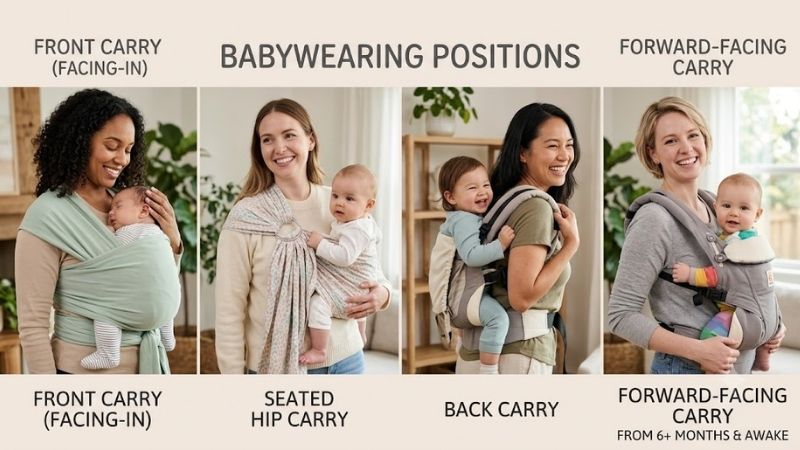
The front inward chest carry remains the most celebrated option across all developmental stages for young babies. Positioning your infant facing inward against your chest secures their fragile head while keeping airways visible and clear. A supportive base guarantees natural spine curvature without placing pressure on joints.
Maintaining proper positioning requires lifting baby knees slightly above the bottom to shape a visible letter M. Narrow seats cause infant legs to dangle loosely downward, which puts excessive mechanical strain on delicate hips. Investing in wide bucket seats guarantees dependable orthopedic alignment across daily outings.
Hip Carry Positioning for Inquisitive Infants
Transitioning an infant onto your hip provides a dynamic vantage point for curious babies exploring new sights. Resting baby weight directly over your pelvic bone prevents muscle fatigue while keeping the child balanced against your torso. This method stops parents from popping hips outward, maintaining healthy spinal posture.
Adjustable ring slings and flexible buckle carriers adapt quickly to create a secure seat for active babies. This carry keeps delicate hips properly angled while encouraging infants to look around freely during walks. Parents enjoy enhanced flexibility for indoor chores while maintaining a cozy, supportive connection.
Back Carry Ergonomics for Growing Toddlers
Mounting a heavier toddler onto your back becomes essential once front carrying causes significant spinal tension. Securing your toddler behind you shifts their center of gravity over your spine, reducing strain on shoulder muscles. This balanced distribution lets you run errands, hike outdoor trails, or clean your living room.
Proper back babywearing positions demand that your toddler sits upright with open air space around their face. High back carries allow inquisitive children to gaze over your shoulders, keeping them entertained without pulling on clothes. Reinforced seams and dependable buckles ensure complete safety across longer journeys.
Breathable Textile Weaves and Lumbar Padding
Fabric breathability directly influences baby comfort because small infants cannot regulate their own heat well. Dense synthetic wraps trap excess body heat during long strolls, leading to heavy sweating and skin irritation. Choosing natural woven linen or certified organic cotton maximizes airflow and keeps skin cool.
Sturdy lumbar support pads protect caregiver backs from strain when carrying growing toddlers for extended hours. Wide, firm waistbands distribute heavy downward weight toward the hips instead of pulling on delicate shoulders. Padded shoulder straps cushion sensitive pressure points, making long family walks effortless.
Top Picks for Ergonomic Babywearing Positions
Selecting dependable gear becomes straightforward when you compare models tailored for healthy babywearing positions. We analyzed dozens of popular carriers to highlight top models that excel across versatile carrying arrangements. The summary table below presents our favorite choices designed for active families.
| Product | Carrier Style | Key Strength | Ideal User |
|---|---|---|---|
| Ergobaby Omni Breeze | Structured Carrier | High-airflow mesh | All-day active parents |
| Baby Tula Free-to-Grow | Adjustable Buckle | No-insert setup | Rapidly growing infants |
| Solly Baby Lightweight Wrap | Stretchy Wrap | Lenzing modal fabric | Newborn chest snuggles |
| WildBird Aerial Buckle | Padded Linen | European linen build | Ergonomic back carries |
Ergobaby Omni Breeze Carrier
The Ergobaby Omni Breeze is the benchmark structured carrier for active parents needing multi-position comfort. Its lightweight mesh channels keep both caregiver and infant remarkably cool during sunny outdoor excursions. The frame adjusts quickly to front inward, front outward, hip, and back modes without added inserts.
On the downside, the firm padded waistbelt and structured straps feel somewhat bulky inside compact diaper bags. Even so, the sliding chest adjusters and built-in lumbar support provide marvelous ergonomic relief on extended hikes. It remains a dependable investment for caregivers wanting versatile support across four stages.
Baby Tula Free-to-Grow Carrier
The Baby Tula Free-to-Grow is an exceptional match for parents seeking a streamlined carrier that adapts easily. The base panel shifts smoothly into three width settings, accommodating babies from seven up to forty-five pounds without extra padding. Generous shoulder foam prevents annoying slippage during long morning neighborhood walks.
This carrier deliberately omits an outward front-facing mode, which may disappoint parents with highly curious babies. Nevertheless, the pure cotton construction and simple buckles make everyday adjustments simple and secure. It offers a cozy, minimalist platform that encourages healthy hip placement from day one.
Solly Baby Lightweight Wrap
The Solly Baby Wrap is an exquisite choice for parents who cherish womb-like snuggles during early newborn weeks. Made from custom modal fabric, this lightweight wrap spreads infant weight across your shoulders without trapping warmth. The silky textile hugs delicate babies snugly, easing fussy crying into restorative sleep.
However, stretchy wraps offer limited longevity, losing structural tension once your infant reaches twenty-five pounds. Mastering the manual wrap technique also requires patience and practice during the busy postpartum phase. Still, its featherlight compactness and supreme softness make it essential for young infants.
WildBird Aerial Buckle Carrier
The WildBird Aerial Buckle Carrier caters to design-conscious parents who prioritize natural textiles and support. Constructed from woven European linen, this buckle carrier provides rigid physical security for inward and back carries. Dense shoulder straps disperse toddler weight effectively, keeping pressure off tender neck muscles.
Pure linen requires a short break-in period before softening fully, feeling somewhat stiff during early outings. In addition, hand washing and spot cleaning require extra care compared to quick-drying synthetic alternatives. Nonetheless, its timeless aesthetic and even weight balance make it wonderful for outings.
Frequently Asked Questions About Babywearing Positions
Mastering proper carrying techniques becomes easy when you review essential babywearing positions before your stroll. New parents frequently worry about hip ergonomics, airway protection, and transition ages for outward views. Exploring the answers below helps you navigate daily babywearing adventures with total confidence.
What Is the Ergonomic M-Position in Infant Carriers?
The ergonomic M-position describes an infant seated posture where thighs spread wide and knees sit above hips. This spread-squat position ensures natural pelvic tilt, fostering correct hip socket development as babies grow. It protects vulnerable joint capsules by preventing unnatural downward leg dangling during walks.
Soft structured carriers featuring adjustable seat panels make maintaining this anatomical shape straightforward over time. Checking your infant in a hallway mirror confirms whether fabric extends from knee pit to knee pit evenly. Keeping knees properly elevated ensures your child rests securely throughout long carrying sessions.
When Can Babies Transition to Outward Facing Positions?
Infants should only explore outward facing babywearing positions once they exhibit complete neck and head control. This developmental milestone typically occurs around six months of age when spinal muscles gain strength. Babies must also stand tall enough so their mouth rests safely clear of the front carrier panel.
Carrying infants facing forward increases strain on adult spines because the child center of gravity moves outward. Furthermore, curious infants can quickly become overstimulated by chaotic public surroundings without resting inward. Limiting forward-facing strolls to twenty minutes keeps outings cheerful, fun, and comfortable.
How Does the TICKS Rule Protect Infant Airways?
The TICKS rule summarizes essential safety standards recommended across the babywearing community for carrying children. The acronym reminds caregivers to keep carriers Tight, In view, Close enough to kiss, Keep chin off chest, and Supported back. Following these five checks guarantees an unobstructed airway on every single walk.
Because infant airways are soft, curled positions with a chin touching the chest can restrict airflow rapidly. Carrying your infant upright with their forehead near your chin lets you monitor breathing with ease. Reviewing these five simple checkpoints every time you buckle a carrier gives complete peace of mind.
When Can Parents Safely Start Back Carrying?
Caregivers must wait to attempt back babywearing positions until their infant demonstrates unassisted sitting abilities. Independent sitting indicates that your child has achieved the trunk stability required to sit securely behind you. Attempting back carries too early prevents you from monitoring airway passage and head posture visually.
Most pediatric specialists recommend waiting until approximately six to eight months before shifting babies onto your back. Front inward carrying remains the safest choice for smaller infants, allowing continuous visual supervision. Waiting for core developmental markers ensures that every back carry remains completely secure.
Final Thoughts
Adopting safe babywearing positions allows you to enjoy wonderful bonding moments while keeping both hands totally free. Emphasizing the ergonomic spread-squat seat, supportive lumbar pads, and breathable fabrics protects your child and your back. Select the carrier that matches your daily lifestyle and step outside with complete joy.









Write Your Review
No reviews yet. Be the first to share your experience!