
Key takeaways
- Using the seat before the child is ready: Do not place a newborn or a baby without reliable head and trunk control on a bare hip seat.
- Wearing it too low or too loose: A sliding waistband makes the child unstable and increases adult back strain.
- Allowing forward slumping: A visible face is essential. Reposition immediately if the chin drops toward the chest.
- Letting legs dangle: Support the thighs and keep the child’s hips in a comfortable, spread position.
- Overloading pockets: Keep heavy items out of storage compartments. Extra weight can pull the carrier away from your body.
- Using a damaged buckle or seat: Tape, household stitching, and improvised clips are not reliable repairs.
- Expecting hands-free safety: Keep a hand on a young or restless child, particularly in the seat-only configuration.
- Ignoring heat: Dress both of you in breathable layers and check the child’s neck and back for sweating or flushed skin.
A hip seat carrier can make short walks, errands, and toddler pick-ups easier by supporting a child on a firm, shelf-like seat rather than asking your arms to carry all the weight. Used incorrectly, however, it can allow a baby to slump, tip sideways, slide through an opening, or press their face into the adult’s body. A loose waistband can also strain your back, while a damaged buckle or overloaded pocket can cause the carrier to shift.
The safest approach is to treat a hip seat as a positioning aid, not a hands-free substitute for a fully supportive carrier. Read the specific product manual before use, check the manufacturer’s minimum age and weight limits, and use an infant insert or additional panel only if that model explicitly approves one. The following routine applies to many hip seat carriers in 2026, including products such as the Tushbaby Original, priced around $72.99, and the HKAI Baby Hip Carrier, priced around $34.19. Product features and limits vary.
As an Amazon Associate we earn from qualifying purchases at no extra cost to you. Product prices and availability are accurate as of the date shown and are subject to change.

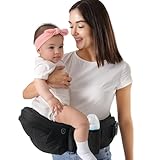
What You Need
| Item | Why | Optional? |
|---|---|---|
| Hip seat carrier | Choose one with a secure waistband, sturdy buckle, non-slip seat surface, and clear age and weight instructions. | No |
| Product manual | Confirms approved positions, child size limits, cleaning instructions, and whether newborn use is allowed. | No |
| Full-support carrier panel or infant insert | Provides head, neck, back, and leg support when the carrier is designed for that configuration. | Only when manufacturer-approved |
| Mirror or second adult | Helps you check the child’s airway, leg position, and fasteners during the first few uses. | Yes, but useful |
| Small essentials | Use built-in pockets for lightweight items only; avoid heavy bottles, keys, or bulky objects that can change the seat’s balance. | Yes |
Most hip seat carriers sell for roughly $30 to $75, but price is not a substitute for fit or certification. Never assume a higher-priced carrier is safer for your child without checking its instructions.
Step-by-Step
1. Check the carrier and your child’s readiness — 2 minutes
Inspect the waistband, buckle, stitching, hook-and-loop fastener, seat fabric, and any support panel. Look for fraying, loose threads, cracks, missing snaps, or a buckle that does not click and release normally. Do not use the carrier if the seat is warped or the safety label is unreadable.
Confirm that your child meets the manual’s age, developmental, and weight requirements. A seat-only position generally requires a child who can sit steadily and control their head and torso. A newborn or young infant must not be placed on an exposed hip seat unless the manufacturer specifically provides an approved, fully supportive configuration. Never rely on a folded blanket for extra support.
2. Position the waistband correctly — 2 minutes
Place the waistband around your natural waist or upper hips according to the manual, not loosely around your lower hips. The seat should rest level and close to your body. Center it on the front, side, or back position permitted by the product instructions.
Fasten the primary buckle, then secure any secondary safety strap or hook-and-loop panel. Pull the adjustment strap until the carrier feels snug without restricting your breathing or digging painfully into your skin. You should not be able to pull the waistband several inches away from your body. Ask another adult to check the buckle if you are unsure it is fully engaged.
3. Load the child while seated — 1 minute
Stand beside a bed, sofa, or another low, stable surface during your first attempts. Keep one arm around the child’s upper back and the other under their bottom as you guide them onto the seat. Do not lift a wiggly child onto the carrier while leaning over a staircase, curb, or slippery floor.
Keep the child’s bottom fully supported on the seat. Their torso should be upright and close to you, with their legs comfortably spread around your body. Knees should be at least level with, and often slightly higher than, the bottom rather than dangling straight down. The child should face inward unless the manual specifically permits another position.
4. Secure the child and check the airway — 30 seconds
Attach every approved support panel, shoulder strap, or safety tether. The carrier should support the child’s back without forcing the chin onto the chest. Keep the face visible at all times: you should be able to see the nose and mouth without moving fabric. Maintain at least two adult fingers’ width under the child’s chin, and make sure the child can turn their head freely.
Do not cover the child’s face with a nursing cover, scarf, coat, or carrier fabric. A sleeping child needs especially close observation because slumping can obstruct breathing. If the child’s chin touches their chest, stop and reposition immediately.
5. Perform a movement check — 1 minute
Before walking, gently lean forward a few degrees, turn from side to side, and take several slow steps. The child should remain high, upright, and close to your center of gravity. The seat should not tilt sharply, and the waistband should not slide downward.
Support the child with one arm whenever using a seat-only position. Do not run, jump, cycle, cook over a hot surface, climb a ladder, or carry hot drinks while using the carrier. A hip seat can free one hand, but it does not eliminate the need for active support.
6. Recheck during use and remove safely — 1 to 2 minutes
Recheck the child’s airway, leg position, and the waistband after sitting, standing, bending, or walking for several minutes. Stop if the child slumps, slips, cries from pressure, or appears too warm. To remove the child, support their upper body and bottom first, move to a stable surface, and release the carrier only after the child is safely in your arms.
Mistakes to Avoid
- Using the seat before the child is ready: Do not place a newborn or a baby without reliable head and trunk control on a bare hip seat.
- Wearing it too low or too loose: A sliding waistband makes the child unstable and increases adult back strain.
- Allowing forward slumping: A visible face is essential. Reposition immediately if the chin drops toward the chest.
- Letting legs dangle: Support the thighs and keep the child’s hips in a comfortable, spread position.
- Overloading pockets: Keep heavy items out of storage compartments. Extra weight can pull the carrier away from your body.
- Using a damaged buckle or seat: Tape, household stitching, and improvised clips are not reliable repairs.
- Expecting hands-free safety: Keep a hand on a young or restless child, particularly in the seat-only configuration.
- Ignoring heat: Dress both of you in breathable layers and check the child’s neck and back for sweating or flushed skin.
How Often
Inspect the carrier briefly before every use and perform a closer check weekly if you use it often. Wipe spills promptly and wash it exactly as directed; some carriers should be air-dried rather than placed in a dryer. Check the fit whenever your child grows, gains weight, or begins wearing thicker clothing. During every outing, make an airway and buckle check after the first few minutes and after major position changes.
Use the carrier for the duration your child and your body tolerate comfortably. There is no universal safe number of minutes. Take breaks during long walks, and stop if you develop back, hip, shoulder, or abdominal pain.
When to Call a Pro or Replace
Contact the manufacturer for help when the manual is missing, the approved age or weight range is unclear, or you cannot achieve a snug fit. A certified babywearing educator can check positioning in person, especially for an infant, premature baby, child with low muscle tone, or child with hip, spine, or breathing concerns. Ask your pediatrician before use if your child has a medical condition affecting posture or respiration.
Replace the carrier after a fall, crash, or heavy impact, even when damage is not obvious. Replace it sooner if the buckle will not lock, the webbing is frayed, the stitching is separating, the seat is cracked or misshapen, or the non-slip surface has worn smooth. Follow any manufacturer expiration, recall, or replacement guidance.
FAQ
Can a newborn use a hip seat carrier?
Only if the specific model is designed and approved for newborn use with its complete infant-support configuration. A bare seat does not support a newborn’s head, neck, or spine. Follow the manual’s minimum age, weight, and developmental requirements rather than relying on the product’s name or appearance.
Should the baby face in or out?
Face-in carrying is generally the easier position for maintaining airway visibility, back support, and hip alignment. Use a forward-facing position only when the manufacturer allows it and the child has strong head and torso control. Stop if the child becomes overstimulated, slumps, or cannot keep their face clear.
Can I use a hip seat while climbing stairs?
Use extra caution. Hold the child securely with one arm, keep a free hand on the railing, and take slow steps. Do not use the carrier on a ladder, escalator, wet surface, or uneven trail unless you can maintain firm control. A seat-only carrier is not a substitute for a fully secured, hands-free carrier in these situations.
How tight should the waistband be?
It should be snug enough that the carrier stays level and close to your body without sliding, pinching, or making breathing difficult. Fasten all required closures, then test the fit with the child loaded. If the seat shifts when you walk or the child leans away from you, remove the child and tighten or reposition the carrier.






Write Your Review
No reviews yet. Be the first to share your experience!