
Key takeaways
- Choosing between a soft structured carrier and a hip seat is less about which product is universally better and more about how your household moves through the day. One option keeps a child close and leaves both hands available; the…
Choosing between a soft structured carrier and a hip seat is less about which product is universally better and more about how your household moves through the day. One option keeps a child close and leaves both hands available; the other makes frequent up-and-down trips easier without asking you to fully wear your child for every minute.
That distinction matters at home. A carrier can help with cooking, walking the dog, folding laundry, or settling a baby while you stand. A hip seat can be more convenient when your child wants to be picked up, then put down again five minutes later. It also changes how much storage space you need, how much fabric you wash, and how comfortable the setup feels during longer periods of use.
Our top picks



As an Amazon Associate we earn from qualifying purchases at no extra cost to you. Ratings are shown as listed on Amazon.
For this 2026 comparison, “soft structured carrier” means a fabric carrier with padded shoulder straps, a supportive waistband, and adjustable panels or buckles. A hip seat means a structured, usually waist-mounted shelf that supports a child on one side of your body. Both can be useful, but they solve different carrying problems.
Quick Verdict
Choose a soft structured carrier if you want hands-free carrying, frequent walks, longer wearing sessions, or a way to keep a baby securely close while doing household tasks. It generally distributes weight across your shoulders, back, hips, and waist more evenly than a hip seat.
Choose a hip seat if your child is old enough to sit independently, regularly asks to be held and released, and you value quick access over fully hands-free support. It is especially practical for short trips around the house, errands, travel days, and toddler stages when carrying is intermittent.
For many families, the best answer is not either-or. A carrier tends to be the primary tool for infants and longer outings, while a hip seat becomes valuable during the “up, down, up again” toddler years.
Side by Side
| Factor | Soft structured carrier | Hip seat |
|---|---|---|
| Comfort | Usually better for extended wear because weight is shared across the torso; padded straps and a waistband matter. | Comfortable for short carries, but often loads one shoulder, hip, or side of the back more heavily. |
| Durability | Quality buckles, stitching, and webbing can withstand years of regular use; fabric can show wear first. | Fewer large fabric panels, but the seat base and waistband should be checked for compression, cracks, and loose stitching. |
| Price range | About $38–$130 for the products commonly considered in this category. | About $64–$85 for mainstream models, with premium versions costing more. |
| Maintenance | More fabric and padding to wash; spot cleaning and air drying are often preferred. | Generally quicker to wipe down, although storage pockets and seams can collect crumbs. |
| Space needed | Often folds or compresses to roughly the size of a small backpack; straps can tangle in drawers. | Usually compact, but the rigid or semi-rigid seat does not flatten as completely. |
| Look | More like specialized baby gear, though neutral colors can blend with everyday clothing. | Less visually bulky across the chest, but the waist pack is noticeable at the front or side. |
| Resale | Strongest when clean, complete, and free of stains, with an intact waist buckle and instruction label. | Can retain appeal if the seat surface and structural components remain in excellent condition. |
| Best for | Infants, naps on the go, longer walks, chores, and genuinely hands-free carrying. | Older babies and toddlers who alternate between walking and being carried. |
Where Soft Structured Carrier Wins
The biggest advantage is weight distribution. A well-adjusted soft structured carrier pulls the child toward your center of gravity and uses multiple contact points: shoulder straps, a waist belt, and a supportive body panel. That arrangement is usually less tiring than balancing a child on one hip for 20 or 30 minutes.
It is also the more versatile option for early parenthood. Many models support a lower minimum weight than hip seats, but the exact age and position rules vary. A newborn should only be carried in a configuration specifically approved for that child’s size and developmental stage. If an insert is required, use the manufacturer’s approved insert rather than improvising with blankets or padding.
A carrier is the stronger choice when you need both hands. You can prepare a simple meal, carry groceries from the entryway, or manage a leash while walking at a controlled pace. It does not make every activity safe—hot liquids, stovetops, climbing, and tasks involving sharp tools still require caution—but it reduces the need to support a child with one arm.
It can also be easier on a home’s traffic flow. Instead of setting a child down in a busy kitchen or hallway, you can keep the child close while moving between rooms. A carrier’s weight is often between roughly 1.5 and 3 pounds before the child is added, so compare that base weight with strap padding and adjustability rather than assuming the lightest model will be most comfortable.
Entry-level pricing can be relatively approachable. The Infantino Flip 4-in-1 Baby Carrier Convertible Ergonomic, Floral Navy is listed at $37.97, while the Mabē Monarch Ergonomic Baby Carrier is listed at $129. Those prices illustrate the broad range: basic carriers can cost less than a hip seat, while premium fabrics, newborn-to-toddler adjustment, and more substantial padding raise the price.
Where Hip Seat Wins
A hip seat is built for convenience, not necessarily all-day carrying. The shelf supports part of the child’s weight, making it easier to lift a toddler from the floor, hold them while looking out a window, or move them from the car to a store cart. When the child wants down, you can release them without unbuckling a full carrier from your shoulders and waist.
That quick transition is particularly useful for children who are walking but still tire easily. It also works well in homes where the caregiver is constantly switching between sitting on the floor, standing at a counter, and responding to a child in another room. Many hip seats include storage, so a phone, keys, wipes, or a small snack can stay close without a separate belt bag.
The tradeoff is balance. Even with a supportive seat, the child is typically positioned on one side of your body, and you may instinctively lean to compensate. That can become uncomfortable during long periods or with a heavier toddler. Most hip seats are intended for children who can sit independently; always follow the specific product’s minimum age, weight, and positioning guidance.
They also are not automatically hands-free. Some designs include a detachable panel or strap, but a simple seat generally requires one arm to steady the child. For that reason, a hip seat is not a replacement for a fully supportive carrier when you need to use both hands.
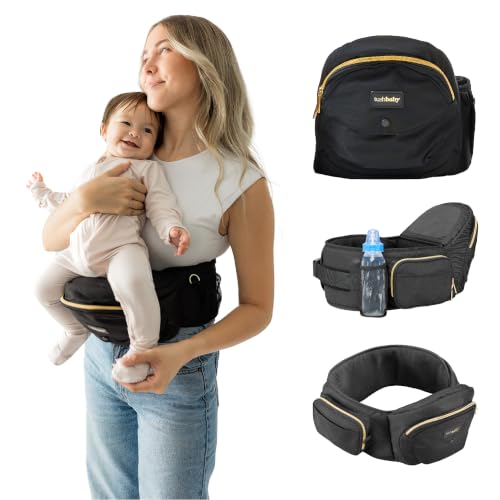
The Tushbaby Original Hip Seat Baby Carrier, available in Black & Gold at $63.70 and Grey at $84.99, shows how color and seller pricing can affect the purchase price without changing the basic category. Either style should be judged by fit, support, storage, and cleaning needs rather than color alone.
Cost Over 5 Years
A realistic five-year cost depends more on how often the product is used than on its sticker price. For a single carrier priced around $38–$129, the purchase cost works out to approximately $0.73–$2.48 per month over 60 months, before tax. A hip seat priced around $64–$85 works out to about $1.07–$1.42 per month.
Those numbers are useful, but they can be misleading because many families use either product intensively for only one to three years. A $100 carrier used several times a week for two years costs about $4.17 per month during its active period. A $75 hip seat used regularly for 18 months costs about $4.17 per month as well.
Include the cost of accessories only if they are truly needed. A newborn insert, drool bibs, replacement buckles, or a second carrier for another caregiver can raise the total. Washing typically costs little beyond detergent and water, but frequent machine drying may shorten the life of elastic, padding, and coatings. Air drying and following the care label can help protect resale value.
Which One for Your Home
Small apartment
A hip seat can be easier to store because it has fewer long straps and usually fits on a shelf or in an entryway basket. Choose it if your daily routine involves short indoor carries and your child is already developmentally ready. If you have limited floor space and need to keep both hands free while navigating a narrow kitchen, a compact soft structured carrier may be more useful despite taking up slightly more storage space.
Family with kids and pets
A soft structured carrier is usually the better primary choice. It keeps a baby secure while you open doors, refill a pet bowl, or manage a leash, and it reduces the chance of a child sliding when your attention is divided. For a toddler who walks most of the time, add a hip seat if repeated pickups are creating shoulder or arm fatigue.
Rental
Neither option requires installation, wall anchors, or changes to the property, making both rental-friendly. A carrier with washable fabric can be preferable if the home has shared laundry concerns or limited storage. A hip seat’s wipeable surfaces may be convenient around carpet, borrowed furniture, or a small entryway where dropped snacks are common.
Long-term home
Buy for the stage you expect to use most. Families planning more than one child may get better value from a durable carrier with broad adjustability, provided it can be cleaned thoroughly between children. A hip seat may offer better long-term usefulness once children become active toddlers, but its value falls if your children strongly prefer walking or rarely ask to be held.
FAQ
Is a soft structured carrier safer than a hip seat?
Neither category is automatically safer. Safety depends on the child’s developmental stage, the product’s approved weight range, correct adjustment, and continuous supervision. A young infant needs supported positioning and clear airways; an older child may be appropriate for a hip seat. Read the manual and check the fit every time.
Can a hip seat replace a baby carrier?
Usually not. A basic hip seat is designed for supported, often one-sided carrying and may require an adult’s hand to steady the child. It can complement a carrier, particularly during the toddler stage, but it is not the best substitute for hands-free support or extended wear.
Which is easier to clean?
Hip seats are often quicker to wipe because they have less fabric, though pockets and seams need attention. Soft structured carriers can be washed, but padding, webbing, and buckles may require careful spot cleaning and air drying. Follow the product’s care instructions rather than assuming every carrier is machine washable.
Should I buy both?
Buy both only if they solve different, recurring problems in your routine. A carrier earns its place when you need hands-free support or longer walks. A hip seat earns its place when your child repeatedly switches between walking and being carried. If storage or budget is tight, start with the option that matches your most frequent daily scenario.


Write Your Review
No reviews yet. Be the first to share your experience!