
Key takeaways
- Choosing between a front carry and back carry carrier is less about which position is universally better and more about how you use your home, your time, and your body. A front carrier keeps a baby or small pet visible…
Choosing between a front carry and back carry carrier is less about which position is universally better and more about how you use your home, your time, and your body. A front carrier keeps a baby or small pet visible and close, which can be reassuring in a compact room or during short errands. A back carry carrier shifts weight behind you and usually leaves your hands, chest, and front pathway clearer for walking, chores, and longer outings.
The decision also depends on what you are carrying. Infant carriers are designed around head support, hip positioning, and a developing child’s needs. Pet carriers prioritize ventilation, weight distribution, and secure leg or body openings. A toddler hiking carrier is a different category again, with a framed structure and substantially higher capacity. As you compare front carry vs back carry carrier options for 2026, consider fit, floor space, storage, cleaning, and how often the carrier will actually be used—not just the purchase price.
Our top picks



As an Amazon Associate we earn from qualifying purchases at no extra cost to you. Ratings are shown as listed on Amazon.
Quick Verdict
Choose a front carry carrier if you want close contact, quick access, and better visibility of a newborn, small baby, or small pet. It is particularly practical in a small apartment, during short walks, and when the wearer needs to monitor the passenger frequently.
Choose a back carry carrier if you expect longer walks, hiking, household tasks, or a heavier child or pet. Back carrying generally distributes weight more comfortably once the passenger is developmentally ready and the carrier is properly fitted. It also keeps the front of your body open, making doorways, countertops, and crowded spaces easier to navigate.
For many households, the best answer is not either-or. A soft front carrier can cover the newborn or short-trip stage, while a structured back carrier can take over for longer outings later.
Side by Side
| Consideration | Front Carry | Back Carry |
|---|---|---|
| Comfort | Excellent for short sessions and close contact; may strain the shoulders as weight increases. | Usually better for longer walks and heavier loads when the waist belt and torso length fit correctly. |
| Durability | Soft carriers commonly use cotton, polyester, or blends and have fewer rigid parts. | Structured carriers often add aluminum or plastic frames, heavier fabric, and reinforced stitching. |
| Price range | About $15-$180 for basic pet and infant models; premium wraps and structured options may cost more. | About $50-$300 for child or pet carriers; framed toddler hiking models can exceed $300. |
| Maintenance | Often easier to machine wash, though straps and buckles need careful inspection. | May require spot cleaning, hand washing, or frame-safe care; more seams can collect dirt. |
| Space needed | Typically folds to roughly 10-16 inches long and stores in a drawer or closet bin. | Often measures about 18-30 inches tall and needs a closet, mudroom, or garage hook. |
| Look | Soft, minimal, and clothing-like; available in wraps, slings, and buckle styles. | More outdoor-oriented, with visible straps, pockets, padding, and a taller profile. |
| Resale | Good if fabric and buckles remain clean, especially for popular infant sizes. | Can retain value when the frame, suspension, and padding are in excellent condition. |
| Visibility | High visibility for checking a baby or pet; face and airway access are easier to monitor. | Limited visibility, so the passenger needs a secure fit and regular checks. |
| Best for | Newborn bonding, short errands, small pets, and indoor movement. | Hiking, longer walks, toddlers, and situations where front clearance matters. |
Where Front Carry Wins
Front carry is the simplest choice when closeness and visibility matter more than maximum load capacity. With an infant, having the baby against your chest makes it easier to notice changes in position, temperature, or comfort. Many front infant carriers support newborn use with an insert, adjustable panel, or wrap-style construction, but the manufacturer’s minimum weight and developmental requirements should always control. A typical soft carrier may support roughly 8-30 or 35 pounds, while newborn-focused designs tend to emphasize head and neck support.
Front carry also works well indoors. You can move through a kitchen, nursery, or living room without the tall profile of a framed pack. In a home with narrow hallways or limited storage, a soft carrier that folds to around 12 inches can be considerably easier to live with than a rigid pack measuring more than 24 inches high.
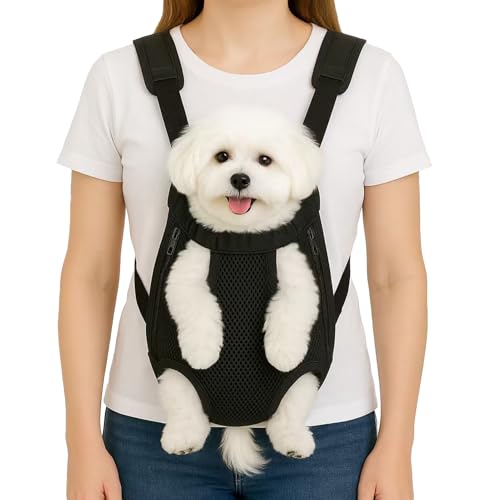
For a small dog or cat, a front pet carrier can make short trips feel more controlled. The Inspack Dog Backpack Carrier/Cat Carrier, for example, is listed for 4-7-pound pets and offers a front-carry format with legs-out positioning. The Mosago Dog Backpack Carrier is another low-cost front-chest option for small dogs. Products in this category are commonly priced around $15-$40, making them accessible for occasional use, although buyers should check the pet’s measurements—not only its weight—and confirm that the opening prevents slipping.
Front carry is not automatically cooler or safer in every situation. A passenger pressed against the wearer can increase heat, and a poorly adjusted waistband can pull on the lower back. Keep the airway clear, avoid covering a baby’s face with fabric, and do not use a pet carrier for a load beyond its stated capacity.
Where Back Carry Carrier Wins
Back carrying becomes more attractive as the passenger gets heavier or the outing gets longer. A properly fitted waist belt transfers part of the load to the hips, while padded shoulder straps stabilize the upper body. This is particularly useful for trails, parks, travel days, and household projects where you need your chest and arms unobstructed.
A structured toddler hiking carrier usually has a taller seat, a sunshade, side pockets, and a stand for loading. The besrey Toddler Hiking Backpack Carrier, listed at $159.99, illustrates the price level of a more substantial child-carrying pack. These carriers take more room than soft infant models and may weigh several pounds before the child is added, but they can be more comfortable for extended use when adjusted to the wearer’s torso.
Back carry can also be useful for small pets that become restless when held in front. A pet backpack may include mesh panels, a leash clip, and a supportive base. Look for ventilation on at least two sides, a washable liner, and a total load rating that includes the pet plus any blanket or accessory. For a back carrier, test the pack while walking indoors first: sway, shoulder pressure, and the pet’s breathing position are easier to identify before you leave home.
The main tradeoff is reduced visibility. You cannot continuously see a child or pet behind you, and a rear-mounted pack changes your balance. Avoid low branches, narrow door frames, and hot parked vehicles. A back carrier is also less convenient for frequent loading and unloading unless it has a stable stand or wide opening.
Cost Over 5 Years
The five-year cost depends more on replacement and usage than on the initial price. A basic front carrier priced at $30-$90 may last through one child or pet if used occasionally and washed according to instructions. A premium infant model, such as the WildBird Aerial Buckle Wrap listed at $83.99, sits within the midrange for a soft structured front carrier. If it is used for two years and then resold for $25-$45 in good condition, the effective cost may be about $39-$59 before cleaning supplies.
A low-cost front pet carrier priced around $14.99-$15.89 may cost $15-$32 over five years if it remains suitable for one small pet. However, replacement is more likely if claws, chewing, frequent washing, or weight changes damage the fabric. Budget two carriers at $15-$40 each for a practical five-year range of $30-$80.
A back carrier commonly costs $80-$250, with framed toddler models around $150-$350. Using a $159.99 carrier for three years and reselling it for $60-$90 produces an effective cost of roughly $70-$100, assuming no repairs. Add $10-$30 for occasional cleaning products or replacement straps. A back carrier that serves multiple children or remains useful for hikes over five years can offer better value than buying several smaller front carriers.
These figures exclude medical, safety, or travel-related expenses. Capacity, fit, and condition should matter more than achieving the lowest five-year total.
Which One for Your Home
Small Apartment
Choose a front carrier if storage is limited and most trips are short. A foldable model can fit in a 12- to 18-inch closet cube, and its lower profile is easier in narrow rooms. If you choose a back carrier, designate one wall hook or a shelf at least 30 inches wide so the pack does not become a hallway obstacle.
Family With Kids or Pets
A two-carrier setup is often the most flexible. Use a front infant carrier for close supervision and quick errands, then add a back carrier for an older toddler or small pet during longer outdoor activities. Label each carrier by passenger and weight range, especially when children and pets share storage space.
Rental
Renters benefit from a soft front carrier because it requires no permanent storage installation and is less likely to scuff walls or doors. For a bulky back carrier, use a freestanding coat rack or an over-door organizer only if the pack’s weight is within the organizer’s rating. Avoid leaving a damp carrier on hardwood or laminate flooring.
Long-Term Home
If you expect multiple children, frequent hiking, or years of pet travel, prioritize adjustable harnesses, replaceable parts, and a broad manufacturer weight range. A durable back carrier can justify its larger footprint, while a washable front carrier remains useful for newborn or short-duration stages.
FAQ
Is front carry or back carry better for a newborn?
Front carry is generally the appropriate position for a newborn because it allows closer monitoring and supports the baby near the wearer’s chest. Use only a carrier specifically approved for the baby’s age and weight, and follow its instructions for head, neck, hip, and airway positioning. Back carrying should wait until the carrier and the child’s developmental stage specifically allow it.
Can a front carrier be used for a dog or cat?
Yes, if it is designed for pets and fits the animal securely. Check the weight limit, torso length, ventilation, bottom support, and escape-prevention features. Do not substitute an infant carrier for a pet carrier unless the manufacturer explicitly permits that use.
How much heavier does a back carrier feel?
The carrier itself may weigh 2-6 pounds, compared with roughly 1-3 pounds for many soft front carriers. The passenger’s weight matters more than the pack’s weight, but a waist belt and correct torso adjustment can make a back load feel more balanced during extended walking.
What should I check before buying?
Measure the wearer’s torso and the passenger, then compare those measurements with the carrier’s stated range. Confirm the total weight limit, washable components, ventilation, buckle quality, storage dimensions, and return policy. For either position, practice loading at floor level, inspect stitching and straps regularly, and stop using the carrier if the passenger cannot maintain a clear, comfortable position.


Write Your Review
No reviews yet. Be the first to share your experience!