
Key takeaways
- Choosing a linen vs cotton baby carrier is less about finding a universally “better” fabric and more about matching the carrier to your climate, routines, washing habits, and storage space. Linen can feel airy, dry quickly, and develop a relaxed,…
Choosing a linen vs cotton baby carrier is less about finding a universally “better” fabric and more about matching the carrier to your climate, routines, washing habits, and storage space. Linen can feel airy, dry quickly, and develop a relaxed, natural look. Cotton is familiar, widely available, and often easier to find at lower prices in structured newborn-to-toddler carriers.
The real decision is whether you value breathable texture and long-term visual appeal or forgiving softness, simple care, and broad everyday versatility. A carrier is used close to your baby’s skin, but it also lives in your home: it must be easy to grab, store, wash, and continue using as your child grows. For 2026, both fabrics are practical choices when the carrier has appropriate support, secure adjustments, and a weight range that fits your child.
Our top picks


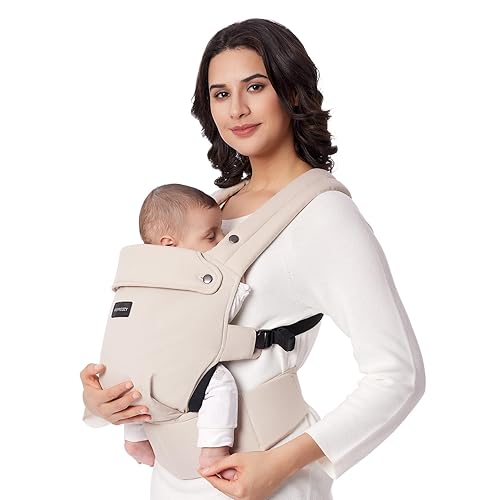
As an Amazon Associate we earn from qualifying purchases at no extra cost to you. Ratings are shown as listed on Amazon.
Quick Verdict
Choose a linen baby carrier if you live in a warm or humid area, prefer a lightweight natural-fiber feel, or want a carrier that looks at home with minimalist, coastal, or Scandinavian interiors. Linen is especially appealing for summer walks and households that appreciate fabric with a slightly textured, relaxed finish.
Choose a cotton baby carrier if you want the widest selection, a softer feel from the start, straightforward washing, or a lower entry price. Cotton is usually the more practical all-season choice for families who carry frequently, share the carrier between adults, or want a familiar fabric that is easy to replace.
In either case, prioritize fit, baby positioning, weight limits, and adjustability over fabric alone. A breathable linen carrier that does not fit the wearer well will be less comfortable than a well-designed cotton one.
Side by Side
| Factor | Linen Baby Carrier | Cotton Baby Carrier |
|---|---|---|
| Comfort | Cool, breathable, and supportive; may feel crisp before breaking in | Soft, familiar, and comfortable immediately; can feel warmer in humid weather |
| Durability | Strong natural fiber that can last for years with gentle care | Dependable for daily use; wear depends on weave, seams, and padding |
| Price range | About $60–$250 for most wraps and soft-structured carriers | About $40–$220, with many budget options below $100 |
| Maintenance | May wrinkle; often needs cold washing, air-drying, and careful heat control | Usually simpler to wash and commonly more tolerant of regular machine care |
| Space needed | Roughly 1–2 square feet folded, depending on padding and hardware | Roughly 1–2 square feet folded; structured versions may be bulkier |
| Look | Textured, natural, and relaxed; wrinkles are part of the character | Smooth, soft, and versatile, with many colors and prints available |
| Resale | Can appeal to buyers seeking natural fibers if kept clean and structurally sound | Broad buyer pool because cotton is familiar and widely used |
| Best for | Warm climates, design-conscious homes, and breathable summer carrying | Frequent everyday use, first-time buyers, and families seeking easy care |
| Breaking-in period | May soften and become more pliable with use | Often comfortable immediately, especially when lightly brushed or blended |
Where Linen Wins
Linen’s biggest advantage is airflow. The fiber generally feels cooler against the body than a dense, warm fabric, making it attractive for summer errands, outdoor festivals, and homes without strong air conditioning. A linen carrier will not eliminate heat—your baby and the wearer are still in close contact—but its breathable texture can make warm-weather carrying more pleasant.
Linen also offers a distinctive tactile experience. It has a dry hand and subtle texture rather than the smooth, familiar feel of basic cotton jersey. Some parents like that texture because it feels supportive without being overly plush. Over time, linen can soften while retaining its strength, so a well-cared-for carrier may become more comfortable with repeated use.
For the home, linen has a quiet visual advantage. Neutral linen shades coordinate naturally with wood, rattan, woven baskets, and uncluttered rooms. If the carrier will hang on a hook by the entryway or rest on an open shelf, it can look more like a considered textile than a piece of baby equipment. A piece of linen yardage, such as the 39-by-55-inch Pllieay Natural Pure Linen Fabric priced at $19.99, also illustrates the accessible, natural-material aesthetic many shoppers are drawn to—although fabric yardage is not a substitute for a purpose-built carrier.
The tradeoff is that linen can wrinkle and may feel somewhat firm at first. Check the care label carefully, particularly if the carrier includes padding, elastic, buckles, or mixed fibers. Avoid assuming that every linen carrier can be washed and dried like a kitchen towel.
Where Cotton Baby Carrier Wins
Cotton is the easier default for many households. It is widely available in wraps, ring slings, soft-structured carriers, and newborn-to-toddler designs. That variety makes it easier to find a carrier with the right fit, color, price, and weight range without waiting for a specialty release.
Many cotton carriers feel soft from the beginning, which matters when a baby is sensitive to texture or when the wearer wants minimal break-in time. Cotton can also be a good choice for layering across seasons: use lighter clothing and a less padded carrier in summer, then adjust the baby’s clothing rather than relying on a thick carrier for warmth.
Price is another practical advantage. A basic cotton infant carrier listed for newborn-to-toddler use and a 7-to-40-pound range may cost around $42.49, while a more feature-focused option such as the Momcozy PureHug Baby Carrier, listed for 7 to 45 pounds at $64.99, remains below many premium linen models. These prices are useful reference points, not a guarantee of fit or quality. Always verify the current specifications and follow the manufacturer’s age and positioning guidance.
Cotton is also familiar to resale shoppers. Because so many families recognize the fiber and understand how to wash it, a clean, gently used cotton carrier may be easier to pass along. However, resale value depends more on condition, brand, color, original packaging, and hardware safety than on cotton alone.
Cost Over 5 Years
For a realistic five-year comparison, assume one carrier is purchased for a child and occasionally used with a second child, with no paid repairs. A budget cotton carrier at $45–$70 costs about $9–$14 per year over five years. A midrange cotton carrier at $80–$140 works out to roughly $16–$28 per year. A linen carrier at $100–$220 costs about $20–$44 per year.
Those figures cover purchase price only. Add approximately $5–$15 per year for detergent, water, and electricity if the carrier is washed every one to two weeks, although the actual amount varies by local utility rates and whether it is air-dried. Air-drying can reduce energy use, but it requires a drying rack or approximately 2–3 square feet of open hanging space.
The lowest five-year cost is not automatically the least expensive carrier. A $50 model that is uncomfortable and replaced after one year costs more than a $120 carrier used for five years. Look for adjustable shoulder straps, a supportive waistband, reinforced stitching, clear weight limits, and a design that more than one caregiver can wear.
Which One for Your Home
Small apartment
Choose the carrier that folds compactly and has limited rigid hardware. Both fabrics can fit in a drawer or basket, but a padded cotton soft-structured carrier may take more room than a simple linen wrap. Measure the storage spot: a 12-by-12-inch basket with a 4- to 6-inch usable height can hold many folded carriers, while bulky waistbands may need a deeper bin. Linen is appealing if the carrier must remain visible, since its natural texture blends with home furnishings.
Family with kids and pets
Cotton is usually the practical choice for a busy household. It is easier to find machine-washable designs and replacement options, and a midrange carrier can cost less than many linen alternatives. Choose a darker or patterned color if pet hair and snack marks are common, but confirm that the fabric, straps, and buckles can be cleaned according to the care instructions.
Rental
Either fabric works well because neither requires permanent installation. A linen carrier suits a rental with neutral finishes and limited storage because it can hang from a sturdy removable hook or fold into a closet basket. Cotton may be preferable if you expect frequent washing or plan to move soon and want a widely available carrier that is easy to replace or resell.
Long-term home
Linen is a strong choice when you expect to use the carrier for multiple children or want a durable textile that can soften over time. Cotton is better when several caregivers need different adjustment settings or when your priorities may change as your family grows. In a long-term home, the most sustainable option is the carrier that stays comfortable, gets used regularly, and remains in good condition rather than being replaced after a season.
FAQ
Is linen cooler than cotton for a baby carrier?
Often, yes. Linen generally allows a cooler, airier feel, particularly in warm or humid conditions. Actual comfort also depends on the weave, padding, carrier structure, baby’s clothing, and the temperature around both bodies.
Is cotton or linen easier to wash?
Cotton is usually easier for routine care because many cotton carriers are designed for regular machine washing. Linen may need cold water, a delicate cycle, air-drying, and low heat to reduce shrinkage and preserve its shape. Always follow the specific care label.
Can I use a linen carrier for a newborn?
Only if that particular carrier is approved for newborn use and provides the required support and positioning. Check the minimum weight, age guidance, seat adjustment, and instructions. Fabric type alone does not make a carrier newborn-safe.
Which has better resale value, linen or cotton?
Neither automatically wins. Linen may attract buyers seeking natural fibers, while cotton has a broader familiar market. Cleanliness, condition, structural safety, brand reputation, color, and proof of original specifications usually matter more than the fiber.


Write Your Review
No reviews yet. Be the first to share your experience!