
Key takeaways
- Choosing between a hip seat and a toddler carrier is less about finding the single “best” product and more about deciding how you usually move through your home and neighborhood. Do you need to lift a 25-pound child for five…
Choosing between a hip seat and a toddler carrier is less about finding the single “best” product and more about deciding how you usually move through your home and neighborhood. Do you need to lift a 25-pound child for five minutes while cooking, walking the dog, or carrying laundry? Or do you need both hands free for a longer outing, nap, travel day, or uneven walk?
A hip seat gives a toddler a broad shelf to sit on, reducing the need to support all of the child’s weight with one arm. A toddler carrier holds the child against your torso with fabric and straps, distributing weight more evenly. That difference affects comfort, storage, cleaning, cost, and how useful each option remains as your child grows. The right choice for your home in 2026 depends on whether convenience or hands-free support matters more.
Our top picks
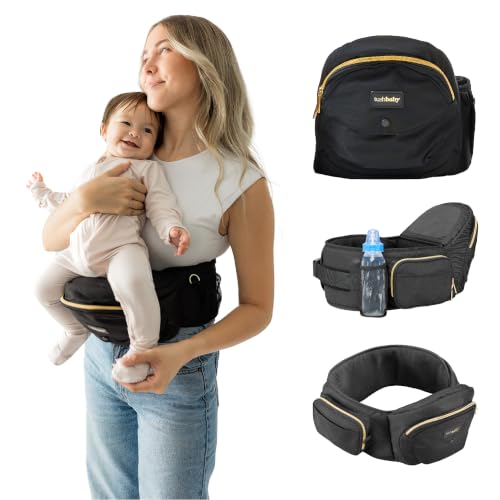


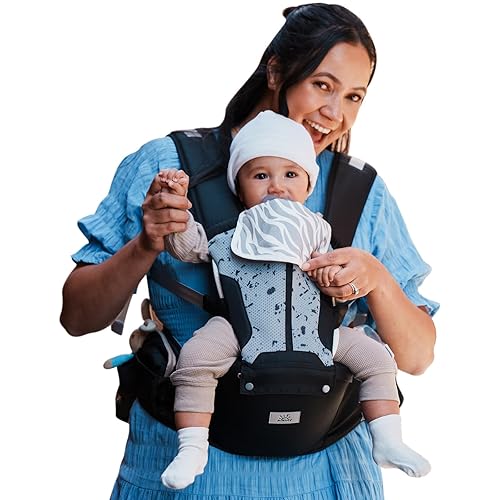 MOMTORY Safety-Certified 6-in-1 Baby Carrier Newborn to
As an Amazon Associate we earn from qualifying purchases at no extra cost to you. Ratings are shown as listed on Amazon.
Quick Verdict
Choose a hip seat if your child frequently asks to be picked up and put down, you need quick access, or you mainly carry them for short periods around the house, yard, store, or neighborhood. It is especially practical for toddlers who want to look outward and move independently.
Choose a toddler carrier if you need both hands free, expect to carry for 20 minutes or longer, or want better support during travel, hiking, chores, and crowded outings. A properly adjusted carrier generally provides more even weight distribution than a hip seat.
If your budget allows only one, a carrier is usually the more versatile all-purpose purchase. If your child resists being strapped in or wants frequent up-and-down breaks, a hip seat may be used more often.
Side by Side
| Factor | Hip Seat | Toddler Carrier |
|---|---|---|
| Comfort for parent | Good for short carries; weight rests mainly at the waist and hips | Better for longer carries when shoulder and waist straps are adjusted correctly |
| Comfort for child | Open, upright seat with a clear view; less enclosing | More secure and supported, but can feel restrictive to an independent toddler |
| Durability | Usually sturdy, with fewer moving parts than a full carrier | Durable when seams, buckles, and straps are well made; more components to inspect |
| Price range | About $63.70-$84.99 for the referenced hip-seat examples | About $23.98-$41.95 for the referenced sling and multi-position carrier examples |
| Maintenance | Often simple spot cleaning or machine washing, depending on the label | More fabric and padding can mean longer washing and drying time |
| Space needed | Usually compact; plan for roughly 12-18 inches of drawer or shelf width | Typically needs a similar 12-20-inch storage area when folded, depending on padding |
| Look | Structured and practical, with a visible waist pack or belt | More like a backpack or wrap and often blends better with everyday clothing |
| Resale | Can retain value if the seat, belt, and fasteners remain clean and functional | Popular models may resell well, but stains, stretched fabric, and missing inserts reduce value |
| Best for | Short lifts, errands, cooking, and toddlers who want frequent breaks | Hands-free carrying, travel, walks, naps, and longer periods of support |
Where Hip Seat Wins
The hip seat’s main advantage is speed. You can usually put it on, tighten the waist belt, and lift your child onto the platform without threading arms through multiple straps. That makes it useful during the constant “up, down, up again” phase of toddlerhood. A child can sit facing you or outward, depending on the design and the child’s age and developmental readiness.
It is also a strong choice for household tasks. If you need one free hand to unload a dishwasher, move clothes from the washer, answer the door, or carry a small bag, the seat can take some of the load without fully enclosing the child. Many hip seats include storage compartments for keys, a phone, wipes, or a small snack, reducing the need for a separate bag.
For a child who dislikes shoulder straps, a hip seat may be more acceptable. The open design lets toddlers see the room and interact with a parent. It can also be easier to lower a sleeping or restless child than a snug carrier, although every design handles transfers differently.
The trade-off is asymmetry. A hip seat typically shifts more weight to one side of your body, especially if you carry with one arm for balance. Your lower back, hip, or shoulder may become tired sooner during extended use. It is best viewed as a short-duration tool rather than a solution for all-day carrying. Follow the manufacturer’s age, weight, and positioning instructions, and support a young or sleepy child as required.
Where Toddler Carrier Wins
A toddler carrier wins when you need stability and both hands free. The child’s weight is held close to your center of gravity, while shoulder straps and a waist belt spread the load across more of your body. That can make a meaningful difference on walks, airport transfers, museum visits, and household projects that last longer than a few minutes.
Carriers are also more secure for movement. When properly fitted, they keep a child close while you climb stairs, bend carefully, navigate a crowded shop, or walk on an uneven path. Some models offer several carry positions, while others are designed for a particular front, back, or hip-carry configuration. A multi-position option such as the MOMTORY Safety-Certified 6-in-1 Baby Carrier, listed at $41.95, may appeal to families wanting one carrier to cover several stages.
A sling can be a lower-cost entry point. The Shiaon Baby Sling Carrier, listed at $23.98, is an example of the budget end of the category, although a sling’s fit and learning curve deserve particular attention. The lowest price is not automatically the best value if the carrier is difficult to adjust or uncomfortable for the adults who will use it.
Carriers do require more setup. Straps must be adjusted for the wearer and child, buckles need checking, and thick padding may feel warm indoors. A toddler who wants to climb down immediately may also object to the enclosed design. Before buying, confirm the listed weight range and whether the carrier supports your preferred carry position.
Cost Over 5 Years
Up-front prices in this comparison range from $23.98 to $84.99. The Shiaon sling is the least expensive reference product at $23.98, while the MOMTORY carrier is $41.95. The two Tushbaby Original Hip Seat listings are $63.70 in Black & Gold and $84.99 in Grey. Color can create a surprisingly large price difference, so compare the actual listing rather than assuming all versions cost the same.
Spread over five years, those prices equal approximately $4.80, $8.39, $12.74, and $17.00 per year, respectively, if the item is used for the entire period. In practice, most children will outgrow the need for a toddler-carrying product before five years, so a two-year active-use calculation is more realistic: about $11.99 for the sling, $20.98 for the MOMTORY carrier, $31.85 for the lower-priced hip seat, and $42.50 for the higher-priced hip seat.
Longevity depends less on the calendar than on wear. Clean spills promptly, let damp fabric dry fully, avoid exceeding the weight limit, and inspect buckles and stitching. A carrier that works for more than one child can have a lower household cost than a cheaper product that is uncomfortable and rarely used.
Which One for Your Home
Small apartment
Choose based on traffic flow and storage. A hip seat is convenient if your toddler regularly follows you from room to room and needs brief lifts. It can hang from a hook or fit in a drawer, with a typical storage footprint of about 12-18 inches. Choose a carrier instead if your apartment has stairs, limited elevator access, or frequent walks where both hands need to remain free.
Family with kids and pets
A toddler carrier is usually the more practical choice. Managing a stroller, leash, diaper bag, older child, or grocery bag is easier when your toddler is held close. A hip seat still works well for quick lifts, but the one-sided load can be tiring when you are already balancing several responsibilities. Look for washable fabric and enough storage for small essentials.
Rental home
Neither option requires installation or changes to the property, making both rental-friendly. The hip seat may be preferable for quick indoor use because it can be stored without taking much room. A carrier is the better pick if your rental is near busy streets, public transportation, or shared outdoor spaces where secure hands-free carrying matters more than rapid access.
Long-term home
Think about how your household will use the product across children, travel, and changing routines. A durable carrier may offer more years of practical use if it fits multiple adults and has an adaptable weight range. A hip seat can be a worthwhile second purchase for the toddler stage, particularly if your child strongly prefers an open view. The Tushbaby Original Hip Seat is listed in two versions at $63.70 and $84.99, giving buyers a mid-to-upper price option for this category.
FAQ
Is a hip seat better than a toddler carrier for your back?
Not necessarily. A hip seat can feel comfortable for short carries because it supports the child on a shelf, but it may load one side of your body. A carrier generally distributes weight more evenly when adjusted correctly, making it the stronger choice for longer carrying. Stop using either product if you feel pain, numbness, or unusual pressure.
Can a toddler sleep in a hip seat?
A hip seat is not usually the best choice for unattended or extended sleep because it is open and requires active support. Follow the product instructions, keep the child’s airway clear, and move a sleeping child to a safe sleep surface rather than relying on a carrying position not intended for sleep.
How long can a toddler stay in a carrier?
There is no single time limit for every child or carrier. Check the manufacturer’s instructions, monitor breathing and posture, and take breaks during long outings. The child should be positioned securely, with the face visible and the body properly supported. Comfort, heat, age, and the child’s ability to change position all matter.
Should you buy both?
Buy both if your routine includes frequent short lifts and occasional long, hands-free outings. Otherwise, start with the product matching your most common need: a hip seat for quick up-and-down carrying, or a toddler carrier for secure, longer-duration support.


Write Your Review
No reviews yet. Be the first to share your experience!