
Key takeaways
- Mobility over uneven terrain: Cobblestones, sand, and curbs present zero obstacles when your baby is strapped securely to your chest or back.
- Streamlined airport navigation: Boarding trains and clearing security checkpoints proceeds much faster without folding and stowing heavy strollers.
- On-the-go soothing: The rhythmic motion of walking combined with close parental contact encourages sleep amidst overwhelming travel stimulation.
What's inside
Navigating airports, cobblestone streets, and crowded terminals becomes significantly easier when you master practical babywearing travel tips. Keeping your hands free while providing your infant with a familiar, ergonomic sanctuary simplifies transit logistics and keeps disruptions to nap schedules minimal during your journey.
Why Babywearing Is Essential for Family Travel
Strollers often struggle on steep staircases, crowded metro stations, and narrow historic walkways. Wearing your baby distributes their weight across your hips and shoulders, granting you hands-free mobility to handle luggage, passports, and tickets while soothing your infant in unfamiliar surroundings.
- Mobility over uneven terrain: Cobblestones, sand, and curbs present zero obstacles when your baby is strapped securely to your chest or back.
- Streamlined airport navigation: Boarding trains and clearing security checkpoints proceeds much faster without folding and stowing heavy strollers.
- On-the-go soothing: The rhythmic motion of walking combined with close parental contact encourages sleep amidst overwhelming travel stimulation.
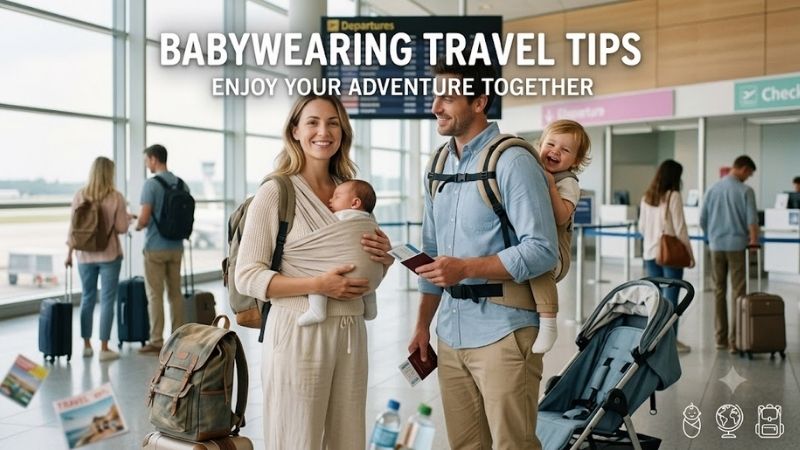
Airport Security and Flights: Step-by-Step Guide
Navigating airport checkpoints and flight cabins requires a clear grasp of security protocol and in-flight safety rules. Preparing your carrier and posture in advance prevents unnecessary security delays and keeps your child calm through long boarding queues and unexpected tarmac delays.
Passing Airport Security Checkpoints
Under Transportation Security Administration (TSA) guidelines and standard international aviation security frameworks, parents are generally permitted to wear their infants through standard walk-through metal detectors. However, you should prepare for additional screening:
- Inform the officer early: State clearly that you are wearing your child before entering the scanner.
- Secondary screening: Officers frequently conduct a quick visual inspection and a swab of your hands for explosive trace residue.
- Advanced imaging technology: If directed through full-body scanners (AIT), agents will usually require you to unbuckle and hold your baby in your arms while the carrier passes through the X-ray belt. Choose a buckle carrier with quick-release clips to avoid holding up the line.
In-Cabin Flight Etiquette and Regulations
Aviation authorities (including the FAA and EASA) prohibit strapping an infant into a baby carrier during aircraft taxi, takeoff, and landing. During these critical phases, you must remove baby from the carrier and secure them on your lap. Once the seatbelt sign turns off at cruising altitude, babywearing becomes invaluable:
- Aisle pacing: Wearing baby in an upright chest carry soothes fussiness and helps relieve ear pressure.
- Hands-free meals: Keep baby asleep against your chest while managing meal trays and hydration.
- Turbulence awareness: When seated during flight with baby worn, keep your seatbelt fastened around your waist underneath the carrier waistband, never around the baby.
4 Top Travel-Friendly Baby Carriers Reviewed
Selecting the right travel carrier means balancing lumbar support, packability, and quick temperature regulation. The four models below stand out for dedicated travel performance, ranging from self-packing minimalist designs to ultra-breathable, all-day structured systems.
1. Tula Lite Travel Baby Carrier
- Best For: Ultralight packing and minimalist day trips.
- Key Features: Made of durable, quick-drying ripstop fabric; folds into an integrated hip pouch that remains wearable as a fanny pack.
- Pros: Compact footprint in diaper bags; negligible added weight; front-inward and back carry options for infants 12–30 lbs.
- Cons: Minimal padding on shoulder straps; not suitable for newborns under 12 lbs without an insert.
- Use Case: Day trips where a stroller handles the main walking, but baby requires sudden wear during stair climbs or crowded sights.
- Who It’s For: Travelers prioritizing carry-on space who need a secondary, emergency carrier.
2. Ergobaby Omni Breeze
- Best For: All-day sightseeing and warm-weather expeditions.
- Key Features: Custom SoftFlex diamond mesh covering almost the entire body; rated for babies 7–45 lbs without extra inserts.
- Pros: Unmatched lumbar support; ergonomic hip positioning in all 4 carry modes; integrated sun privacy hood with UPF 50+.
- Cons: Bulky to stow in a backpack; higher price point.
- Use Case: Full-day urban walking tours or nature walks in warm climates where ventilation and spinal support are paramount.
- Who It’s For: Parents carrying babies or toddlers for hours daily who require top-tier weight distribution.
3. BabyBjörn Baby Carrier Mini
- Best For: Newborn travel and short city journeys.
- Key Features: Ultra-soft, flexible jersey/mesh construction; separate front section allows unbuckling a sleeping infant without waking them.
- Pros: Extremely easy to slip on without assistance; minimal bulk inside overhead bins; tailored specifically for 0–12 months.
- Cons: Weight cap is 24 lbs; lacks a supportive waist belt, putting all load onto upper shoulders.
- Use Case: Quick airport terminal changes, taxi rides, and short transit runs with infants up to 6 months old.
- Who It’s For: Parents traveling during the fourth trimester who prioritize fast on-and-off transitions.
4. Beco Gemini Baby Carrier
- Best For: Budget-conscious versatility and petite-to-tall fit.
- Key Features: Crossable shoulder straps for custom back support; multi-position design (front in/out, hip, back); fold-down headrest.
- Pros: Crossable straps distribute weight evenly across smaller frames; simple buckle setup; machine washable.
- Cons: Thicker cotton canvas holds body heat in tropical destinations; waist belt lacks storage pockets.
- Use Case: Multi-destination holidays requiring quick switches between front-facing curiosity and snug chest naps.
- Who It’s For: Budget-minded parents looking for a sturdy, workhorse carrier capable of adapting to any travel scenario.
How to Choose the Ideal Carrier for Your Trip
Selecting the best carrier requires balancing five primary dimensions based on your specific destination, your baby’s developmental stage, and physical luggage constraints. Evaluating these trade-offs prevents purchasing an uncomfortable carrier that remains stuck in your hotel room.
+------------------+-----------------------------+------------------------------------+
| Criteria         | What to Look For            | Practical Trade-off                |
+------------------+-----------------------------+------------------------------------+
| Fabric / Heat    | 3D mesh, moisture wicking   | Cool airflow vs. less plush jersey |
| Weight / Pack    | Under 1.5 lbs, packable pocket| High portability vs. thin padding|
| Ergonomics       | Wide padded waistbelt, M-shape| All-day comfort vs. luggage volume |
| Ease of Use      | 2-3 clip buckle system      | Fast unbuckling vs. custom fabric  |
| Versatility      | Inward, outward, back-carry | Longevity vs. extra structural bulk|
+------------------+-----------------------------+------------------------------------+
- What: Breathable 3D mesh fabrics allow continuous air circulation between caregiver and infant.
- Why: Body heat compounds quickly when babywearing in humid destinations, causing skin irritation and overheating.
- Who: Crucial for anyone touring Southeast Asia, Southern Europe, or tropical resort locations.
- Trade-off: Mesh fabrics are stiffer against bare newborn skin compared to plush organic cotton or modal wraps.
- What: Integrated packability (fold-in pouch designs).
- Why: You cannot wear a carrier 100% of the time, and standard carriers occupy half a carry-on daypack.
- Who: Essential for minimalist, one-bag travelers and backpackers.
- Trade-off: Minimalist travel carriers eliminate thick lumbar support pads and plush shoulder cushioning.
- What: Fast-adjusting buckles with crossable strap configurations.
- Why: Allows partners of differing heights and builds to share babywearing duties without prolonged rethreading.
- Who: Couples alternating wearing duties on long travel days.
- Trade-off: Crossable straps take slightly longer to buckle solo compared to fixed backpack-style straps.
Practical Babywearing Travel Tips on the Move
Maintaining your child’s physiological comfort across changing weather, different transport modes, and long walking tours requires deliberate routine adjustments. Applying proactive habits ensures your travel days remain seamless, safe, and free from exhaustion for both you and your infant.
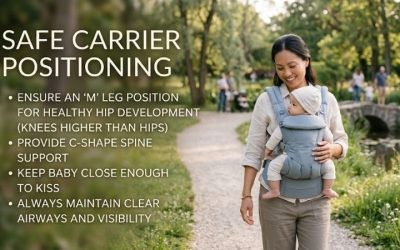
- Apply the T.I.C.K.S. Rule Rigorously: Ensure baby is Tight against your body, In view at all times, Close enough to kiss, Keep chin off the chest, and supported with a Supported back in an ergonomic “M” squat position.
- Dress in Layers: Remember that the carrier counts as at least one layer of clothing. In warm climates, dress your baby in a single breathable cotton or bamboo onesie and rely on a wide-brim sun hat.
- Protect Exposed Extremities: Legs, feet, and necks stick out of carriers and burn rapidly. Apply baby-safe mineral sunscreen to exposed calves and use clip-on UV muslin covers.
- Hydrate Constantly: Carrying 15–25 pounds of infant weight across city miles dramatically increases caloric and water expenditure. Drink water at every transit stop.
- Pack a Wet Bag and Backup Shirt: Spit-ups and diaper blowouts happen directly onto your chest while wearing. Keep a spare adult shirt and wet bag accessible in your carry-on daypack.
Frequently Asked Questions
Can I wear my baby through international customs and immigration?
Yes, customs and immigration checkpoints allow babywearing. You must keep your baby’s face fully visible to the border control officer for facial verification against their passport photo. Remove any hoods or bulky sunshades before approaching the inspection counter.
What is the best baby carrier for hot and humid destinations?
The Ergobaby Omni Breeze and Beco Toddler Cool Mesh excel in high heat. Both utilize open-weave 3D mesh panels that maximize airflow between parent and baby, preventing trapped heat rashes during humid tropical excursions.
How do I handle baby naps while touring museums or cities?
Plan museum visits or transit legs around scheduled nap windows. Strap baby in 15 minutes before their target sleep time and maintain a steady walking pace. Pull up the carrier’s breathable sleep hood to block overhead gallery spotlights and ambient museum noise.
Can I babywear on public transportation like buses and subways?
Yes, babywearing is safer and substantially easier than navigating turnstiles and crowded subway cars with an unfolded stroller. When standing, hold a handrail firmly to brace against sudden vehicle braking, and sit down in designated priority seating whenever available.
Conclusion
Babywearing transforms travel from a stressful logistical hurdle into an intimate, flexible journey, letting you explore bustling terminals and historic trails while keeping your baby calm, secure, and comfortably rested right against your chest.

Write Your Review
No reviews yet. Be the first to share your experience!