
Key takeaways
- T – Tight: The carrier must be worn tight enough to hug your baby close against your body. Any slack allows your baby to slump, which can restrict their breathing.
- I – In view at all times: You should always be able to look down and see your baby’s face without pushing fabric aside.
- C – Close enough to kiss: Your baby’s head should be positioned as close to your chin as comfortable. Tipping your head forward should allow you to kiss the top of their head easily.
- K – Keep chin off chest: Ensure there is always a gap of at least two fingers between your baby’s chin and their chest to protect their airway.
- S – Supported back: In an upright carry, the baby’s back should be supported in its natural curved “C-shape” (for newborns) or rounded back posture without sagging.
What's inside
- Quick Direct Answers to Essential Babywearing FAQs
- Essential Babywearing Safety Guidelines & Hip Ergonomics
- Comparing Types of Baby Carriers
- Top Recommended Baby Carriers (2026 Roundup)
- Babywearing Buying Guide: How to Choose the Right Carrier
- Troubleshooting Common Babywearing Challenges
- Additional Frequently Asked Questions
- Conclusion
Navigating the world of babywearing can feel overwhelming with so many carrier styles, safety rules, and positioning advice available. Addressing core babywearing FAQs helps parents confidently carry their infants with ergonomic safety and maximum comfort. This guide answers your biggest questions to make babywearing simple.
- Quick Direct Answers to Essential Babywearing FAQs
- Essential Babywearing Safety Guidelines & Hip Ergonomics
- Comparing Types of Baby Carriers
- Top Recommended Baby Carriers (2026 Roundup)
- Babywearing Buying Guide: How to Choose the Right Carrier
- Troubleshooting Common Babywearing Challenges
- Additional Frequently Asked Questions
- Conclusion
Quick Direct Answers to Essential Babywearing FAQs
Understanding essential babywearing FAQs allows parents to make safe decisions from day one. Below are immediate answers to core questions regarding age requirements, weight limits, and safe carry duration. Refer to these foundational facts before exploring detailed carrier reviews and positioning techniques.
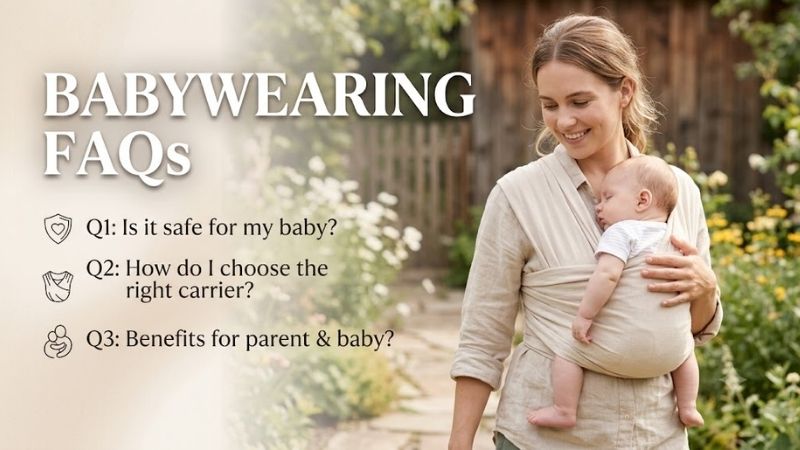
At what age can you start babywearing?
You can start babywearing from day one with a full-term, healthy newborn weighing at least 7 lbs (3.2 kg). Stretchy wraps and specialized newborn soft-structured carriers provide the necessary head and neck support without needing infant inserts. For premature babies or infants under 7 lbs, consult your pediatrician before using any carrier.
Is babywearing safe for newborns?
Yes, babywearing is safe for newborns when caregivers follow strict physical positioning rules. Your baby’s chin must remain off their chest, and their face must remain visible at all times to keep their airway clear. Always maintain an upright position to protect underdeveloped respiratory pathways.
How long can a baby stay in a carrier?
An infant can stay in a carrier for 60 to 90 minutes at a time. It is important to take regular breaks to stretch their limbs, check their diaper, and adjust their position. Overusing a carrier without breaks can cause muscle stiffness or overheating for both parent and child.
What is the “M-Position” in babywearing?
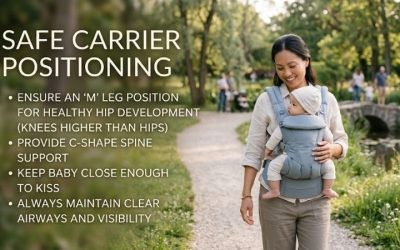
The M-position (or spread-squat position) is an ergonomic posture where your baby’s knees rest higher than their bottom, creating an “M” shape when viewed from the front. This position supports healthy hip joint development and prevents developmental hip dysplasia.
Essential Babywearing Safety Guidelines & Hip Ergonomics
Prioritizing infant airway protection and hip development is crucial when wearing your newborn or toddler. Mastering key positioning standards prevents physical strain and accidental asphyxiation. The structural guidelines below highlight essential ergonomic practices every caregiver must implement during daily use.
The TICKS Rule for Safe Babywearing
To ensure your infant’s safety during every wrap or buckled carry, always follow the international T.I.C.K.S. framework:
- T – Tight: The carrier must be worn tight enough to hug your baby close against your body. Any slack allows your baby to slump, which can restrict their breathing.
- I – In view at all times: You should always be able to look down and see your baby’s face without pushing fabric aside.
- C – Close enough to kiss: Your baby’s head should be positioned as close to your chin as comfortable. Tipping your head forward should allow you to kiss the top of their head easily.
- K – Keep chin off chest: Ensure there is always a gap of at least two fingers between your baby’s chin and their chest to protect their airway.
- S – Supported back: In an upright carry, the baby’s back should be supported in its natural curved “C-shape” (for newborns) or rounded back posture without sagging.
Preventing Hip Dysplasia: The Ergonomic M-Position
Incorrect carrier support can cause infant hips to drop into an unnatural straight-leg position, increasing the risk of developmental hip dysplasia.
- Correct Ergonomics: The carrier fabric must support your baby’s thighs from knee-pit to knee-pit. Knees should be bent and elevated slightly above the hips, creating an M-shape.
- Incorrect Ergonomics: Dangling legs with narrow crotch support strain the hip joints and pull the spine out of natural alignment.
Comparing Types of Baby Carriers
Selecting the right carrier category depends heavily on your baby’s age, lifestyle needs, and personal comfort preferences. From stretchy wraps for newborns to structured backpacks for active toddlers, each style offers unique functional benefits. The breakdown below explains how each carrier design performs.
| Carrier Type | Best Age Range | Ease of Use | Key Strength | Potential Limitation |
| Stretchy Wrap | Newborn – 6 Months | Moderate (Learning Curve) | Custom fit & extreme snuggleness | Can feel hot; fabric sags as baby grows |
| Ring Sling | Newborn – Toddler | Moderate (Quick with practice) | Fast on/off; great for quick trips | Asymmetrical weight distribution on one shoulder |
| Soft Structured Carrier (SSC) | 0 Months – 3+ Years | Very Easy (Buckles) | Excellent lumbar support; long carry time | Bulkier to pack in a diaper bag |
| Mei Dai (Hybrid) | Newborn – Toddler | Moderate | Highly adjustable for different body types | Long fabric ties can touch dirty ground outside |
Top Recommended Baby Carriers (2026 Roundup)
Investing in a top-rated baby carrier ensures optimal physical support, weight distribution, and longevity. Based on ergonomic testing and real parent feedback, we evaluated the leading carriers available today. Read our detailed reviews below to choose the ideal model for your budget and lifestyle.
Ergobaby Omni Breeze – Best Overall All-in-One Carrier
- Best For: Parents seeking a versatile, breathable, all-in-one carrier that grows from newborn to toddlerhood.
- Key Features: SoftFlex Mesh fabric, padded lumbar support, 4 carry positions (Front-Inward, Front-Outward, Hip, Back), slider adjustment system, built-in side pockets.
- Pros:
- Exceptional airflow and ventilation for warm climates.
- No infant insert required (7 to 45 lbs).
- Crossable shoulder straps offer customizable lumbar weight distribution.
- Cons:
- Bulkier than fabric wraps or slings.
- Higher price point compared to basic buckle carriers.
- Use Case: Long outdoor walks, day trips, and everyday active routines requiring maximum back support.
- Who It’s For: Caregivers who want one durable, highly supportive carrier to cover all stages from birth to age four.
Solly Baby Wrap – Best Lightweight Wrap for Newborns
- Best For: Newborn bonding, fourth-trimester skin-to-skin contact, and indoor contact naps.
- Key Features: 100% Certified TENCEL Modal fabric, custom-fit wrap style, lightweight single-layer construction, suited for babies from 7 to 25 lbs.
- Pros:
- Ultra-soft, silky texture that is gentle on sensitive newborn skin.
- Breathable design prevents heat buildup between parent and baby.
- Distributes weight evenly across the shoulders and upper back.
- Cons:
- Requires practice to tie correctly.
- Becomes uncomfortable once baby passes 15–18 lbs due to fabric stretch.
- Use Case: Soothing fussy newborns, soothing colic, and hands-free indoor chores during early infancy.
- Who It’s For: New mothers and fathers looking for a cozy, custom-molded wrap for early infancy.
WildBird Ring Sling – Best Quick-On Carrier for On-the-Go
- Best For: Quick errands, toddlers who frequently demand to be held and put down, and stylish everyday wear.
- Key Features: 100% Belgian Linen or linen-cotton blends, aircraft-grade aluminum rings, compact foldable size, weight capacity from 8 to 35 lbs.
- Pros:
- Extremely compact; slips easily into a purse or diaper bag.
- Fast to put on and take off once mastered.
- Natural linen fabric is strong, durable, and temperature-regulating.
- Cons:
- Puts weight entirely on one shoulder.
- Not ideal for long hikes or hours of continuous carrying.
- Use Case: Quick grocery runs, airport security lines, and hip-carries for inquisitive toddlers.
- Who It’s For: Parents wanting a fast, compact, and aesthetically pleasing carrier for quick trips.
BabyBjörn Carrier Mini – Best Compact Carrier for Early Months
- Best For: Short outings with young infants without dealing with long wrap fabrics.
- Key Features: 3D Mesh or soft jersey cotton, two-part front design, compact sizing, weight capacity from 7 to 24 lbs (0 to 12 months).
- Pros:
- Extremely quick buckle system; unfastens easily to transfer sleeping babies.
- Small footprint; takes up minimal space.
- Supports front-inward and front-outward positions.
- Cons:
- Lacks a thick waist belt; weight rests primarily on shoulders.
- Short lifespan (outgrown around 12 months).
- Use Case: Short walks around the neighborhood and fast transfers between car seats and strollers.
- Who It’s For: Parents who prioritize simplicity and fast buckling during the first year.
Baby Tula Free-to-Grow – Best Ergonomic Style & Extended Comfort
- Best For: Parents wanting an easy buckle carrier with vibrant patterns and long-term ergonomic comfort.
- Key Features: Adjustable panel height and width, 100% printed cotton, padded shoulder straps, wide lumbar support belt, weight capacity from 7 to 45 lbs.
- Pros:
- Wide range of stylish prints and colorways.
- Intuitive panel adjustments fit infants without bulky inserts.
- Excellent ergonomic support for long carry sessions.
- Cons:
- Does not support front-outward facing position (only inward and back carry).
- Standard cotton can feel warm in high humidity.
- Use Case: Daily walking, home chores, and long family travel days.
- Who It’s For: Parents who value simple adjustments, ergonomic back relief, and unique aesthetics.
Babywearing Buying Guide: How to Choose the Right Carrier
Choosing between carrier options requires analyzing key structural elements against your daily routines and child’s age. Evaluating fabric breathability, weight limitations, lumbar support, and ease of adjustment prevents costly purchasing mistakes. Use the structured criteria below to make a smart buying decision.
What to Look For (The Core Criteria)
When shopping for a carrier, evaluate four major features:
- Weight Range: Verify minimum and maximum weight ratings. Look for carriers that accommodate 7 lbs up to 30–45 lbs for maximum longevity.
- Adjustability: If multiple caregivers share one carrier, choose structured carriers with quick-pull buckle straps rather than wrap styles that require readjusting knot tension.
- Fabric Breathability: Choose 3D air mesh or pure linen if you live in warm climates to avoid overheating.
- Lumbar Support: Padded waist belts distribute baby’s weight from your shoulders down to your hips, protecting your lumbar spine.
Why Ergonomics and Adjustability Matter
A carrier without proper lumbar support forces your upper back and shoulders to compensate for your child’s weight, causing back pain and posture fatigue. Adjustable seat widths ensure your growing baby maintains proper hip placement without cutting off circulation at the back of their knees.
Who Should Choose Which Style?
- For Newborn Caregivers (0–3 months): Choose a stretchy wrap (like Solly Baby) or a specialized newborn buckle carrier (like BabyBjörn Mini) for closeness and ease.
- For Active & Outdoor Parents: Choose a structured 4-position mesh carrier (like Ergobaby Omni Breeze) for long walks and weather resistance.
- For On-the-Go Parents: Choose a ring sling (like WildBird) for quick ins and outs.
The Trade-offs: Comfort vs. Bulk
- Structured Buckle Carriers: Offer peak weight distribution and back relief, but are bulkier and harder to pack small.
- Wraps and Slings: Offer extreme portability and light weight, but provide less lumbar support for heavier infants and take more effort to adjust properly.
Troubleshooting Common Babywearing Challenges
Troubleshooting everyday babywearing challenges ensures a more comfortable experience for both caregiver and child. Issues like back pain, baby crying, or skin overheating stem from simple setup flaws that are easily resolved. Follow these expert tips to fix common fit mistakes quickly and effectively.
Problem 1: Lower Back Pain or Shoulder Strain
- The Cause: The waist belt is worn too low on the hips, or shoulder straps are loose, causing the baby to pull away from your center of gravity.
- The Solution: Fasten the waist belt higher up around your natural waist (above your hips). Tighten shoulder straps so your baby rests snugly against your chest.
Problem 2: Baby Crying When Placed in the Carrier
- The Cause: Baby feels restricted, uncomfortable, over-stimulated, or senses caregiver hesitation.
- The Solution: Walk or bounce gently immediately after placing baby inside. The rhythmic movement mimics the womb and calms fussy infants quickly. Ensure straps are not pinching legs.
Problem 3: Overheating and Sweat Accumulation
- The Cause: Heavy fabric layers combined with shared body heat.
- The Solution: Dress your baby in one less layer of clothing than you are wearing. Choose moisture-wicking or mesh carriers, and avoid covering the baby with heavy outer jackets.
Additional Frequently Asked Questions
Can I breastfeed or bottle-feed while babywearing?
Yes. Lower the carrier’s waist belt slightly to align your baby’s mouth with your breast or bottle. Always keep your baby’s head supported, monitor their airway closely during feeding, and raise them back up to the “close enough to kiss” position immediately after feeding.
Can a baby face forward in a carrier?
Baby facing forward (front-outward) is safe starting around 5 to 6 months, once your baby demonstrates strong head and neck control and their chin clears the carrier panel. Limit forward-facing sessions to 20–30 minutes at a time to prevent overstimulation and spinal strain. Never let a baby sleep while facing forward.
How do I clean my baby carrier?
Most fabric wraps and structured carriers are machine washable on a gentle cycle with cold water and mild detergent. Buckle up all clips and place structured carriers inside a pillowcase or wash bag before washing. Always air dry; machine drying can degrade foam support and buckle durability.
Conclusion
Mastering essential babywearing FAQs empowers you to nurture your infant safely while keeping your hands free for daily tasks. By adhering to TICKS safety guidelines and choosing an ergonomic carrier fitted to your body, babywearing becomes a rewarding habit. Invest in a carrier that suits your lifestyle to start enjoying its benefits.









Write Your Review
No reviews yet. Be the first to share your experience!