
Key takeaways
- Table of Contents 4 sections 8 min read 1 How to Choose Baby Carriers 1.1 Ergonomic Hip Support and Seat Width 1.2 Unobstructed Airway and Neck Support 1.3 Weight Distribution and Lumbar Structure 1.4 Intuitive Adjustments Without Complex Inserts 2…
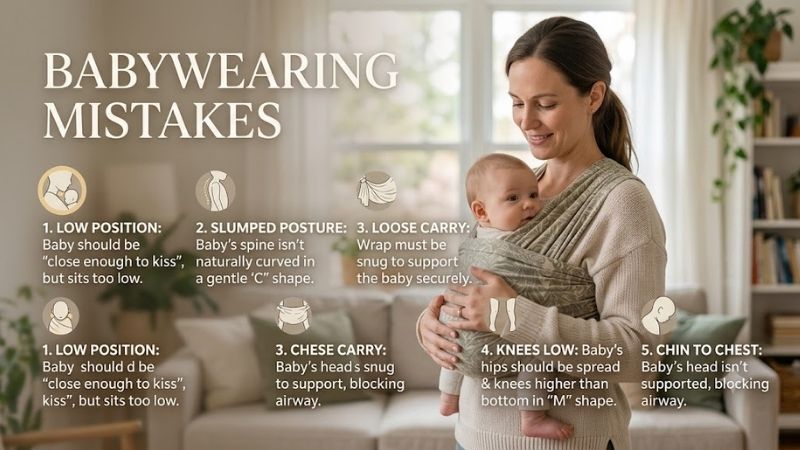
Babywearing Mistakes frequently compromise infant airway safety and cause severe lower back fatigue for new parents. Slumping chin to chest narrows vital breathing passages, while loose side straps pull the caregiver center of gravity uncomfortably forward. Proper positioning protects infant hips and provides all-day carrying comfort.
How to Choose Baby Carriers
Spotting early babywearing mistakes requires understanding proper carrier engineering before purchasing any model. A quality design keeps your infant upright, stabilizes developing hips, and distributes weight evenly across your shoulders. Selecting structured support tailored to your body type prevents persistent muscle fatigue during long daily walks.
Ergonomic Hip Support and Seat Width
Narrow seat bases let infant legs dangle straight down, creating unhealthy pressure on delicate hip sockets. Proper ergonomic support seats your child in an M-position where knees rest higher than the pelvis, encouraging natural spine curvature. Adjustable seat widths preserve this healthy posture as babies grow through their early developmental milestones.
Carriers featuring sliding base tabs or button adjustments let parents widen the fabric panel as the baby grows taller. Investing in adaptable base widths eliminates the hazard of dangling limbs while maintaining healthy hip alignment. For parents who want easy base adjustments, the Ergobaby Omni 360 and Infantino Flip Advanced offer reliable seat sizing.
Unobstructed Airway and Neck Support
Restricted airflow represents the most severe hazard during infant carrying, especially when newborns lack strong neck control. A safe carrier keeps the child high on your chest so you can kiss their forehead without bending forward. Rigid head panels should never push the chin downward or cover the nose, ensuring open breathing passages.
Fabric must cup the nape of the neck securely without covering the mouth, cheeks, or airway zone at any time. Caregivers must easily monitor facial coloring and quiet respiration during every single outing without moving heavy flaps. The BabyBjörn Baby Carrier Mini keeps fragile newborns upright with an open, visible neckline.
Weight Distribution and Lumbar Structure
Poorly padded shoulder straps and flimsy waist belts concentrate all load tension directly onto the upper cervical spine. Wide lumbar panels disperse infant mass across the caregiver pelvic girdle, neutralizing excessive strain during prolonged strolls. Thickly padded straps prevent localized shoulder pinching and stabilize posture over long afternoons.
Crossable shoulder straps offer customizable torso security for petite wearers who struggle with standard parallel harness configurations. Sturdy lumbar belts also reduce maternal spine flexion while walking across uneven outdoor trails. Both the Ergobaby Omni 360 and Tula Explore supply reinforced lumbar panels that save tired backs.
Intuitive Adjustments Without Complex Inserts
Complicated wrap arrangements and fiddly standalone infant inserts increase user error during hectic morning outings. Standalone fabric cushions shift out of alignment easily, potentially misplacing infant head positioning during movement. Integrated harness systems that adapt via internal buttons provide superior repeatability and minimize dangerous setup oversights.
External sliders and color-coded webbing loops allow sleep-deprived parents to secure their little one correctly in seconds. Streamlined buckle configurations ensure you achieve an audible, secure click every single time without third-party assistance. The Tula Explore and Infantino Flip Advanced eliminate bulky extra cushions with intuitive buckle adjustments.
Top Picks
Correcting habitual babywearing mistakes starts with choosing gear engineered to enforce safe posture automatically. The following four selections provide reliable seat support, intuitive adjustments, and proven durability for daily parenting routines. Review our comparison below to find the carrier that matches your routine.
| Product | Best For | Key Spec | Watch Out For |
|---|---|---|---|
| Ergobaby Omni 360 | Best Overall | 7 to 45 lbs weight capacity | Bulky profile under jackets |
| Infantino Flip Advanced | Best Value | 4-in-1 convertible seat | Thin waist belt padding |
| BabyBjörn Baby Carrier Mini | Best for Newborns | 7 to 24 lbs front carry only | Short practical lifespan |
| Tula Explore Carrier | Best Adjustability | 7 to 45 lbs no insert needed | Stiff canvas break-in period |
Ergobaby Omni 360
Parents who want a single carrier from newborn through toddlerhood will appreciate this versatile, all-in-one workhorse. The rugged cotton construction supports front-inward, front-outward, hip, and back carrying options up to forty-five pounds. Deeply padded shoulder straps cross in an X-shape to alleviate localized pressure on your neck.
The structured bucket seat guarantees healthy M-position ergonomics, actively preventing common babywearing mistakes on outdoor trips. Sturdy side buckles fasten securely with firm, audible clicks that confirm total stability before you release your grip. However, the generous lumbar pad and thick canvas create noticeable bulk beneath fitted winter coats.
Infantino Flip Advanced
Budget-conscious caregivers seeking ergonomic safety will find outstanding value in this versatile, highly adaptable carrier. It accommodates infants from eight to thirty-two pounds using a convertible seat that toggles between narrow and wide positions. The adjustable head support folds down smoothly once your growing infant gains full neck stability.
The lightweight design folds down compactly into a standard diaper bag for quick errands around town. Clear harness indicators help tired parents position their child at the correct height to avoid airway restrictions. However, the narrow waist strap lacks thick lumbar cushioning, which limits carrying comfort during lengthy multi-hour hikes.
BabyBjörn Baby Carrier Mini
First-time parents wanting an uncomplicated, cozy option for early infancy will love this specialized, two-piece front carrier. The ultra-soft jersey fabric hugs newborns weighing seven to twenty-four pounds, keeping delicate legs supported without bulky inserts. A detached front panel lets you unbuckle sleeping babies smoothly without disturbing their peaceful rest.
The compact frame keeps fragile newborns resting high against your sternum where their breathing remains clearly visible. Simple front buckles allow quick fastening without awkward twisting or reaching behind your back. However, the carrier lacks back-carry functionality and distributes all infant weight across your upper shoulders rather than your hips.
Tula Explore Carrier
Caregivers looking for effortless adjustability across diverse body types will value this stylish, variable-width canvas carrier. Three width settings adjust via sturdy snaps along the waistband, accommodating babies from seven to forty-five pounds without extra padding. A padded neck roll buttons securely to cushion fragile heads without obscuring vital airflow.
The streamlined construction eliminates confusing strap excess, preventing clumsy babywearing mistakes during daily transitions. Wide padded shoulder straps distribute heavy toddler mass across your torso, preventing muscle strain during extended community festivals. However, the heavy-gauge cotton canvas feels quite rigid initially and requires several wash cycles to break in fully.
Frequently Asked Questions
Understanding proper carrier mechanics helps active parents avoid common babywearing mistakes that compromise infant posture. Mastering correct positioning requires practicing basic height checks, monitoring temperature, and securing snug harness buckles. Here are clear answers to frequent questions concerning infant carrier safety and everyday alignment.
How High Should a Baby Sit in a Carrier?
Your baby should sit high enough on your torso that you can easily kiss their head without craning your neck forward. This elevated height keeps the infant chin off their chest, maintaining an open airway throughout your walk. Placing the waist belt above your natural hips guarantees proper vertical clearance for small babies.
If you must bend your head downward more than two inches to touch their scalp, your waistband is strapped too low. Reposition the main belt directly under your ribcage and tighten the webbing until the child feels completely snug. Always perform this height check in front of a mirror before heading out on long neighborhood walks.
How Can Parents Prevent Slumping in Fabric Carriers?
Infant slumping occurs when support straps remain excessively loose, allowing the baby spine to collapse inward awkwardly. Tightening lateral webbing pulls the child body flush against your chest, keeping their breathing passage clear of soft tissue obstruction. A supportive seat panel should firmly hold the lower back while supporting natural spinal curvature.
Check that the carrier base is wide enough to support both thighs horizontally without bunching up painfully between the knees. If your infant curls into a loose ball, unbuckle the side straps, reposition their pelvis, and retighten firmly. Regular adjustments ensure correct positioning even when babies relax and fall deeply asleep on the move.
Can Carrying Infants Outward Cause Discomfort?
Forward-facing positions should only occur once babies demonstrate complete head control and sufficient torso length, usually around six months. Facing outward shifts the combined center of gravity forward, placing added strain on the adult lumbar spine during extended strolls. Limiting forward-facing sessions to thirty minutes avoids infant overstimulation.
Never permit an outward-facing child to sleep in that position because their chin can slump forward and restrict vital airways. If your infant exhibits heavy eyelids, turn them inward immediately so their head rests safely against your sternum. This simple rotation prevents posture babywearing mistakes while keeping airway passages completely open and unobstructed.
How Do You Prevent Overheating While Babywearing?
Overheating occurs rapidly because your infant absorbs direct body heat while sharing close chest contact inside thick carrier fabrics. Dress your baby in only a single layer of breathable cotton clothing, counting the carrier fabric as an extra garment layer. Choose models with ventilated 3D mesh panels to maximize continuous airflow on warm afternoons.
Never drape blankets, muslin swaddles, or coats over the top opening of your carrier to block sunlight or bright ambient light. Fabric coverings trap hot exhaled air, increasing ambient internal temperature while obscuring your view of the baby nose and mouth. Instead, apply a broad-brimmed sun hat to protect delicate skin while preserving free airflow.
Final Thoughts
Steering clear of common babywearing mistakes ensures your infant remains safe, comfortable, and anatomically aligned on every adventure. Choosing a carrier with adjustable seat panels, sturdy lumbar support, and clear airway visibility protects your child and your back. Invest in a dependable carrier today to enjoy hands-free bonding with complete peace of mind.










Write Your Review
No reviews yet. Be the first to share your experience!