
Key takeaways
- A Dedicated Bassinet (Pram Mode): Provides an entirely flat, firm surface that keeps the infant’s airway completely uncompromised and promotes natural spinal alignment.
- A True Lie-Flat Seat: An integrated stroller seat that reclines flat (minimum 150° to 170° angle) with enclosed head and foot barriers to create a cocoon-like environment.
- An Infant Car Seat Adapter (Travel System): Allows your infant car seat to click directly into the stroller frame, moving a sleeping baby from vehicle to stroller without disruption.
What's inside
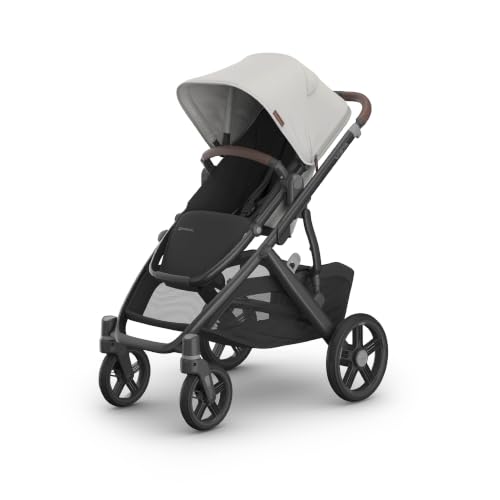
UPPAbaby Vista V3 Convertible Single-to-Double Stroller - Savannah
Included for 'How to Choose the Best Stroller For Newborn: Complete Guide' because the listing specifies Savannah, details this guide uses to compare options.
View on AmazonFinding the right stroller for newborn safety requires knowing that infants cannot hold their heads up and need a full recline or bassinet. This complete guide walks you through essential safety requirements, key differences between travel systems and prams, and top tested options so you can choose the perfect model with confidence.
What Makes a Stroller Newborn-Ready?
Selecting an infant stroller is fundamentally different from buying a toddler pushchair because newborns lack the neck strength and muscle control required to hold their airways open independently. If placed in an upright or semi-reclined bucket seat, a newborn’s heavy head can tilt forward onto their chest, causing postural asphyxiation.
To safely transport an infant from birth to approximately six months of age, your stroller setup must support one of three safe configurations:
- A Dedicated Bassinet (Pram Mode): Provides an entirely flat, firm surface that keeps the infant’s airway completely uncompromised and promotes natural spinal alignment.
- A True Lie-Flat Seat: An integrated stroller seat that reclines flat (minimum 150° to 170° angle) with enclosed head and foot barriers to create a cocoon-like environment.
- An Infant Car Seat Adapter (Travel System): Allows your infant car seat to click directly into the stroller frame, moving a sleeping baby from vehicle to stroller without disruption.
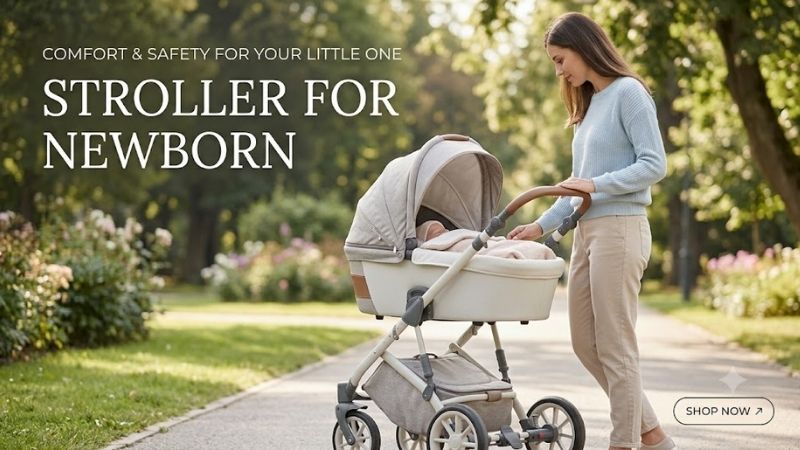
Bassinet vs. Travel System: Which Format Fits Your Daily Routine?
Before evaluating individual models, you need to decide between a dedicated bassinet pram and an infant travel system. Both formats keep newborns secure, but they serve different lifestyles, storage constraints, and daily travel habits.
| Feature / Criterion | Dedicated Bassinet / Pram | Travel System (Frame + Car Seat) | True Lie-Flat Integrated Seat |
|---|---|---|---|
| Ergonomic Safety | Maximum (Flat airway protection) | Moderate (Limit to 2 hours at a time) | High (Firm, fully reclined base) |
| Overnight Sleep Approved | Yes (Select models, e.g., UPPAbaby) | No (Never approved for unmonitored sleep) | No |
| Convenience on Quick Trips | Requires swapping or storing bassinet | Instant click-in from car to stroller | Ready right out of the box |
| Long-Term Storage Footprint | High (Bassinet must be stored after 6 mo) | Low (Uses existing infant car seat) | Lowest (Single seat grows with child) |
| Best For | Long neighbourhood walks and city strolls | Frequent drivers and daily errand runners | Minimalists wanting one single piece |
Best Stroller For Newborn Options Tested for Safety and Comfort
Finding reliable newborn gear means focusing strictly on certified lie-flat angles, verified suspension systems, and genuine build quality. The following four models represent distinct categories to match specific lifestyle needs without compromising your infant’s physical well-being.
Chicco Bravo Trio Travel System — Best Value Travel System for Newborns
- Best For: Suburban families seeking a proven, budget-friendly car-to-stroller transition without purchasing separate adapters.
- Key Features: Includes the top-rated KeyFit 30 infant car seat; removable toddler seat creates a lightweight frame carrier; one-hand quick-fold mechanism; parent console with dual cup holders.
- Pros:
- Effortless click-in connection with audible locking indicator.
- Self-standing compact fold keeps fabrics off dirty ground.
- Durable frame with generous under-seat basket capacity.
- Cons:
- Plastic wheels offer limited shock absorption on rough trails.
- The stroller seat itself does not lay 100% flat without the car seat.
- Use Case: Smooth suburban walking, suburban grocery trips, and daily car commuting where rapid vehicle-to-sidewalk transitions matter most.
- Who It’s For: New parents who want an all-in-one system that avoids complicated aftermarket adapters while delivering top-tier automotive crash safety.
UPPAbaby Vista V2 (with Bassinet) — Best Overall Premium Bassinet Stroller
- Best For: Urban parents and growing families who prioritize certified lie-flat infant ergonomics and future multi-child expansion.
- Key Features: Overnight-sleep certified bassinet included with perforated mattress and vented base; all-wheel suspension with independent shocks; expandable up to three children.
- Pros:
- Breathable bassinet canopy with pop-out UPF 50+ sunshade.
- Huge under-seat storage basket holding up to 30 lbs.
- Effortless single-button bassinet release with one hand.
- Cons:
- Substantial weight (27 lbs with standard seat) makes lifting into trunks demanding.
- Premium investment cost compared to standard umbrella designs.
- Use Case: Extended neighborhood strolls, city park outings, and outdoor naps where flat, open-airway ergonomics are critical.
- Who It’s For: Parents wanting an investment stroller that provides the gold standard in infant sleep ergonomics alongside long-term structural durability.
Babyzen YOYO2 (with Bassinet or 0+ Pack) — Best Lightweight Travel Stroller
- Best For: Frequent flyers, public transit riders, and urban apartment dwellers with minimal entryway storage.
- Key Features: Folds down to airline overhead bin dimensions (IATA approved); independent 4-wheel Hytrel elastomer suspension; interchangeable newborn textile packs.
- Pros:
- Weighs only 13.6 lbs, making it effortless to carry over the shoulder.
- Fits into compact vehicle trunks and tight subway turnstiles.
- Smooth one-hand steering through crowded indoor and outdoor spaces.
- Cons:
- Under-seat basket holds only 11 lbs.
- Small wheels struggle over gravel, grass, or deep snow.
- Use Case: Airport navigation, daily apartment stair climbs, and navigating tight grocery store aisles.
- Who It’s For: Urban city commuters who cannot manage a 25-pound full-size stroller frame up apartment walk-ups or into mass transit.
Nuna Mixx Next — Best All-Terrain Lie-Flat Stroller
- Best For: Parents wanting true all-terrain capability with an integrated seat that reclines entirely flat without needing a separate bassinet attachment.
- Key Features: True flat sleeper seat recline; Free-flex rear suspension with foam-filled rubber tires; compact fold-away axle that tucks under for smaller storage footprints.
- Pros:
- Seat converts into an enclosed newborn carriage without buying accessories.
- All-season seat features warm winter padding and breathable summer mesh.
- Superior push feel across grass, broken sidewalks, and cobblestones.
- Cons:
- Heavier than pure urban models (weighs approximately 28.3 lbs).
- Requires two hands to engage the folding levers smoothly.
- Use Case: Mixed suburban terrain, gravel parks, uneven brick sidewalks, and long all-weather walking routines.
- Who It’s For: Families who want the full-recline safety of a bassinet directly integrated into a rugged, high-mileage frame.
Newborn Stroller Buying Guide: The Four Pillars
Choosing the ideal stroller requires assessing your physical living environment, transportation habits, and infant development milestones. Use these four critical evaluation pillars to narrow down your options efficiently before investing.
1. Lie-Flat Airway Support
- What: A 180-degree horizontal resting base, either via an attachable bassinet or an engineered lie-flat recline seat.
- Why: Young infants have soft cartilage in their necks and cannot correct their posture if their chin drops to their chest, which can restrict airflow.
- Who: Vital for every baby from birth until they reliably sit unassisted (roughly 6 months).
- Trade-off: Dedicated bassinets provide superior airflow and posture but must be stored once outgrown.
2. Suspension and Wheel Composition
- What: Independent spring or elastomer shock absorbers paired with polyurethane or foam-filled rubber wheels.
- Why: Newborn brain and spinal tissues are sensitive to repetitive micro-shocks caused by cracked pavement, curb drops, and cobblestones.
- Who: Families who walk outdoors daily on mixed sidewalks, park trails, or uneven road surfaces.
- Trade-off: Premium suspension mechanisms and air/rubber tires add overall chassis weight and increase frame bulk.
3. Travel System Versatility
- What: Stroller frame compatibility with infant car seats using click-in locking mechanisms.
- Why: Eliminates the need to unbuckle and disturb a sleeping newborn when running brief errands outside the car.
- Who: Suburban parents and frequent drivers who depend on private vehicles for daily transportation.
- Trade-off: Convenient for quick errands, but pediatric health organizations recommend limiting car seat container time to under two consecutive hours.
4. Frame Weight and Fold Dynamics
- What: The physical weight of the chassis and how many steps are required to collapse the unit into a self-standing package.
- Why: Parents frequently balance a newborn on one arm while opening, lifting, or stowing the stroller chassis into a vehicle trunk.
- Who: City dwellers navigating walk-up stairs, solo caregivers, and owners of compact cars.
- Trade-off: Ultra-lightweight frames often drop tire diameter and basket capacity to achieve their compact footprint.
How to Safely Use a Stroller with a Newborn Baby
Equipping your stroller correctly is only half the battle; maintaining proper operational habits protects your baby from overheating, positional breathing issues, and falls. Follow these practical steps every time you head outdoors.
- Check Airway Alignment: Ensure your baby’s head remains neutral or slightly extended. The infant’s chin should never press downward against their chest.
- Avoid Heavy Blankets Over the Canopy: Never drape thick blankets or coats over the stroller canopy to block sunlight. This traps heat rapidly and creates a dangerous microclimate; use breathable, UV-rated mesh extenders instead.
- Adhere to the Two-Hour Rule: If using an infant car seat clicked into your stroller frame, limit continuous sessions to under two hours. Take your baby out regularly to stretch flat in a bassinet or on a caregiver’s chest.
- Always Secure the Harness in Lie-Flat Seats: If your stroller uses a reclining seat rather than high-walled bassinet sides, always clip the five-point harness securely around their hips and shoulders.
- Engage the Brake Before Loading: Always step on the foot brake before placing your baby in or removing them from the stroller, particularly on inclined driveways or public transit platforms.
Frequently Asked Questions
Can a newborn go directly into a standard stroller seat?
No. Standard stroller seats are molded into upright or semi-recline angles designed for older babies who have mastered independent head control (typically around 6 months). Placing a newborn in an upright toddler seat puts them at immediate risk of airway restriction.
Is an infant car seat safe for long walks in a stroller?
Infant car seats are engineered primarily for crash safety inside vehicles, positioning infants at an incline that compresses their torso slightly. While convenient for brief errands, extended walks exceeding 90 to 120 minutes are best handled with a completely flat bassinet attachment.
When can my baby transition out of the bassinet?
Most infants transition out of the bassinet between 5 and 7 months of age, or as soon as they can push up on their hands and knees or sit unassisted. At that developmental stage, their neck muscles are strong enough for a standard multi-position stroller seat.
Do I need an all-terrain stroller for my newborn?
You only need an all-terrain stroller if your daily walking routes involve dirt trails, uneven park lawns, beach boardwalks, or cracked urban roads. If your daily routine consists of indoor malls and paved sidewalks, a lighter urban stroller will save you significant trunk space and lifting fatigue.
Conclusion
Selecting a stroller for newborn use comes down to balancing certified lie-flat safety, daily portability, and your lifestyle. Whether you prefer an all-in-one travel system or an elegant bassinet pram, ensure it supports open airways and smooth strolling. Invest in verified comfort now to enjoy every outdoor adventure with peace of mind.










Write Your Review
No reviews yet. Be the first to share your experience!