
Key takeaways
- The Strategy: Schedule long flights or road trip departures during morning nap periods or immediately after bedtime routines.
- Why It Matters: Babies are significantly less prone to overstimulation tantrums when the hum of jet engines or car motion mimics white noise during their biological sleep windows.
- Pro Tip: Feed your baby during takeoff and landing (breast, bottle, or pacifier) to relieve ear pressure changes caused by cabin altitude shifts.
What's inside
Selecting the right baby travel gear transforms chaotic family journeys into smooth, memorable adventures. Whether flying across continents or embarking on weekend road trips, having lightweight, certified transit essentials protects your child and restores your sanity. Here is how to plan, pack, and travel safely with your little one.
How to Plan and Travel with a Baby: Step-by-Step Guide
Traveling smoothly with an infant requires deliberate staging before you ever leave home. From coordinating nap routines with flight schedules to organizing gate-check protocols, disciplined preparation prevents mid-journey meltdowns. Follow these four foundational steps to manage transit logistics with calm, dependable parental mastery.
Step 1: Align Itineraries with Natural Infant Sleep Windows
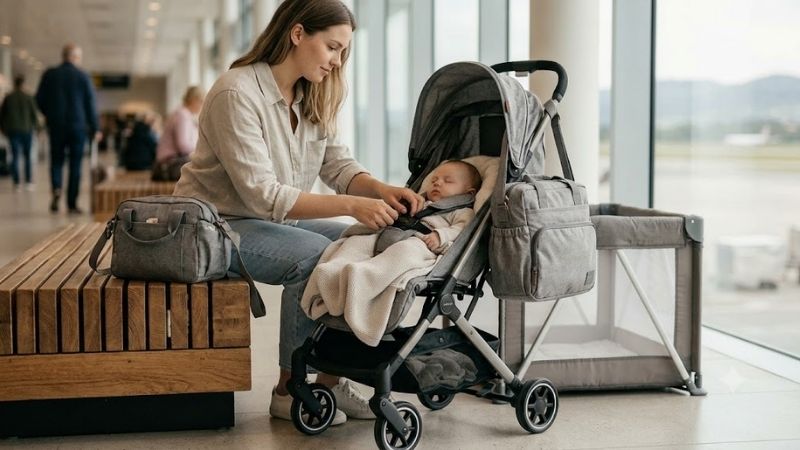
- The Strategy: Schedule long flights or road trip departures during morning nap periods or immediately after bedtime routines.
- Why It Matters: Babies are significantly less prone to overstimulation tantrums when the hum of jet engines or car motion mimics white noise during their biological sleep windows.
- Pro Tip: Feed your baby during takeoff and landing (breast, bottle, or pacifier) to relieve ear pressure changes caused by cabin altitude shifts.
Step 2: Decide on Flight Seating: Lap Infant vs. Dedicated Ticketed Seat
- The Strategy: Assess whether you will hold your infant under two years as a “lap child” or book a dedicated seat equipped with an FAA-approved car seat.
- Why It Matters: While holding a lap baby saves money, turbulence poses genuine physical risks. Installing an approved car seat guarantees physical restraint and maintains familiar nap boundaries.
- Pro Tip: Check the car seat label for the red text: “This Restraint is Certified for Use in Motor Vehicles and Aircraft.”
Step 3: Streamline the Airport Security Checkpoint (TSA Protocols)
- The Strategy: Consolidate baby liquids—including pumped breast milk, formula, and jarred purées—into a clear, separate pouch.
- Why It Matters: Medically necessary liquids for infants are exempt from the 3-1-1 liquids rule, but they trigger manual screening or vapor testing.
- Pro Tip: Keep your baby in an ergonomic structured carrier through metal detectors so your hands remain free to push stroller frames onto conveyor belts.
Step 4: Master Hotel and Rental Accommodation Babyproofing
- The Strategy: Conduct a 5-minute crawl-level audit of your hotel room or rental property upon arrival.
- Why It Matters: Loose electrical cords, unsecured heavy furniture, blind cords, and accessible cleaning chemicals represent immediate hazards in unfamiliar spaces.
- Pro Tip: Pack blue painter’s tape to cover exposed outlets and secure dangling cords without damaging hotel walls.
Essential Baby Travel Gear Packing Checklist
Packing efficiently for baby travel means eliminating redundant bulk while securing life-saving conveniences. A structured packing list separates in-transit necessities from destination gear so you never scramble through carry-ons at thirty thousand feet. Use this streamlined packing strategy to optimize weight and space.
In-Flight / Diaper Bag Essentials (Keep Under Seat)
- Diapers & Wipes: Pack 1 diaper per hour of transit time, plus a surplus of 4 for unexpected tarmac delays.
- Sanitation Kits: Baby-safe surface sanitizing wipes for airplane tray tables, armrests, and window shades.
- Clothing Changes: 2 complete spare outfits for baby (zippered footies) and 1 spare shirt for each parent.
- Feeding Gear: Pre-measured formula dispensers, leak-proof bottles, silicone bibs, and shelf-stable snack pouches.
- Comfort & Distraction: Pacifier clips, high-contrast soft books, suction spinner toys for airplane windows, and an extra swaddle.
Destination Nursery & Sleep Essentials (Checked Luggage)
- Portable Sleep Haven: Travel crib or playard featuring breathable mesh perimeter walls.
- Sleep Climate Control: Portable white noise machine with USB-C rechargeability and a portable blackout canopy.
- Portable Feeding Seat: Clip-on table chair or fabric harness seat adapter for restaurant outings.
- Health & First Aid: Infant acetaminophen/ibuprofen, digital rectal/temporal thermometer, nasal aspirator, and saline spray.
Top Baby Travel Gear Recommendations for Seamless Trips
Investing in dedicated travel equipment eliminates heavy lifting and awkward vehicle transfers. From ultra-compact overhead strollers to portable infant sleep spaces, each vetted product below solves a major transit friction point. Discover our top equipment picks evaluated for durability, safety, and effortless portability.
1. Babyzen YOYO2 – Best Ultra-Compact Cabin Stroller
- Best For: Urban commuters and international air travelers who refuse to risk baggage-handling damage through gate-checking.
- Key Features: True IATA overhead bin dimensions ($20.5 \times 17.3 \times 7.1$ inches folded); independent 4-wheel elastomer suspension (Hytrel technology); padded shoulder carry strap; multi-position reclining seat back up to 48.5 lbs; extendable UPF 50+ canopy with peek-a-boo window.
- Pros:
- Fits inside airplane overhead compartments on virtually all major airlines.
- Featherweight chassis (13.6 lbs) allows one-handed carrying up subway stairs.
- Extremely nimble one-handed push through narrow airport aisles.
- Cons:
- Shallow under-seat storage basket (11-pound weight capacity).
- Requires a two-step folding technique that takes brief practice to master.
- Use Case: Navigating tight international airport concourses, cobblestone streets, and compact rideshare trunks.
- Who It’s For: Frequent flying parents wanting a robust, airline-certified stroller that never leaves their direct possession.
2. Guava Lotus Everywhere Travel Crib – Best Portable Travel Crib
- Best For: Families wanting an ultra-portable, chemical-safe sleeper that packs down into an ergonomic hands-free backpack.
- Key Features: Certified GreenGuard Gold for low chemical emissions; 15-second setup with aluminum framing; zippered side-access door; airport carry-on compliant backpack carrying case; resting mattress directly on the floor for zero weight limit restrictions.
- Pros:
- Backpack travel case frees both hands to manage luggage and carry your infant.
- Side-zip door lets nursing mothers lie alongside their baby to soothe them to sleep.
- No weight limit on the floor-resting mattress, accommodating older toddlers.
- Cons:
- Floor-level mattress can feel chilly on uncarpeted ground without extra padding.
- Requires specialized fitted sheets tailored to the proprietary mattress shape.
- Use Case: Hotel rooms, vacation rentals, camping cabins, and grandparents’ guest rooms.
- Who It’s For: Road-tripping and flying families who demand an easy-to-carry, non-toxic travel bassinet and playard.
3. Ergobaby Omni Breeze – Best Hands-Free Baby Carrier for Transit
- Best For: Parents navigating crowded airports, boarding ramps, and hiking trails where strollers prove impractical.
- Key Features: SoftFlex mesh fabric maximizing 360-degree airflow; four carrying positions (inward, outward, hip, and back); ergonomic lumbar support belt; integrated privacy hood with UPF 50+ sun protection; adjustable slider tabs fitting newborns (7 lbs) to toddlers (45 lbs) without separate inserts.
- Pros:
- Breathable mesh keeps both caregiver and baby cool in hot airport terminals.
- Lumbar support pad prevents lower back fatigue during long TSA security lines.
- Clears TSA walk-through metal detectors without needing to be removed.
- Cons:
- Bulky waist belt takes up meaningful space inside personal carry-on bags.
- Learning correct strap tension and ergonomic hip M-positioning requires practice.
- Use Case: Boarding jet bridges, hands-free customs check-ins, and walking nature trails.
- Who It’s For: Active parents prioritizing breathability, spinal support, and physical closeness on the go.
4. Doona Infant Car Seat & Stroller – Best All-in-One Car & Flight System
- Best For: City travel and rideshare-heavy itineraries eliminating the need to haul separate car seat bases and stroller frames.
- Key Features: Integrated deployable wheels converting car seat to stroller in seconds; FAA aircraft certified for air travel; side-impact protection with double-wall structure; infant insert with bamboo charcoal antibacterial fabric; rear-facing installation with vehicle seat belts or LATCH base.
- Pros:
- Completely eliminates the bulky stroller frame in rideshares and airport taxis.
- FAA approval allows direct installation into standard aircraft passenger seats.
- Smooth wheel release mechanism avoids waking asleep babies during transfers.
- Cons:
- Heavy carrier weight (16.5 lbs) when lifting manually into elevated vehicles.
- Strict infant weight limit (up to 35 lbs or 32 inches), lasting roughly 12 to 15 months.
- Minimal on-board storage capacity for diaper bags.
- Use Case: Taxi and Uber rides in metropolises, quick airport transfers, and short errand runs.
- Who It’s For: Urban adventurers and rideshare users who want rapid vehicle-to-sidewalk transitions without packing a trunk full of gear.
5. SlumberPod Privacy Sleep Nook – Best Travel Sleep Darkening Canopy
- Best For: Families sharing a single hotel room or studio rental who need to preserve infant nap schedules without sitting in the dark.
- Key Features: Breathable, blackout fabric blocking 90%+ of ambient light; fits completely over standard playards, mini-cribs, and toddler cots; dedicated clear pouch for baby monitors; integrated pockets for battery-operated ventilation fans; compact travel pouch weighing under 5 lbs.
- Pros:
- Creates an isolated, pitch-black sleep environment in brightly lit hotel rooms.
- Allows parents to leave lights and TVs on in the same room without waking the infant.
- Breathable fabric engineered and tested for air exchange safety.
- Cons:
- Requires basic pole assembly similar to pitching a small dome camping tent.
- Interior can warm up quickly without an auxiliary travel fan running in warm climates.
- Use Case: Multi-bed hotel rooms, Airbnb rentals with thin curtains, and shared family living quarters.
- Who It’s For: Parents of sleep-sensitive infants who need predictable nap and bedtime routines regardless of external room lighting.
Baby Travel Gear Buying Guide: How to Choose the Right Gear
Choosing infant travel equipment requires balancing packability against certified safety and child ergonomics. Misjudging your transit gear often leads to strained backs, denied gate checks, and cranky infants. Evaluate your purchases through these four critical dimensions to make cost-effective, long-lasting gear choices.
1. Folded Dimensions and Airline Overhead Compatibility
- What: The exact exterior measurements of folded gear, specifically evaluated against international carry-on standards.
- Why: Airline gate-check handlers frequently damage or misplace strollers and car seats; keeping gear in the overhead bin protects your investment.
- Who: Air travelers and train commuters who require immediate mobility upon arrival without waiting on the jet bridge.
- Trade-off: Ultra-compact overhead strollers feature smaller wheel diameters, which reduces rolling smoothness over gravel and cracked pavements.
2. Safety Certifications and Regulatory Approvals
- What: Verified legal and mechanical testing marks, including FAA approval for aircraft, GreenGuard Gold for emissions, and JPMA child safety compliance.
- Why: Using non-certified seats on commercial flights leaves your baby unprotected during severe turbulence and runway emergencies.
- Who: Safety-conscious parents making long-haul flights or taking foreign car journeys with unfamiliar car seat standards.
- Trade-off: Certified heavy-duty safety components (such as steel-reinforced anti-rebound bars) add substantial weight to your travel load.
3. Setup Speed and Single-Handed Mechanics
- What: The ease, time, and physical dexterity required to assemble, deploy, or collapse equipment.
- Why: Caregivers often hold an infant in one arm while folding a stroller or collapsing a playard on a crowded boarding platform.
- Who: Solo traveling parents and caregivers moving frequently through fast-paced transit hubs.
- Trade-off: Highly complex folding mechanisms with multiple internal springs and hinges present more mechanical failure points over multi-year use.
4. Fabric Breathability, Thermal Comfort, and Washability
- What: Textile engineering utilizing mesh vents, machine-washable slipcovers, and UPF sun protection canopies.
- Why: Confined car seats, baby carriers, and travel cribs trap heat quickly, causing dehydration, skin rashes, and infant distress.
- Who: Families journeying to humid, sunny destinations or embarking on extended outdoor excursions.
- Trade-off: Highly breathable mesh fabrics provide less thermal insulation in chilly climates, requiring supplemental layering blankets.
Frequently Asked Questions About Baby Travel Gear
Navigating aviation regulations, infant car seat laws, and hotel sleep arrangements can easily overwhelm traveling parents. Below, we address the most urgent practical questions regarding flight safety, carry-on allowances, and nursery sanitation so you can embark on your upcoming family expedition with total confidence.
Can I take my baby travel stroller through airport security for free?
Yes. Major commercial airlines permit parents to gate-check a stroller and an infant car seat free of charge at the jet bridge, or bring an IATA-compliant ultra-compact stroller into the cabin overhead locker without counting against standard carry-on baggage allowances.
Does a portable travel crib count as checked baggage on flights?
Standard airlines treat a travel crib as regular checked luggage unless it fits within your allotted ticketed baggage weight and dimensional limits. Always check your specific carrier’s sporting and nursery baggage exceptions before arriving at ticket counters.
How do I sterilize baby bottles and pacifiers while staying in a hotel?
Use microwave steam sterilizer bags, which collapse flat inside luggage and clean accessories in under three minutes using hotel room microwaves. Alternatively, pack cold-water effervescent sterilizing tablets in a collapsible silicone travel wash basin.
Is it safe for a newborn to sleep overnight in a travel crib mattress?
Yes, provided the travel crib meets ASTM and CPSC sleep safety standards, utilizes a firm, flat, tightly fitted mattress, and remains completely free of loose blankets, pillows, and bumper pads to eliminate suffocation and SIDS risks.
Conclusion
Traveling with a baby demands intentional preparation, but equipped with the proper baby travel gear, family journeys become manageable and deeply rewarding. By curating ultra-compact strollers, certified car seats, and blackout sleep solutions, you safeguard your baby’s comfort while enjoying every stop along the open road.






Write Your Review
No reviews yet. Be the first to share your experience!