
Key takeaways
- Best For: Long-term safe sleep and modern nursery aesthetic.
- Key Features: GREENGUARD Gold Certified against 10,000+ chemicals and VOCs, sustainable New Zealand pine wood construction, includes toddler bed conversion kit, 4 adjustable mattress height positions, rounded spindle design.
- Pros:
- Screened for harmful chemicals to maintain pristine indoor air quality.
- Low-profile footboard and side rails make placing a sleeping newborn easy.
- Converts into a toddler bed and daybed with the included conversion rail.
What's inside
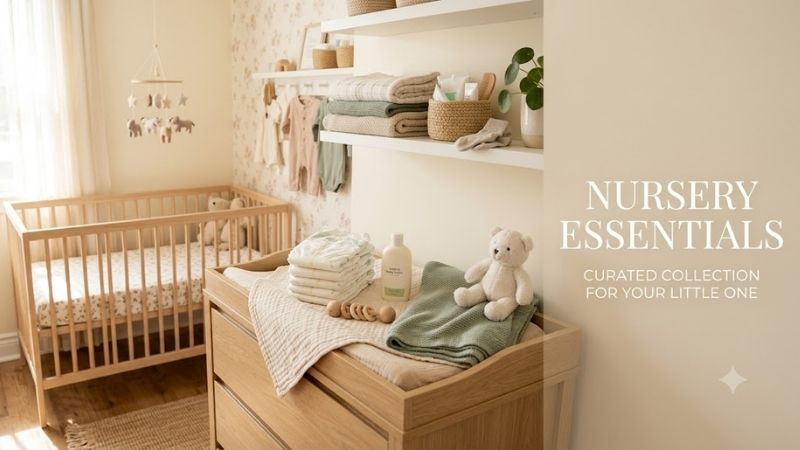
Preparing for a newborn requires practical gear that ensures infant safety and restful sleep. Investing in verified nursery essentials eliminates clutter while simplifying daily routines like diaper changes and night feeds. This expert roundup tests reliable baby essentials to help you create a secure, functional nursery from day one.
Top Verified Nursery Essentials: Complete Product Roundup
Equipping a functional nursery requires investing in durable tools that simplify daily routines while keeping your infant safe. We evaluated the top nursery essentials on build quality, ergonomic design, and daily convenience to highlight the standout products that make nighttime feeds, diaper changes, and sleep routines seamless for parents.
1. Babyletto Hudson 3-in-1 Convertible Crib
- Best For: Long-term safe sleep and modern nursery aesthetic.
- Key Features: GREENGUARD Gold Certified against 10,000+ chemicals and VOCs, sustainable New Zealand pine wood construction, includes toddler bed conversion kit, 4 adjustable mattress height positions, rounded spindle design.
- Pros:
- Screened for harmful chemicals to maintain pristine indoor air quality.
- Low-profile footboard and side rails make placing a sleeping newborn easy.
- Converts into a toddler bed and daybed with the included conversion rail.
- Cons:
- Soft pine wood can show dents or scratches under heavy impact.
- Assembly requires two adults for proper alignment of side panels.
- Analysis (Feature → Meaning → Benefit → Limitation → Use Case):
- Feature: Independent GREENGUARD Gold chemical certification combined with multi-position adjustable base.
- Meaning: Eliminates hazardous formaldehyde off-gassing while accommodating infant motor development milestones.
- Benefit: Protects sensitive infant respiratory tracts and prevents parent lower-back strain during transfers.
- Limitation: The natural wood finish is prone to teething indentations without rail protectors.
- Use Case: Primary infant sleep space starting from newborn homecoming up through preschool years.
- Who It’s For: Parents seeking a certified clean-air crib that transitions across developmental phases without requiring separate toddler bed purchases.
2. Newton Baby Waterproof Essential Crib Mattress
- Best For: Breathable infant sleep safety and hygienic washable maintenance.
- Key Features: Patented Wovon interior core ($90\%$ air, $10\%$ food-grade polymer), dual-layer quilted cloud cover with a waterproof toddler reverse side, $100\%$ washable from core to cover, zero foam, latex, glue, or chemical flame retardants.
- Pros:
- Infants can breathe directly through the mattress core if they roll over.
- The entire core can be rinsed clean in a standard bathtub after diaper leaks.
- Firm infant side transitions to a waterproof toddler side to resist training spills.
- Cons:
- Premium retail price point compared to traditional innerspring units.
- Requires line drying the core, which takes several hours.
- Analysis (Feature → Meaning → Benefit → Limitation → Use Case):
- Feature: Interconnected polymer Wovon grid replacing standard poly-foam cushioning.
- Meaning: Unobstructed air permeability eliminates suffocation hazards when infants transition to stomach sleeping.
- Benefit: Significantly lowers nighttime suffocation anxiety for parents while maintaining orthopedic spinal support.
- Limitation: Polymer material produces a slight crinkling texture until covered by fitted cotton sheets.
- Use Case: Standard-size crib mattress installation from birth through the active toddler potty-training stage.
- Who It’s For: Safety-minded parents prioritizing maximum airflow to reduce SIDS risks who want an easily sanitized mattress.
3. Hatch Rest 2nd Gen Smart Sound Machine & Night Light
- Best For: Soothing sleep cues, nocturnal feeding lighting, and wake routines.
- Key Features: High-fidelity white noise, ambient sounds, and lullabies, dimmable LED color nightlight, smartphone app connectivity via Wi-Fi, touch-ring top control, customizable automation schedules.
- Pros:
- Adjust lighting brightness and volume from your phone without entering the nursery.
- Soft red and amber hues preserve infant melatonin production during nocturnal diaper checks.
- Transitions into a visual “Time-to-Rise” sleep trainer for older toddlers.
- Cons:
- Requires a stable $2.4\text{ GHz}$ home Wi-Fi network for smart features.
- Companion subscription (Hatch+) is required to access advanced sound library content.
- Analysis (Feature → Meaning → Benefit → Limitation → Use Case):
- Feature: Wi-Fi connected sound generator paired with adjustable spectrum LED lighting.
- Meaning: Replicates acoustic womb sounds while providing non-stimulating illumination for midnight care.
- Benefit: Masks sudden household noises so the baby stays asleep longer, reducing nighttime wakefulness.
- Limitation: Premium features require ongoing app subscriptions, though standard noise and color profiles remain free.
- Use Case: Continuous background sound masking on a nursery dresser or bedside nightstand from infancy onward.
- Who It’s For: Families seeking an all-in-one sound machine and gentle nursery lamp that adapts into a toddler sleep training clock.
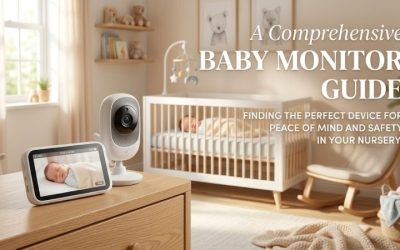
4. Nanit Pro Smart Baby Monitor & Wall Mount
- Best For: High-definition video monitoring, breathing motion tracking, and sleep analytics.
- Key Features: 1080p overhead video with night vision, integrated sensor-free Breathing Band motion tracking, two-way audio, background audio playback, nursery temperature and humidity sensors, encrypted cloud recording.
- Pros:
- Tracks chest breathing motions without placing electronic sensors against baby’s skin.
- Overhead bird’s-eye perspective eliminates blind spots inside the crib.
- Comprehensive sleep metrics help parents identify nap regressions and sleep windows.
- Cons:
- Premium pricing tier with ongoing annual membership fees for advanced historical video clips.
- Completely dependent on home internet connection and smartphone screen availability.
- Analysis (Feature → Meaning → Benefit → Limitation → Use Case):
- Feature: Computer-vision camera equipped with custom pattern-reading fabric tracking.
- Meaning: Continuously registers breathing rhythms and nursery climate metrics without skin-contact electrodes.
- Benefit: Delivers verifiable reassurance to anxious parents while compiling structured sleep diagnostics.
- Limitation: Occasional internet network drops temporarily pause video streaming.
- Use Case: Overhead wall-mounted crib surveillance for dedicated nursery sleeping arrangements.
- Who It’s For: Data-driven parents wanting real-time respiratory tracking, precise sleep analytics, and clear HD streaming from anywhere.
5. Ubbi Steel Odor-Locking Diaper Pail
- Best For: Odor containment and budget-friendly bag compatibility.
- Key Features: Powder-coated steel body construction, airtight rubber perimeter seals, sliding top hatch with childproof lock, universal bag mechanism (fits standard 13-gallon kitchen trash bags or reusable cloth liners).
- Pros:
- Steel does not absorb fecal odors over time like porous plastic trash bins.
- Requires no proprietary, expensive refill cassettes or specialized bag cartridges.
- Sliding lid minimizes air displacement when discarding soiled diapers.
- Cons:
- A burst of trapped odor escapes momentarily when the sliding hatch is opened.
- Tends to collect interior condensation if left unwashed during humid summer months.
- Analysis (Feature → Meaning → Benefit → Limitation → Use Case):
- Feature: Non-porous powder-coated steel housing fitted with dual rubber perimeter gaskets.
- Meaning: Confines volatile sulfur and nitrogen odor molecules physically inside the canister.
- Benefit: Keeps the nursery smelling neutral without requiring ongoing recurring expenses for custom plastic liners.
- Limitation: The interior chamber must be wiped down and aired out every few weeks to avoid moisture buildup.
- Use Case: Placed directly adjacent to the nursery changing table for rapid disposal during diaper changes.
- Who It’s For: Cost-conscious caregivers who demand superior odor control without the expensive recurring cost of bespoke refill rings.
6. DaVinci Olive Gentle Glider with Storage Ottoman
- Best For: Ergonomic nursing posture, soothing rocking motion, and lumbar support.
- Key Features: Smooth $360\text{–degree}$ swivel mechanism with gentle forward-and-backward glide, included lumbar support pillow, coordinating gliding ottoman with concealed interior storage, upholstered with water-repellent, stain-resistant fabric, GREENGUARD Gold Certified.
- Pros:
- Certified clean air emissions protect newborn respiratory health during contact feeds.
- Ottoman glides in tandem with the chair to maintain synchronized, soothing movements.
- Compact footprint fits comfortably into tight corners and small nurseries.
- Cons:
- Higher backrest may feel slightly firm for taller parents requiring deep neck rests.
- Manual gliding action lacks motorized recline functionality.
- Analysis (Feature → Meaning → Benefit → Limitation → Use Case):
- Feature: Synchronized ball-bearing glide mechanism paired with certified low-emission foam padding.
- Meaning: Delivers smooth rhythmic motion while supporting healthy adult spinal alignment during feedings.
- Benefit: Eliminates parent shoulder strain and soothes colicky infants during lengthy nighttime routines.
- Limitation: Requires physical core and foot engagement to maintain continuous gliding cadence.
- Use Case: Dedicated nursing, bottle-feeding, and storybook corner inside the primary nursery.
- Who It’s For: Breastfeeding and bottle-feeding caregivers who need supportive posture alignment and smooth motion in a compact chair.
+---------------------------------------------------------------------------------------------------------+
|                                    NURSERY ESSENTIALS COMPARISON MATRIX                                 |
+----------------------+--------------------+---------------------+---------------------+-----------------+
| Product              | Category           | Key Distinction     | Air Quality / Safety| Best Standout   |
+----------------------+--------------------+---------------------+---------------------+-----------------+
| Babyletto Hudson     | Convertible Crib   | 3-in-1 Design       | GREENGUARD Gold     | Longevity       |
| Newton Waterproof    | Crib Mattress      | 100% Breathable     | Foam/Latex-Free     | Suffocation Red.|
| Hatch Rest 2nd Gen   | Sound & Light      | App-Controlled      | Amber LED Sleep-Safe| Sleep Induction |
| Nanit Pro            | Smart Baby Monitor | Sensor-Free Band    | Encrypted Streaming | Sleep Insights  |
| Ubbi Diaper Pail     | Sanitation         | Powder-Coated Steel | Rubber Gasket Seal  | Standard Bags   |
| DaVinci Olive Glider | Ergonomic Seating  | Gliding Ottoman     | GREENGUARD Gold     | Nursing Posture |
+----------------------+--------------------+---------------------+---------------------+-----------------+
Strategic Buying Guide: How to Choose Nursery Gear
Designing an efficient nursery requires balancing long-term utility against nursery footprint and safety standards. Before adding items to your registry, evaluate each nursery essential through material purity, multi-stage versatility, and cleaning effort to ensure your purchases provide enduring value during the early parenting journey.
1. Chemical Safety and Material Emissions
- What: Third-party chemical verifications including GREENGUARD Gold, OEKO-TEX Standard 100, and CertiPUR-US certifications for nursery furniture, textiles, and mattresses.
- Why: Newborns breathe at twice the rate of adults and possess immature respiratory systems particularly susceptible to volatile organic compounds (VOCs), formaldehyde off-gassing, and synthetic chemical flame retardants.
- Who: Essential for every family furnishing a dedicated nursery space, especially in modern, tightly insulated homes with lower passive air exchange rates.
- Trade-off: Certified non-toxic furniture carries a $15\%\text{ to }30\%$ higher initial price tag than uncertified engineered particleboard alternatives.
2. Multi-Stage Adaptability vs. Single-Purpose Items
- What: Nursery items engineered to transform alongside child development, such as 3-in-1 convertible cribs, dual-firmness mattresses, and sound machines with toddler wake trainers.
- Why: Infants outgrow newborn-exclusive items within 4 to 6 months. Convertible furnishings eliminate repetitive furniture purchases during early childhood stages.
- Who: Practical, budget-conscious parents who want to furnish a room once and use the core elements through early elementary age.
- Trade-off: Multi-stage gear often has a slightly larger physical footprint and requires storing spare hardware or conversion rails for future years.
3. Ease of Sanitization and Maintenance
- What: Surfaces built with non-porous metals, removable machine-washable fabrics, and water-repellent performance textiles.
- Why: Nursery spaces experience daily encounters with regurgitated milk, diaper blowouts, and medicine spills. Difficult spot-clean-only fabrics accumulate bacterial odors and consume scarce parental rest time.
- Who: Critical for busy parents, working households, and multi-child families who need rapid cleanup solutions.
- Trade-off: Washable polymer mattresses and wipeable performance fabrics can feel slightly crisper than ultra-plush non-removable velour coverings.
4. Nursery Footprint and Acoustic Flow
- What: Compact, multi-functional furniture footprints designed with smooth edges, quiet glide bearings, and soft-closing hardware.
- Why: Squeaky floorboards, clacking trash lids, and tight spatial bottlenecks disrupt sleeping infants and complicate nighttime navigation in dim lighting.
- Who: Families setting up nurseries in urban apartments, shared master bedrooms, or standard secondary bedrooms under $120\text{ sq ft}$.
- Trade-off: Compact nursery gliders and slender crib designs feature narrower seating widths and less integrated side storage.
Frequently Asked Questions About Nursery Essentials
Preparing your nursery often brings up questions regarding room sharing, chemical safety standards, and gear longevity. Here are direct, practical answers to common questions about nursery essentials, helping you bypass marketing gimmicks, minimize nursery clutter, and establish a secure, restorative environment for your newborn.
What are the absolute non-negotiable nursery essentials for a newborn?
The true non-negotiables are an AAP-compliant sleep space (a firm, flat crib or bassinet with a snug fitted sheet), an infant car seat for transit, basic feeding equipment, and a hygienic diaper disposal setup. While gliders, sound machines, and smart monitors substantially improve daily quality of life, your infant fundamentally requires only safe sleep, warmth, nourishment, and clean diapering gear.
How does room-sharing impact nursery setup during the first 6 months?
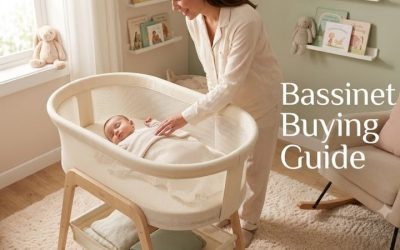
The American Academy of Pediatrics recommends room-sharing with your infant for at least their first six months. Many parents set up a portable bassinet or compact mini-crib in the parental bedroom while using the primary nursery for daytime diaper changes, daytime naps, nursing routines, and clothing storage. This dual-setup approach eases nighttime feedings while acclimating the baby to their nursery crib environment.
Are wipe warmers and changing tables necessary nursery essentials?
Dedicated changing tables are optional; an ergonomic changing pad secured atop a sturdy, standard dresser functions just as well while saving room space. Wipe warmers are similarly non-essential; they frequently dry out wipes, can harbor bacterial growth if unwashed, and condition your infant to reject standard room-temperature wipes when traveling outside the home.
Why is steel preferred over plastic for nursery diaper pails?
Plastic is a naturally porous polymer that absorbs foul-smelling fatty acid molecules over time. Once odor compounds embed into plastic walls, scrubbing with bleach or disinfectants will not permanently remove the smell. Powder-coated steel is completely non-porous; odor molecules cannot penetrate the metal shell, ensuring the pail locks odors inside throughout years of daily use.
Curating a calm, practical baby room centers on choosing tested nursery essentials rather than excess gadgets. By investing in certified cribs, breathable sleep surfaces, and durable sanitation gear, you ensure long-term safety and comfort. Build an organized space that simplifies nighttime parenting and supports healthy newborn sleep.


Write Your Review
No reviews yet. Be the first to share your experience!