
Key takeaways
- Fine-tuned comfort. Tied shoulder straps can be spread across your shoulders or back instead of concentrating pressure in narrow, fixed straps. This can make a meaningful difference during a 30-minute walk or a two-hour outing.
- Flexible fit for multiple adults. The straps accommodate a wide range of torso lengths and body shapes. That is useful when two caregivers share one carrier, although each person should re-adjust rather than assume the previous setting is correct.
- Useful from early infancy through toddlerhood. Many models cover a broad range, such as newborn through 33 pounds. Actual usability depends on the child’s leg length, torso development, and the carrier’s panel adjustments—not weight alone.
- Good weight distribution. A supportive waistband transfers much of the baby’s weight to the wearer’s hips. A properly tightened shoulder wrap can reduce pressure points compared with rigid shoulder straps.
- Compact and soft. A fabric carrier generally takes up less room than a framed hiking carrier or bulky travel stroller. It can fit in a diaper bag or small tote once folded, though the exact folded size varies by fabric thickness and strap length.
- More adaptable positioning. Depending on the design and the child’s age, half buckles can support front, hip, or back carries. That gives an older baby or toddler more variety when front carrying becomes tiring.
- Aesthetic and tactile appeal. Parents who dislike the technical look of many structured carriers may prefer the softer fabric, colors, and drape of a half buckle.
The Short Answer
Yes—half buckle carriers are worth it if you want a supportive, adjustable carrier and do not mind tying shoulder straps. They are especially appealing for caregivers who want more customization than a structured buckle carrier but less wrapping than a traditional woven wrap.
The key condition is simple: you must be comfortable learning and checking a tie-on finish. If you want a carrier that can be put on quickly with minimal adjustment, a full-buckle model is probably a better buy. A half buckle is not automatically more comfortable or safer; its value comes from the combination of a buckled waistband and flexible fabric shoulder straps.
Our top picks

As an Amazon Associate we earn from qualifying purchases at no extra cost to you. Ratings are shown as listed on Amazon.
What You Actually Get
A half buckle carrier usually has a fabric body panel, a padded or semi-padded waistband that fastens with a buckle, and two long shoulder straps that you tie around your body. The waistband provides the main anchor. The straps let you spread fabric over your shoulders and back, tighten in small increments, and adapt the carrier to different caregivers and babies.
That design sits between two familiar options. A structured carrier uses buckles at the waist and shoulders, making it relatively fast to put on. A wrap uses long fabric for nearly every part of the carry, offering excellent flexibility but requiring more practice. A half buckle borrows the strongest features of both.
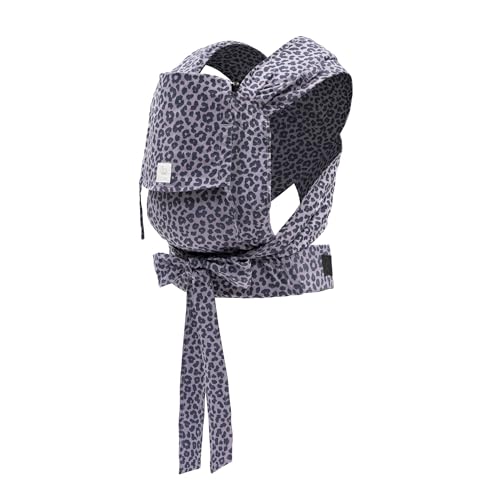
Fit depends on the specific model. For example, the Stokke Limas Carrier is marketed for newborn use through 33 pounds and offers front, hip, and back carrying positions, depending on the baby’s developmental stage and the manufacturer’s instructions. The listed price for the Limas in colors such as Leopard Lilac and Glacier Green is $179. That is a mid-to-premium price for a soft carrier, so buyers should expect better adjustability and materials rather than a dramatically different carrying experience.
Newborn suitability still requires careful attention. A carrier may be labeled safe from birth, but the baby must meet the stated minimum weight and fit securely in the panel. Many newborns need the seat narrowed and the fabric positioned so their airways remain clear. The baby should be high enough to kiss, with the face visible, chin off the chest, and knees supported in an ergonomic “M” position.
Half buckles are also more dependent on correct technique than their appearance suggests. The buckle does not make the entire carry foolproof. You still need to tighten the shoulder straps evenly, maintain adequate support, and inspect the waistband and stitching regularly.
Pros
- Fine-tuned comfort. Tied shoulder straps can be spread across your shoulders or back instead of concentrating pressure in narrow, fixed straps. This can make a meaningful difference during a 30-minute walk or a two-hour outing.
- Flexible fit for multiple adults. The straps accommodate a wide range of torso lengths and body shapes. That is useful when two caregivers share one carrier, although each person should re-adjust rather than assume the previous setting is correct.
- Useful from early infancy through toddlerhood. Many models cover a broad range, such as newborn through 33 pounds. Actual usability depends on the child’s leg length, torso development, and the carrier’s panel adjustments—not weight alone.
- Good weight distribution. A supportive waistband transfers much of the baby’s weight to the wearer’s hips. A properly tightened shoulder wrap can reduce pressure points compared with rigid shoulder straps.
- Compact and soft. A fabric carrier generally takes up less room than a framed hiking carrier or bulky travel stroller. It can fit in a diaper bag or small tote once folded, though the exact folded size varies by fabric thickness and strap length.
- More adaptable positioning. Depending on the design and the child’s age, half buckles can support front, hip, or back carries. That gives an older baby or toddler more variety when front carrying becomes tiring.
- Aesthetic and tactile appeal. Parents who dislike the technical look of many structured carriers may prefer the softer fabric, colors, and drape of a half buckle.
Cons
- There is a learning curve. The shoulder straps must be crossed, routed, tightened, and tied correctly. A first attempt may take several minutes, particularly with a squirmy baby.
- Less convenient for frequent on-and-off use. If you repeatedly load and unload your child for errands, a full-buckle carrier can be faster. A half buckle may require loosening or retying the straps each time.
- Long straps can drag. The tails may touch the ground in a parking lot, bathroom, or muddy playground. They also require more attention when walking near doors, strollers, and other equipment.
- Heat can still be an issue. Extra fabric over the shoulders and back may feel warm in summer. Breathable mesh is not universal, and a natural-fiber carrier is not necessarily cool if several layers cover your body and the baby.
- Premium pricing is common. A $150–$200 half buckle is not unusual, and some limited colors or organic-cotton versions cost more. You are paying for fabric quality, adjustment, construction, and design—not a guarantee that every wearer will prefer it.
- Fit is not one-size-fits-all in practice. A carrier may technically fit a baby from 7 to 33 pounds, but very small newborns, petite caregivers, and larger-bodied caregivers may need a different panel shape or strap length.
- Hip and back carries require extra confidence. These positions are not appropriate for every developmental stage, and a back carry is harder to monitor. Follow the manual and practice over a safe surface before carrying outside.
Who Should Buy It
Buy a half buckle if you want to babywear several times a week, value a close and adjustable fit, and are willing to spend a few practice sessions learning the straps. It is a strong choice for caregivers whose bodies do not fit standard buckle settings comfortably, couples with noticeably different builds, or parents who want one carrier to remain useful through multiple stages.
It can also be a good middle ground for wrap-curious buyers. You get some of the fabric adjustability and pressure distribution of a wrap without managing a long piece of fabric from start to finish. If you expect to carry for walks, household tasks, travel, or soothing a baby during naps, the investment may pay off through regular use.
Who Should Skip It
Skip a half buckle if speed is your top priority, you strongly dislike tying knots, or you expect several inexperienced caregivers to use the carrier without instruction. A full-buckle carrier is generally easier to hand to a grandparent, babysitter, or partner and explain in a few steps.
You may also want another option if you live in a hot climate and plan to carry outdoors for long periods, have persistent back or hip pain, or cannot test the carrier’s waistband and shoulder fit before buying. Babywearing should not be used to push through significant pain, numbness, restricted breathing, or pressure on a healing incision.
Cheaper Alternatives
| Option | Cost | Trade-off |
|---|---|---|
| Budget soft structured carrier | $35–$80 | Usually faster to buckle, but shoulder adjustments and newborn fit may be less flexible. |
| Used half buckle | $60–$130 | Can deliver premium materials for less, but inspect buckles, webbing, stitching, stains, and recalls before use. |
| Meh dai-style carrier | $50–$120 | Similar tie-on flexibility, often with less padding and no buckled waistband. |
| Stretchy newborn wrap | $30–$70 | Soft and inexpensive for early months, but may feel less supportive as a child approaches 20–25 pounds. |
| Basic ring sling | $40–$100 | Very quick for hip carries and short trips, but places more load on one shoulder and takes practice to tighten evenly. |
Prices are typical retail ranges and can vary by fabric, brand, condition, and sales. Used gear deserves extra scrutiny: avoid carriers with damaged hardware, frayed straps, missing instructions, or an uncertain history.
FAQ
Are half buckle carriers safe for newborns?
They can be, if the specific carrier is approved for newborns and the baby meets its minimum requirements. Adjust the panel for the baby’s size, keep the face visible, and maintain a clear airway. Never let fabric cover the nose or mouth, and do not rely on a newborn insert unless the manufacturer specifically approves it for that model.
Are half buckle carriers more comfortable than full-buckle carriers?
Sometimes, but comfort is personal. Tied straps can distribute pressure more broadly and provide a closer fit. However, some caregivers prefer the padding and simplicity of buckled shoulder straps. The best design is the one that stays comfortable for both wearer and baby during the length of carry you actually plan to do.
How long can a baby stay in a half buckle carrier?
There is no universal time limit for a healthy baby who is positioned correctly, but frequent checks are important. Watch the airway, temperature, leg position, and your own comfort. Take breaks, especially for newborns, and remove the baby before feeding. Follow pediatric guidance for premature babies or babies with medical conditions.
Is a $179 half buckle carrier worth it?
It can be worth $179 if you will use it regularly, need a highly adjustable fit, and expect it to serve from infancy through toddlerhood. It is harder to justify if you only need occasional short carries or are unsure whether you like babywearing. In that case, borrow one, attend a local carrier demonstration, or consider a reputable used model before making a premium purchase.


Write Your Review
No reviews yet. Be the first to share your experience!