
Key takeaways
- Using a 7-pound carrier for a smaller baby: Wait until the baby meets the minimum and the fit is secure.
- Assuming “one size” fits every newborn: Carrier designs differ considerably in panel height, seat width, and adjustment range.
- Adding an unapproved insert: Use only an insert made or approved for that carrier. Improvised padding can alter the airway position.
- Letting the baby slump: A rounded back can push the chin toward the chest. Tighten the carrier and reposition the baby upright.
- Covering the face: Hoods, blankets, and fabric must not cover the nose or mouth. Check the airway frequently.
- Ignoring leg position: The knees should sit higher than the bottom, with support extending comfortably from knee to knee.
- Comparing price instead of fit: A $38 carrier is not automatically a better value than a $98 carrier if it does not fit your baby or your body.
If you are shopping for a newborn carrier, the minimum listed weight is usually more important than the maximum. Many soft structured carriers and compact infant carriers begin at 7 pounds (3.2 kilograms), although some wrap-style carriers can fit smaller babies when used exactly as directed. A carrier’s minimum weight is not a suggestion: it reflects the manufacturer’s testing, panel design, head support, and ability to position a small baby safely.
For most healthy, full-term newborns, a carrier with a 7-pound minimum may be appropriate once the baby meets all other requirements in the manual. Babies born early, those with low birth weight, or infants with medical or breathing concerns may need an individual recommendation from a pediatrician before being carried hands-free.
Our top picks

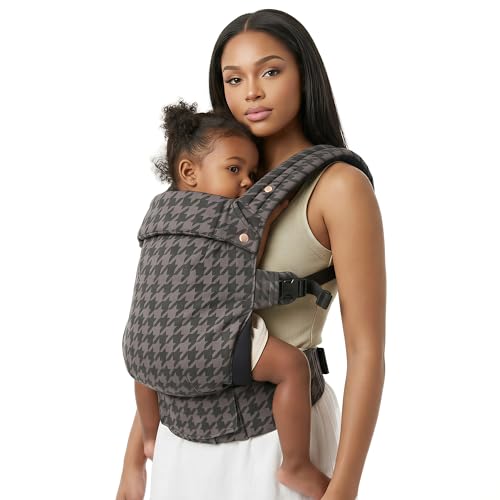


As an Amazon Associate we earn from qualifying purchases at no extra cost to you. Ratings are shown as listed on Amazon.
The Short Answer
The most common newborn carrier minimum weight is 7 pounds (3.2 kilograms). Some newborn-specific wraps and slings begin around 5 pounds (2.3 kilograms), while many all-purpose carriers start at 7 to 8 pounds and extend to 30, 35, or 40 pounds.
Do not rely on weight alone. Your baby should also fit securely in the carrier, with the head and neck supported, the face visible, the chin off the chest, and the hips positioned in a supported “M” shape. If the baby’s head sinks below the top edge, the fabric covers the nose or mouth, or the legs cannot spread comfortably, the carrier is not ready for use, even if the baby has reached the stated minimum weight.
As a practical buying range, expect about $35 to $110 for a basic newborn-to-toddler carrier, with compact newborn carriers commonly priced around $75 to $100. For example, the listed BabyBjörn Mini options range from approximately $77.75 to $98, while a cotton carrier advertised for 7 to 40 pounds is priced around $38.24. Prices can change by color, fabric, and retailer.
Standard Sizes
Carriers do not have standardized clothing-style sizes. Instead, they are classified by the baby’s weight range, height guidance, age range, and the dimensions of the carrier panel. The table below gives useful buying benchmarks. Panel measurements are typical approximate measurements for the carrier body, not a guarantee of fit; always compare them with the manufacturer’s specifications.
| Carrier category | Baby weight range | Approximate panel size | Best use |
|---|---|---|---|
| Newborn wrap or newborn insert carrier | 5–12 lb (2.3–5.4 kg) | 13–15 in wide × 15–17 in high (33–38 × 38–43 cm) | Small newborns, when the manual permits |
| Compact newborn carrier | 7–15 lb (3.2–6.8 kg) | 12–14 in wide × 14–16 in high (30–36 × 36–41 cm) | Newborn stage and early infancy |
| Infant carrier | 7–24 or 25 lb (3.2–10.9 or 11.3 kg) | 13–15 in wide × 15–18 in high (33–38 × 38–46 cm) | Newborn through approximately the first year |
| Newborn-to-toddler carrier | 7–35 or 40 lb (3.2–15.9 or 18.1 kg) | 14–17 in wide × 16–19 in high (36–43 × 41–48 cm) | One carrier for infancy through toddlerhood |
Compact carriers often have narrower, shorter panels than toddler carriers. That smaller shape can provide better support for a young baby, but it may be outgrown sooner. A carrier marketed from 7 to 40 pounds may offer better long-term value, yet it may require an adjustable seat, infant setting, or insert to fit a newborn properly.
Check the complete size statement rather than a product title alone. A carrier labeled “newborn to toddler” may still require the baby to weigh at least 7 pounds, reach a minimum height, or use a separate insert. Some carriers permit front inward-facing use first and add outward-facing or back-carry options only when the baby has reliable head and neck control.
How to Measure Your Space
- Measure the baby’s weight. Use a reliable pediatric or home scale and record pounds and kilograms. A newborn weighing 6 pounds 12 ounces has not yet reached a 7-pound minimum.
- Measure the baby’s height. Lay the baby flat and measure from the crown of the head to the heel. Height is not a substitute for the carrier’s minimum weight, but it helps identify whether the panel is too tall or too short.
- Check the panel width. The lower edge should support the baby from knee to knee without forcing the legs straight or pressing behind the knees. For young infants, the panel should not extend so high that it covers the face.
- Check the panel height. The upper edge should provide appropriate neck support while leaving the nose and mouth uncovered. You should be able to see the baby’s face without opening or loosening the carrier.
- Measure the wearer’s torso and waist. Measure around the body where the waistband will sit, usually near the natural waist or just above the hips. A typical carrier waistband adjusts across roughly 25 to 55 inches (64 to 140 cm), but the exact range varies.
- Allow room for clothing. Bulky coats can change the fit and may compress the baby’s airway. Dress the baby in thin layers and use an outer cover designed for babywearing when necessary.
- Perform a fit check. The baby should sit high enough to kiss, close enough that the body does not slump, and tight enough that the carrier moves with you. Confirm that the airway remains clear before walking.
By Room or Use Case
Around the house
A lightweight newborn carrier is convenient for short periods while folding laundry, preparing food, or soothing a fussy baby. Look for a compact panel, simple buckles, and breathable fabric. A 7-pound minimum is common. Never use a carrier while cooking over heat, handling sharp objects, or carrying hot liquids.
Outdoor walks
For walks, prioritize padded shoulder straps, a supportive waistband, and fabric that manages temperature. A carrier rated to 25 or 35 pounds may last longer than a compact 7-to-15-pound model, but confirm that the newborn setting creates a snug fit. Sun hats and covers should not block airflow or obscure the baby’s face.
Travel and airports
A soft, foldable carrier is often easier to pack than a stroller. Choose one that weighs about 1 to 2 pounds (0.45 to 0.9 kilograms) and has buckles that can be adjusted without assistance. Practice putting it on and removing it before travel. A carrier should never be used as a substitute for an approved car seat during a vehicle trip.
Longer-term toddler use
If you want one purchase to last, consider a carrier rated from 7 pounds to at least 30 pounds. An adjustable seat width and height can accommodate growth more effectively than a fixed newborn panel. Even so, a newborn-to-toddler carrier may feel bulky during the first weeks compared with a dedicated newborn carrier.
Common Sizing Mistakes
- Using a 7-pound carrier for a smaller baby: Wait until the baby meets the minimum and the fit is secure.
- Assuming “one size” fits every newborn: Carrier designs differ considerably in panel height, seat width, and adjustment range.
- Adding an unapproved insert: Use only an insert made or approved for that carrier. Improvised padding can alter the airway position.
- Letting the baby slump: A rounded back can push the chin toward the chest. Tighten the carrier and reposition the baby upright.
- Covering the face: Hoods, blankets, and fabric must not cover the nose or mouth. Check the airway frequently.
- Ignoring leg position: The knees should sit higher than the bottom, with support extending comfortably from knee to knee.
- Comparing price instead of fit: A $38 carrier is not automatically a better value than a $98 carrier if it does not fit your baby or your body.
FAQ
Can a newborn use a carrier at 6 pounds?
Only if the specific carrier permits a 6-pound minimum and the baby fits correctly. If the carrier starts at 7 pounds, do not use it early. Ask a pediatrician about smaller or premature babies.
What is the safest newborn carrier position?
For most newborns, use an upright, inward-facing position with the baby’s chest against yours. Keep the face visible, the chin lifted away from the chest, and the back supported. Follow the carrier’s instructions for leg and hip positioning.
When can a baby face outward?
Outward-facing use generally requires good head and neck control, often around 5 to 6 months, but the carrier’s manual takes priority. The baby must meet the listed height and weight requirements and remain comfortably supported.
Is a newborn carrier worth buying?
It can be worthwhile if you want a lighter, simpler carrier during the early months. A compact model may fit a newborn better than a large adjustable carrier, while a 7-to-35- or 40-pound model may provide better value over time. Choose based on minimum weight, fit, support, and safe positioning rather than the maximum weight alone.


Write Your Review
No reviews yet. Be the first to share your experience!