
Key takeaways
- Choosing by height alone: Height does not reveal waist size, shoulder width, or torso length.
- Ignoring the waistband: Tall parents sometimes focus on long shoulder straps and overlook a waistband that stops too short.
- Confusing panel size with adult size: A tall child-support panel does not automatically mean the carrier fits a tall adult.
- Buying for future growth only: A carrier that is too large for a newborn may fail to provide proper leg and head support.
- Wearing the waistband too high: If it presses into your ribs or leaves the child too close to your chin, lower it slightly toward your hips and readjust.
- Overlooking strap direction: Cross-back straps may distribute weight differently from H-style straps. Test both configurations if the carrier allows it.
- Using the maximum weight as a comfort promise: A 40- or 45-pound limit is a safety limit, not a guarantee that carrying that weight will feel comfortable.
The Short Answer
Tall parents usually need a baby carrier with an adjustable torso, shoulder straps that extend at least 28 to 34 inches (71 to 86 cm) from the carrier body, and a padded waistband that adjusts to roughly 45 to 60 inches (114 to 152 cm). The most important measurement is not your height alone: it is your torso length, shoulder width, and waist or hip circumference.
For most parents between 6 feet and 6 feet 6 inches tall, look for a carrier with a long, adjustable back panel, wide shoulder straps, and a waistband that sits comfortably on your natural waist or hips. A panel height of approximately 15 to 18 inches (38 to 46 cm) is a useful starting range for a toddler carrier, while a newborn carrier may use a shorter or adjustable panel.
Our top picks
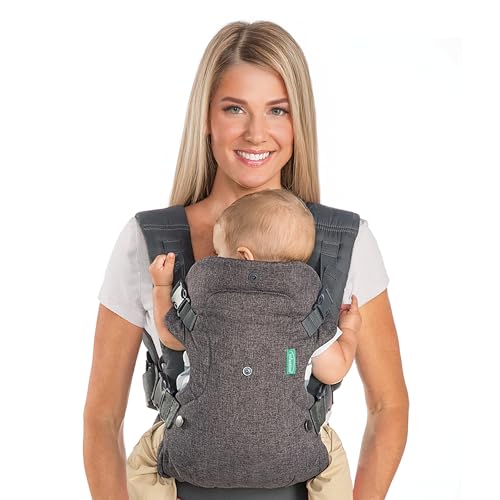 Infantino Flip 4-in-1 Baby Carrier Convertible Ergonomic
- From coffee runs and grocery trips to neighborhood…
- The adjustable convertible seat supports babies from 8-32…
- Choose facing-in with a narrow seat, facing-in with…
| Product | Key specs | Amazon rating | |
|---|---|---|---|
 Tivellary Plus-Size Baby Carrier with Lumbar Support Tivellary Plus-Size Baby Carrier with Lumbar Support | – | Check price | |
| Infantino Flip 4-in-1 Baby Carrier Convertible Ergonomic | From coffee runs and grocery trips to neighborhood… The adjustable convertible seat supports babies from 8-32… Choose facing-in with a narrow seat, facing-in with… | 4.9★ | Check price |
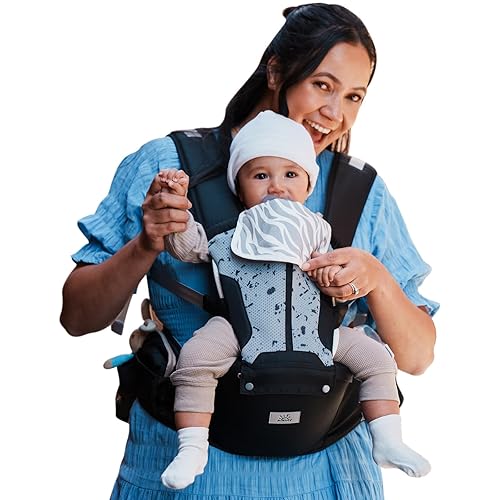 MOMTORY Safety-Certified 6-in-1 Baby Carrier Newborn to MOMTORY Safety-Certified 6-in-1 Baby Carrier Newborn to | 4.6★ | Check price | |
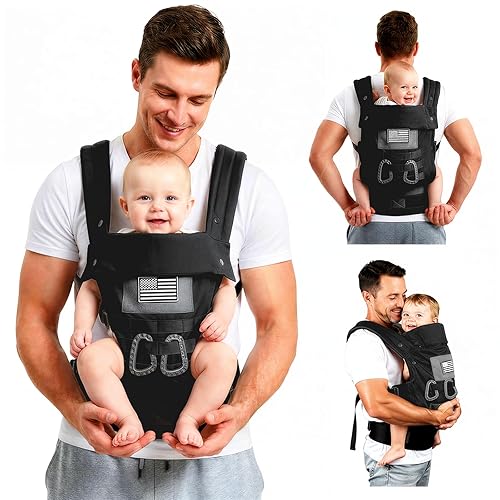 YESYBC Baby Carrier YESYBC Baby Carrier | 4.5★ | Check price |
As an Amazon Associate we earn from qualifying purchases at no extra cost to you. Ratings are shown as listed on Amazon.
Do not choose a carrier solely because it is labeled “plus-size,” “big and tall,” or “one size.” Those labels vary by manufacturer. Instead, compare the listed waist range, strap range, panel dimensions, child weight range, and the recommended child height or age. In 2026, many soft-structured carriers are designed for a broad range of adults, but their adjustment systems are not identical.
Standard Sizes
Baby carriers do not have standardized adult sizes in the way clothing does. The table below shows practical measurement ranges to use when comparing models. These are buying targets, not guarantees that every carrier will fit every body shape.
| Carrier feature | Common range | Recommended target for tall parents | Why it matters |
|---|---|---|---|
| Waistband adjustment | 26–52 in (66–132 cm) | 45–60 in (114–152 cm) | Provides room to wear the carrier at the waist or hips over clothing. |
| Shoulder strap adjustment | 20–32 in (51–81 cm) | 28–40 in (71–102 cm) | Helps prevent the shoulder straps from pulling the carrier too high or tight. |
| Back panel height | 13–18 in (33–46 cm) | 15–19 in (38–48 cm) | Supports the child without pressing into the parent’s neck. |
| Back panel width | 12–16 in (30–41 cm) | 14–18 in (36–46 cm) | Supports the child’s seat and legs as they grow. |
| Child weight range | 7–45 lb (3.2–20.4 kg) | 8–45 lb (3.6–20.4 kg) | Determines when the carrier can be used and when it must be retired. |
| Waistband width | 3–6 in (8–15 cm) | 4–7 in (10–18 cm) | A wider, padded band can distribute the child’s weight more comfortably. |
A tall parent may not need the largest carrier available. Someone who is 6 feet 3 inches tall with a 34-inch waist may fit a standard adjustable carrier, while someone who is 5 feet 10 inches tall with a 52-inch waist may need an extended waistband. Torso length is also important: measure from the top of your shoulder, near the base of your neck, to the top of your hip bone. A longer torso generally benefits from more strap length and a carrier panel that can be adjusted vertically.
Budget carriers commonly cost about $35 to $70. For reference, the Infantino Flip 4-in-1 is listed around $35, the MOMTORY 6-in-1 around $42, the Tivellary Plus-Size model around $50, and the YESYBC model around $70. Prices can change, so use these figures as comparison points rather than fixed prices. Check each product’s current adult waist range and child-size requirements before buying.
How to Measure Your Space
For a baby carrier, “space” means the room available on your body for the waistband, shoulder straps, and child-support panel. Measure over the clothing you expect to wear while babywearing.
- Measure your waist and hips. Use a soft tape measure around the area where the waistband will sit. Measure both your natural waist and the widest part of your hips. Use the larger number when selecting the minimum waistband range.
- Measure your torso. Start at the top of your shoulder, close to the base of your neck, and measure diagonally down to the top of your hip bone. Keep the tape close to your body without pulling it tight. Record the measurement in inches and centimeters.
- Measure shoulder width. Measure across your upper back from one shoulder edge to the other. This helps you identify whether narrow straps may dig into your neck or whether a wider, padded design would be more comfortable.
- Add clothing allowance. If you will wear the carrier over a sweatshirt or winter coat, add approximately 2 to 4 inches (5 to 10 cm) to your waist measurement. Do not rely on this allowance for the child’s fit; bulky clothing can also affect positioning and airflow.
- Check the adjustment overlap. The waistband should not be fastened at the final inch of its range. Aim to have at least 2 inches (5 cm) of adjustment remaining on either side when the carrier is fitted.
- Measure the child’s current size. Record the child’s weight and, when available, height. A carrier that fits the adult can still be unsuitable if the child’s legs are unsupported or the child is below the product’s minimum weight.
After adjusting the carrier, the child should sit high enough to kiss easily, with the child’s face visible and chin clear of the chest. The waistband should feel secure without causing numbness, sharp pressure, or restricted breathing. If possible, test the carrier with a weighted doll or a child for several minutes before removing tags.
By Room or Use Case
Everyday errands
For grocery trips, school pickup, and short walks, choose a soft-structured carrier with a padded waistband and quick-adjust shoulder straps. A waistband range of at least 45 to 55 inches (114 to 140 cm) is a sensible target for many tall or broad parents. A carrier weighing about 1.5 to 3 pounds (0.7 to 1.4 kg) is easier to carry when the child’s weight is added.
Newborn use
Newborn carriers require more than a small adult size. Look for a stated newborn minimum, often around 7 to 8 pounds (3.2 to 3.6 kg), and an approved inward-facing position. The seat should narrow or adjust so the baby’s knees remain supported without forcing the legs wide. Do not use a larger toddler panel simply because the adult wearer needs longer straps.
Toddler carrying
For a toddler, prioritize a supportive waist belt, a seat that reaches from knee to knee, and a panel tall enough to support the child’s back without covering the face. A panel around 16 to 19 inches (41 to 48 cm) may work well for larger toddlers, but the manufacturer’s height and weight limits take priority. Back carrying can also reduce pressure on the adult’s abdomen and provide more room for a long torso.
Warm-weather wear
Hot-weather use calls for breathable fabric and less bulk, not necessarily a smaller carrier. Choose adjustable straps that can be worn in an H or X configuration if offered. Make sure the waistband remains secure over light clothing and that the child’s face is uncovered. A tall parent may prefer a carrier with a structured waistband rather than adding extra layers for padding.
Shared use between parents
If two adults will use the same carrier, compare their waist measurements and torso lengths before purchasing. A model with separate shoulder and waistband adjustments is easier to share than one with limited fixed settings. Allow roughly 4 inches (10 cm) of extra waistband range beyond the larger wearer’s measurement so both adults can adjust the carrier comfortably.
Common Sizing Mistakes
- Choosing by height alone: Height does not reveal waist size, shoulder width, or torso length.
- Ignoring the waistband: Tall parents sometimes focus on long shoulder straps and overlook a waistband that stops too short.
- Confusing panel size with adult size: A tall child-support panel does not automatically mean the carrier fits a tall adult.
- Buying for future growth only: A carrier that is too large for a newborn may fail to provide proper leg and head support.
- Wearing the waistband too high: If it presses into your ribs or leaves the child too close to your chin, lower it slightly toward your hips and readjust.
- Overlooking strap direction: Cross-back straps may distribute weight differently from H-style straps. Test both configurations if the carrier allows it.
- Using the maximum weight as a comfort promise: A 40- or 45-pound limit is a safety limit, not a guarantee that carrying that weight will feel comfortable.
FAQ
What carrier size should a 6-foot-tall parent buy?
Start with an adjustable carrier offering at least a 45- to 55-inch (114- to 140-cm) waistband, shoulder straps that extend to about 32 inches (81 cm) or more, and a panel height of roughly 15 to 18 inches (38 to 46 cm). Confirm the fit using your torso and waist measurements rather than height alone.
Do tall parents need a plus-size baby carrier?
Not always. “Plus-size” usually refers to additional waistband room, while tall parents may primarily need longer shoulder straps or a longer torso adjustment. Review all three measurements: waistband, shoulder straps, and back panel.
Where should the waistband sit?
It should sit snugly around your waist or upper hips, depending on the carrier and carrying position. It should not slide downward, pinch your ribs, or leave a large gap between your body and the child. Keep the child high and close enough that you can monitor the face easily.
What is the best carrier size for a tall parent and a toddler?
Look for a toddler-compatible carrier with a padded waistband of about 45 to 60 inches (114 to 152 cm), a panel approximately 16 to 19 inches (41 to 48 cm) tall, and a child limit that covers the toddler’s current weight. A back-carry option may feel more balanced for taller children and longer carrying periods.


Write Your Review
No reviews yet. Be the first to share your experience!