
Key takeaways
- No stated length, width, material, or hook dimensions.
- Load-capacity claims without information about stitching, hardware, or intended use.
- Thin webbing paired with oversized marketing claims about heavy-duty performance.
- Hooks that look narrow, brittle, poorly plated, or difficult to close.
- Adjusters that slide freely when pulled by hand.
- Padding that covers only a few inches of the shoulder area on a heavy carrier.
- Loose stitching, frayed edges, sharp metal corners, or chemical odor that does not fade.
- A universal strap that does not specify whether it fits your bag’s rings, loops, or D-rings.
Choosing a replacement or add-on carrier shoulder strap looks simple until a bag slips, a metal hook bends, or a thin pad digs into your neck. The most common mistake is shopping by length and price alone. A strap that fits a 13-inch laptop bag may be too short for a crossbody carry, while a strap designed for a folding chair may prioritize load capacity over everyday comfort. Buyers also overlook attachment hardware, the usable adjustment range, and whether the strap is meant for a lightweight bag or a much heavier carrier.
This guide explains how to choose carrier shoulder straps in 2026, with practical measurements and price expectations. The goal is not to find the thickest strap, but to match the strap’s length, construction, padding, hardware, and load demands to the item you actually carry.
Our top picks


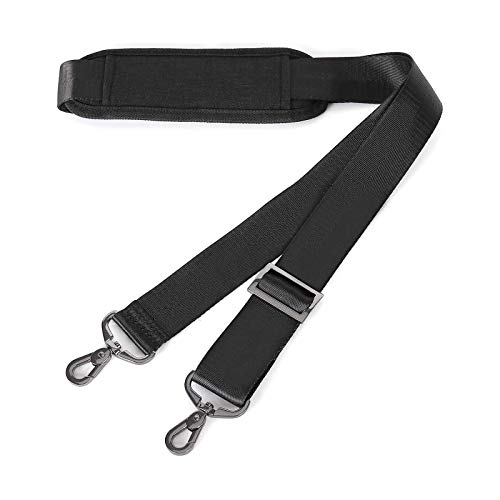

As an Amazon Associate we earn from qualifying purchases at no extra cost to you. Ratings are shown as listed on Amazon.
Decide These 3 Things First
- What are you carrying? Identify the item’s loaded weight, attachment points, and shape. A small messenger bag, laptop case, and folding chair need different strap designs.
- How will you carry it? Decide whether the strap will sit on one shoulder, cross your body, or be used as a backpack-style carrier. Crossbody use generally requires more length and better stability.
- How often will you use it? Occasional use may justify a basic strap. Daily commuting, travel, or outdoor carrying calls for stronger webbing, smoother adjustment, better padding, and more durable hardware.
1. Size and Adjustment Range
Measure the strap you are replacing from end to end, including the hooks if possible. Then measure the distance from one attachment point to the other when the item is worn in your preferred position. A listed length of 56, 67, or 72 inches usually refers to the strap’s maximum overall length, but manufacturers do not always measure in exactly the same way.
For a shoulder bag, an adjustable range of about 32 to 55 inches suits many adults wearing the bag on one shoulder. Crossbody use often works better with 45 to 65 inches, depending on height and the bag’s position. A 67- to 72-inch strap gives taller users and winter-clothing wearers more flexibility, but excess length can dangle unless the adjustment keeper is secure.
Check the strap width as well. Straps around 1 to 1.5 inches wide are common for laptop and messenger bags. A wider 2- to 3-inch design can distribute weight better for chairs, equipment bags, or heavier loads, though it may not fit narrow bag loops. If the item has fixed rings, confirm that the hooks can open wide enough to engage them.
2. Material and Webbing
Most carrier straps use nylon, polyester, cotton, neoprene, foam, or a combination of these materials. Nylon webbing is strong and slightly flexible, making it a common choice for luggage and bags. Polyester tends to resist stretching and moisture well. Cotton can feel comfortable but may absorb water and show wear sooner in outdoor use.
Look for tightly woven webbing without loose fibers, uneven edges, or shiny areas that suggest inconsistent finishing. For everyday bags, webbing around 1.5 to 2.5 millimeters thick is often sufficient. Heavier carriers may benefit from a wider, thicker webbing base, but thickness alone does not establish a safe load capacity.
Padded sections commonly use foam, air-cushion construction, mesh, or neoprene-like material. A shoulder pad measuring roughly 6 to 10 inches long and 2.5 to 4 inches wide can spread pressure without becoming bulky. Mesh may improve airflow in warm weather, while smooth synthetic covers are easier to wipe clean.
3. Construction and Hardware
Inspect the points where the strap is most likely to fail: the sewn loops, adjustment buckles, and hooks. Reinforced stitching should run across the webbing and continue along the folded end. Box stitches or multiple parallel rows generally provide more visible reinforcement than a single straight seam, although stitching style is not a substitute for a stated load rating.
Metal hooks are usually preferable for heavier or frequent-use applications because they resist cracking. Zinc alloy and steel are common. Plastic hooks can be adequate for a light bag, especially when minimizing weight matters, but they deserve closer inspection for stress marks, thin hinge areas, and sharp edges.
Swivel hooks can reduce twisting when you walk, while fixed hooks may be simpler and lighter. A metal adjustment buckle should slide firmly but not require excessive force. Before using a new strap, tug each hook and buckle by hand and inspect whether the webbing creeps through the adjuster.
4. Comfort and Carrying Performance
Comfort comes from width, padding, surface texture, and stability—not just softness. A very soft pad can compress quickly under a heavy load, leaving the narrow webbing to bear against your shoulder. For a bag weighing up to about 8 pounds, a padded section around 2.5 to 3 inches wide is often comfortable for routine carrying. Loads near 10 to 15 pounds call for wider support and a bag that keeps the weight close to your body.
Non-slip backing can help a strap stay in place on a coat or smooth shirt, but aggressive rubberized surfaces may pull at delicate fabrics. A contoured pad may reduce pressure on the neck, while a flat pad is easier to reposition. If you switch between left and right shoulders, choose a symmetrical pad and swiveling hardware.
For folding chairs and outdoor carriers, comfort also depends on balance. Two separate shoulder straps can distribute weight more evenly than a single shoulder strap, but they may require more adjustment. Do not treat a chair-carrier strap as a substitute for a fully supported backpack if the load is awkward, sharp-edged, or heavier than you can comfortably control.
5. Price Tiers and Value
Budget carrier straps typically cost about $7 to $12. Examples include universal replacement straps around 56 to 72 inches long, such as the $8.99 JOCYRN 72-inch strap and the $8.99 MOSISO 56-inch non-slip strap. At this level, expect basic webbing, simple adjusters, and limited padding. These can be sensible choices for light laptop bags, purses, and occasional replacements.
Midrange options generally cost $13 to $25. A $19.99 FIEIL strap, for example, emphasizes a thicker padded section, double adjustment buckles, and metal hooks. This tier is often the best value for daily commuting or a heavier messenger bag because you may gain better pressure distribution and more secure hardware without paying for specialized construction.
Specialty or heavy-duty straps commonly cost about $25 to $45 or more. A three-pack of folding-chair carrier straps priced around $13.99 is inexpensive per strap, but compare its intended use carefully with a padded single strap for a laptop bag. Packs may save money when you need multiple carriers, but they may not provide the same adjustment range or shoulder padding.
6. Warranty and Replacement Support
Check whether the seller offers a stated warranty, return window, or replacement policy. For a strap costing under $15, a straightforward return period may matter more than a long warranty. For a specialty strap costing $25 or more, look for clearly stated coverage for broken hooks, failed stitching, or manufacturing defects.
Keep the packaging and order information until you have tested the strap with the actual load. A warranty usually does not cover overloading, cutting, abrasion, or normal wear. Also check whether replacement buckles or matching straps are available. A common width and hook style can make future replacement easier.
7. Delivery, Fit, and Assembly
Most replacement straps require no assembly beyond attaching the hooks and threading the adjuster. Allow about 5 to 10 minutes to install and tune one. If the strap arrives folded, give the webbing time to flatten before deciding that the length is wrong.
Before ordering, verify the hook opening, which may be roughly 0.25 to 0.5 inch on common bag straps. Measure the bag ring or chair loop so the hook can pass through without forcing it. Also confirm the packed dimensions if you need the strap for travel; a thick padded model may take up 10 to 14 inches of usable packing space when coiled.
After installation, test the empty carrier first, then add weight gradually. Walk indoors for several minutes and check for slipping, twisting, buckle movement, and pressure on your neck. Do not rely solely on a product title’s use-case wording; the actual dimensions and attachment design are more useful.
Spec Checklist
| Spec | Budget | Mid | Premium |
|---|---|---|---|
| Typical price | $7–$12 | $13–$25 | $25–$45+ |
| Length | About 50–72 inches | About 45–72 inches | About 40–75 inches or specialized sizing |
| Webbing width | 1–1.5 inches | 1.5–2 inches | 2–3 inches or task-specific sizing |
| Shoulder pad | Minimal or none | Foam or mesh, about 6–9 inches long | Contoured, ventilated, or multi-layer pad, about 8–12 inches long |
| Hardware | Basic plastic or light metal | Metal hooks and adjustable buckles | Heavy-duty metal, swivel hooks, reinforced adjusters |
| Best use | Light bags and occasional use | Daily bags and moderate loads | Frequent, heavy, outdoor, or specialty carrying |
Red Flags
- No stated length, width, material, or hook dimensions.
- Load-capacity claims without information about stitching, hardware, or intended use.
- Thin webbing paired with oversized marketing claims about heavy-duty performance.
- Hooks that look narrow, brittle, poorly plated, or difficult to close.
- Adjusters that slide freely when pulled by hand.
- Padding that covers only a few inches of the shoulder area on a heavy carrier.
- Loose stitching, frayed edges, sharp metal corners, or chemical odor that does not fade.
- A universal strap that does not specify whether it fits your bag’s rings, loops, or D-rings.
FAQ
How long should a carrier shoulder strap be?
For a one-shoulder bag, start with an adjustable strap that reaches at least 50 to 55 inches. For crossbody wear, 60 to 72 inches gives more flexibility, especially for taller users or bulky coats. Measure the existing strap and compare the manufacturer’s measurement method before ordering.
Are padded straps better than unpadded straps?
Usually, yes, when the carrier weighs more than about 5 to 8 pounds or is worn for longer than 15 to 20 minutes. Padding spreads pressure, but width and stability matter just as much. A thick pad on weak webbing or poorly secured hooks is not a safe upgrade.
Can I use a laptop-bag strap on a folding chair?
Only if the attachment points, length, hardware, and intended load are appropriate. Folding chairs can be awkward and may place twisting forces on the hooks. A chair-specific carrier, particularly one with two straps or reinforced attachment points, is generally the better choice for regular outdoor use.
How do I know when to replace a shoulder strap?
Replace it when you see fraying through the webbing, stretched or separated stitching, bent hooks, cracked plastic, slipping adjusters, or compressed padding that no longer distributes pressure. If a strap has been exposed to saltwater, mud, or repeated heavy loads, inspect it before every use and retire it at the first sign of structural damage.


Write Your Review
No reviews yet. Be the first to share your experience!