
Key takeaways
- Hip-seat-only carriers: These are the lightest and quickest to use. Your child sits on the shelf while you support their back with one arm. They are convenient for children who want to look around and frequently get down.
- Hybrid or full carriers: These add a back panel and straps for more secure, hands-free carrying. They are more versatile but also warmer, bulkier, and slower to put on.
The Short Answer
Yes, a hip seat carrier is worth it if you frequently carry a baby or toddler on one hip and want to reduce the strain of supporting their weight with your arm. The one condition is that you should be comfortable using it mainly for short, frequent carries rather than expecting it to replace a fully supportive, hands-free carrier.
A hip seat is especially useful for errands, stroller walks, playground visits, and the constant up-and-down routine of toddlerhood. It gives your child a padded shelf to sit on while a wide waistband helps transfer some of the load to your torso. However, it does not always hold a child as securely or comfortably as a wrap, structured carrier, or framed backpack—particularly when you are walking for more than 20 to 30 minutes.
Our top picks

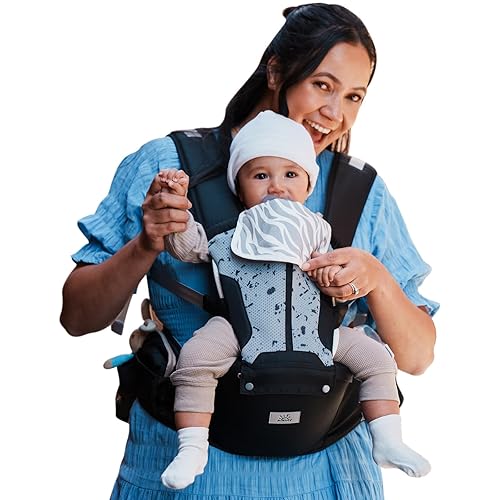 MOMTORY Safety-Certified 6-in-1 Baby Carrier Newborn to
As an Amazon Associate we earn from qualifying purchases at no extra cost to you. Ratings are shown as listed on Amazon.
For 2026, the category remains appealing because the basic design is simple and relatively affordable. Most models cost roughly $40 to $80, compared with premium structured carriers that can cost $100 to $200 or more.
What You Actually Get
A hip seat carrier usually combines three parts: a firm, slightly angled seat; a padded waist belt; and, on some models, a removable fabric panel with shoulder straps. The seat creates a stable platform under the child’s bottom, while the belt prevents the entire load from hanging from your arm.
There are two main types:
- Hip-seat-only carriers: These are the lightest and quickest to use. Your child sits on the shelf while you support their back with one arm. They are convenient for children who want to look around and frequently get down.
- Hybrid or full carriers: These add a back panel and straps for more secure, hands-free carrying. They are more versatile but also warmer, bulkier, and slower to put on.
Storage is another common feature. Depending on the design, you may get a front pocket, side pocket, or a larger compartment for keys, a phone, diapers, or a small pack of wipes. Storage is useful, but it should not be the deciding factor. A full pocket can add bulk at your waist, and a carrier still will not replace a diaper bag.
The Tushbaby The Original Premium Quality Hip Seat Carrier, listed at about $72.99, is an example of the hip-seat-only style. It emphasizes a structured seat, safety buckles, and built-in storage. The MOMTORY Safety-Certified 6-in-1 Baby Carrier, listed at about $41.95, is a lower-cost hybrid-style option with multiple carrying configurations. These products illustrate the main buying decision: pay more for a dedicated, streamlined seat or spend less for a more adaptable carrier system.
Always check the manufacturer’s current age, weight, and position requirements before using any carrier. “Newborn to toddler” does not mean every position is safe from birth, and some configurations require an infant insert or a minimum weight. A carrier should fit snugly, keep the child’s airway clear, and support the child according to the instructions.
Pros
- Less arm fatigue: The seat supports much of the child’s bottom, so your arm is not carrying the full load. This can make a noticeable difference with a 20- to 35-pound toddler.
- Fast to use: A hip seat can be buckled around your waist in seconds. That is helpful when a child suddenly refuses the stroller or wants to be picked up.
- Easy in-and-out access: Children can sit down and get off repeatedly without the longer adjustment process required by many soft-structured carriers.
- Good visibility for toddlers: The elevated position lets children look over your shoulder and see what is happening, which may make errands and walks more pleasant.
- Useful for mixed carrying: You can use it on one hip, switch sides, or briefly carry the child in front, depending on the design and the child’s age.
- Affordable entry price: A basic model can cost around $40 to $50, while better-known dedicated hip seats often fall near $70 to $80.
- Helpful for caregivers with limited grip strength: By transferring weight toward the waist, a good fit may reduce the need to squeeze tightly with one arm.
Cons
- It is not always hands-free: With a hip-seat-only design, you still need to support the child’s back and use at least one arm, especially with younger or wiggly children.
- Less comfortable for long walks: The asymmetrical position can still strain your back, hip, or shoulder. It is generally better for short trips than for an hour-long outing.
- Waist pressure: A tight belt and a child’s weight can feel uncomfortable around the stomach or lower back. This may be a poor match after abdominal surgery or for anyone sensitive to pressure.
- Bulkier than it looks: The firm seat sticks out from your body. It may be awkward under a coat, while sitting in a car seat, or when moving through narrow spaces.
- Heat and sweat: Padded belts and fabric panels can become warm, particularly in summer or when a child is carried front-facing.
- Not ideal for newborns without proper support: A seat by itself does not provide the head, neck, and body support a young infant needs.
- Fit varies by caregiver: A belt that works well for one person may dig in or ride up on another. Waist adjustment ranges and padding differ considerably between brands.
- Safety depends on correct use: A buckle does not replace supervision. You still need to follow the product’s weight limits, keep the child upright, and prevent the child from leaning or climbing out.
Who Should Buy It
A hip seat carrier makes the most sense for parents and caregivers of babies or toddlers who are carried often but do not want to keep them strapped in continuously. It is particularly practical if your child alternates between walking, riding in a stroller, and being picked up.
Consider one if you:
- Carry a child weighing roughly 15 to 35 pounds several times a day.
- Need a quick option for stairs, curbside pickup, grocery aisles, or playground transitions.
- Prefer a child-facing-out view when developmentally appropriate and permitted by the instructions.
- Find that carrying on one arm causes wrist or elbow fatigue.
- Want a carrier that costs less than many premium all-day models.
A hybrid model is the better choice if you want one carrier to cover infant use, toddler use, and longer hands-free walks. A dedicated hip seat is better when speed and easy access matter more than maximum support.
Who Should Skip It
Skip a hip seat, or treat it as a secondary carrier, if you want to carry hands-free for long periods. A structured carrier with two shoulder straps and a supportive waistband will usually distribute weight more evenly.
It may also be the wrong choice if you have ongoing lower-back, hip, pelvic-floor, or abdominal discomfort. The concentrated waist pressure and offset load can aggravate those issues. Caregivers of young infants should choose a carrier specifically designed for the baby’s age and size, rather than assuming a hip seat is suitable because the product has a broad age range.
Cheaper Alternatives
| Option | Cost | Trade-off |
|---|---|---|
| Use a stroller for most outings | $0 if you already own one | Less convenient on stairs, crowded stores, uneven sidewalks, and quick up-and-down trips. |
| Soft baby wrap or ring sling | About $25–$60 | Often more comfortable for small babies, but requires practice and may feel less stable with a larger toddler. |
| Basic soft-structured carrier | About $35–$70 | Usually offers better hands-free support, but can be slower to put on and less convenient for frequent transfers. |
| Secondhand carrier | About $15–$50 | Lower cost, but inspect every buckle, strap, seam, and label; avoid products with missing instructions or unknown recalls. |
The least expensive option is not always the most useful. If you already own a stroller and a carrier, a hip seat may be redundant. If you have neither, a versatile soft-structured carrier may provide more value for the same $40 to $75 price range.
FAQ
Is a hip seat carrier better than a regular baby carrier?
Neither is universally better. A hip seat is quicker and easier for short carries, while a regular carrier usually provides better weight distribution and hands-free support. Many families use a regular carrier for walks and a hip seat for errands and toddler transitions.
What age is best for a hip seat carrier?
It is typically most useful once a baby has strong head and trunk control, and it becomes especially practical during the toddler stage. Exact minimum ages, weight limits, and approved positions vary, so follow the specific product manual rather than relying on a general age estimate.
Can you use a hip seat carrier for long walks?
You can, but comfort depends on the child’s weight, your body, and the belt design. For walks longer than about 20 to 30 minutes, a two-shoulder carrier is often more comfortable because it spreads the load across your shoulders and hips instead of concentrating it on one side.
Is a $40 hip seat carrier good enough?
It can be, provided it fits correctly, has secure buckles, clear instructions, and an appropriate seat for your child’s size. A $70 model may offer better padding, storage, or materials, but price alone does not prove a carrier is safer or more comfortable. Try to buy from a retailer with a clear return policy so you can assess the fit at home.


Write Your Review
No reviews yet. Be the first to share your experience!