
Key takeaways
- Pro: Six carrying configurations offer flexibility.
- Pro: It is marketed as safety-certified and designed from newborn through toddler stages.
- Con: More configurations can mean a steeper learning curve during setup.
Choosing the best carrier for toddlers with special needs is less about finding the most feature-packed design and more about matching the carrier to a child’s support, sensory, and mobility needs. A child who tires quickly may benefit from a hip seat, while a toddler who dislikes pressure or buckles may do better with a simple sling. The right choice also depends on caregiver comfort, how often the carrier will be used, and whether the child can maintain a stable seated position.
This roundup focuses on adjustability, carrying positions, ease of use, and features that may help during errands, walks, appointments, or crowded spaces in 2026. Product descriptions and prices can change, and a carrier should never replace individualized advice from a pediatrician or physical or occupational therapist. If your child has low muscle tone, limited head or trunk control, hip concerns, or breathing difficulties, ask a qualified professional to assess fit before regular use.
Our top picks


As an Amazon Associate we earn from qualifying purchases at no extra cost to you. Ratings are shown as listed on Amazon.
Quick Picks
| Product | Best for | Price |
|---|---|---|
| MOMTORY Safety-Certified 6-in-1 Baby Carrier Newborn to Toddler, Black | Families wanting multiple carrying options | $41.95 |
| Holaraon Baby Sling Carrier for Toddler, Grey | Short trips and lightweight hip carrying | $23.99 |
| Momcozy Baby Carrier with Hip Seat, Black | Long walks and extra sitting support | $79.99 |
| Infantino Flip Advanced 4-in-1 Baby Carrier, Black | Versatile carrying on a budget | $29.15 |
| Baby Sling Carrier, Rich Brown | Portable one-shoulder carrying | $24.99 |
| Grownsy Safety-Certified 3D Knit Baby Carrier Newborn to Toddler, Black | Families prioritizing a knit carrier | $59.99 |
| HKAI Baby Hip Carrier, Black | Breathable hip-seat carrying | $34.19 |
How We Picked
We ranked these carriers by looking at the features most relevant to toddlers with additional physical, sensory, or developmental needs. That includes the number of carrying configurations, the presence of a hip seat, adjustability, shoulder options, waist adjustability, breathable materials, and the stated weight ranges where provided. We also considered how practical each option may be for a caregiver who needs to reposition a child, carry for short periods, or move through appointments and public spaces.
Safety and fit come first. A product described as safety-certified is not automatically the correct choice for every child, and a broad carrying range does not guarantee appropriate support. Check the manufacturer’s instructions, make sure the child’s face and airway remain clear, and inspect buckles, seams, and straps before use. Our “when to skip” notes identify situations in which another style—or professional guidance—may be a better match.
The 7 Best Picks
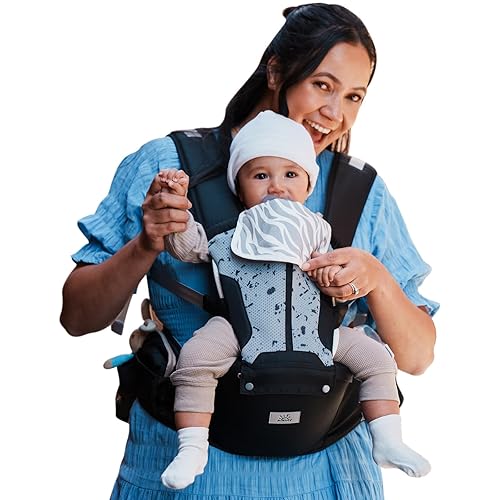
1. MOMTORY Safety-Certified 6-in-1 Baby Carrier Newborn to Toddler, Black
The MOMTORY is the most adaptable pick for caregivers who want one carrier to accommodate changing routines. Its 6-in-1 design suggests several ways to carry, which can be useful when a toddler’s tolerance varies from day to day. The safety-certified positioning may also reassure families comparing basic carriers. For special-needs use, the key is choosing the configuration that keeps the child well supported and the caregiver balanced.
- Pro: Six carrying configurations offer flexibility.
- Pro: It is marketed as safety-certified and designed from newborn through toddler stages.
- Con: More configurations can mean a steeper learning curve during setup.
When to skip: Choose a simpler carrier if multiple adjustments are likely to overwhelm you or if your child needs individualized positioning that this general-purpose design cannot provide. Price: $41.95.
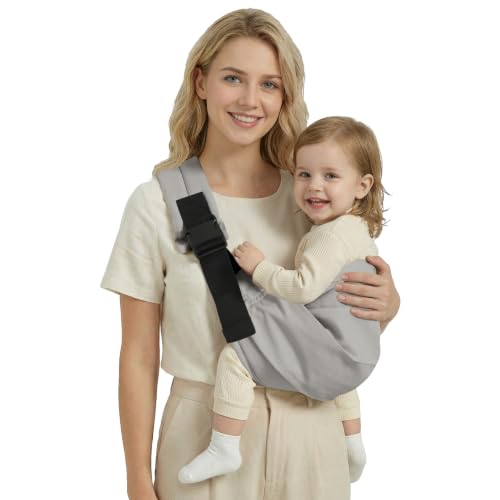
2. Holaraon Baby Sling Carrier for Toddler, Grey
The Holaraon is aimed at caregivers who want a compact toddler carrier for quick transfers, errands, and brief periods of carrying. Its sling format, adjustable left or right shoulder strap, and secure buckle allow the wearer to select a preferred side rather than being locked into one shoulder. The premium cotton description may appeal to families who prefer a less structured feel. Because a sling relies heavily on the wearer’s positioning and the child’s stability, careful adjustment is especially important for toddlers with motor challenges.
- Pro: Left- and right-shoulder adjustability supports different caregiver preferences.
- Pro: The lightweight sling format is convenient to store and carry.
- Con: One-shoulder carrying may become tiring or uneven during longer outings.
When to skip: Skip it for extended walks, children who need substantial trunk support, or caregivers with shoulder, neck, or back discomfort. Price: $23.99.
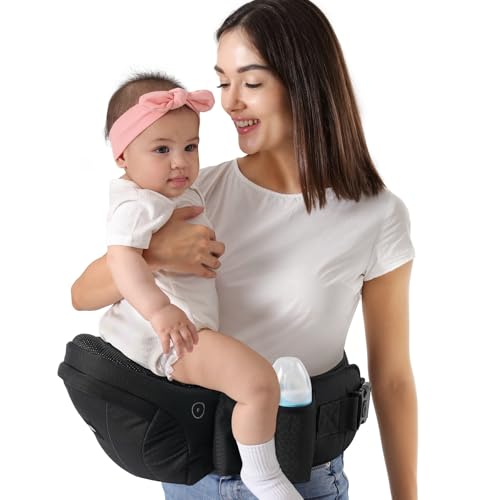
3. Momcozy Baby Carrier with Hip Seat, Black
The Momcozy stands out for combining a detachable hands-free carrier with a hip seat. That format can be useful when a toddler wants to alternate between being held and looking around, since the seat may make quick up-and-down transitions more practical. It is described for forward-facing carry and long walks, with a stated 7–44-pound range and waist fit up to 45 inches. Caregivers should still confirm that forward-facing positioning is appropriate for their child’s development and comfort.
- Pro: The hip seat can distribute some of the child’s weight away from the arms.
- Pro: The 7–44-pound range and waist fit up to 45 inches offer broad stated coverage.
- Con: It is the most expensive option in this roundup at $79.99.
When to skip: Avoid forward-facing use if your child cannot maintain the required posture or becomes overstimulated by the environment.
4. Infantino Flip Advanced 4-in-1 Baby Carrier, Black
The Infantino Flip Advanced is a budget-friendly choice for caregivers who want multiple carrying positions without moving into a premium price category. Its 4-in-1 format may help families adapt as a child’s preferences change, and the familiar structured-carrier design can be easier to learn than a wrap. For a toddler with special needs, fit matters more than the number of positions: the child should sit securely, and straps should be adjusted evenly before walking.
- Pro: Four carrying configurations provide useful flexibility.
- Pro: The $29.15 price makes it accessible for families testing whether a carrier will become part of their routine.
- Con: The product information provided does not specify a toddler weight range.
When to skip: Skip it if you need a clearly stated weight range before purchase or if your child requires specialized postural support. Price: $29.15.
5. Baby Sling Carrier, Toddler Sling Carrier 20–44 lbs, Rich Brown
This one-shoulder sling is designed specifically around a stated 20–44-pound toddler range, making it a practical option for children who are beyond the infant stage but still need occasional carrying. Its adjustable straps and portable design favor quick use at appointments, in parking lots, or during short outings. The simplicity can be appealing when a caregiver does not want a bulky carrier. However, one-shoulder designs place more responsibility on the adult to maintain a comfortable, balanced posture.
- Pro: The stated 20–44-pound range is clear for toddler-focused shopping.
- Pro: Adjustable straps and a lightweight format support portability.
- Con: A one-shoulder carry may not be comfortable for sustained use.
When to skip: Choose another style for long walks, uneven weight distribution, or children who need more structured torso support. Price: $24.99.
6. Grownsy Safety-Certified 3D Knit Baby Carrier Newborn to Toddler, Black
The Grownsy combines a 3D knit construction with a newborn-to-toddler design, giving it a softer-looking alternative to more heavily structured carriers. Its safety-certified description may appeal to families who want a carrier with an added certification claim, while the broad stage range can reduce the need to buy another carrier quickly. Still, toddlers with special needs may require firmer support than a knit design provides, depending on their muscle tone and sitting control.
- Pro: The 3D knit construction may suit caregivers who prefer a softer carrier style.
- Pro: It is designed for use from newborn through toddler stages and is described as safety-certified.
- Con: Knit construction may not provide enough structure for every child with postural needs.
When to skip: Skip it until a professional confirms fit if your child slumps, leans, or needs substantial lateral or trunk support. Price: $59.99.
7. HKAI Baby Hip Carrier, Black
The HKAI focuses on hip-seat carrying, with an adjustable waistband, breathable mesh, and a non-slip hip-seat surface. That combination may work well for caregivers who frequently lift a toddler for short periods and then set the child down again. A hip seat can also make side carrying feel more natural than holding a child entirely in the arms. It is not a substitute for full-body support, though, so the child’s balance and the caregiver’s walking stability should guide how it is used.
- Pro: The non-slip hip-seat surface is designed to help keep the child positioned on the seat.
- Pro: Breathable mesh and an adjustable waistband support everyday usability.
- Con: A hip seat alone may not be adequate for a child who cannot sit steadily.
When to skip: Choose a more supportive carrier if your toddler needs a secured upper body, has limited trunk control, or tends to slide sideways. Price: $34.19.
Buying Guide
Match support to your child’s abilities
Start with head, neck, and trunk control rather than age alone. A child who can sit independently may tolerate a hip seat, while a child who slumps or tires quickly may need a more structured, hands-free design. Ask a physical or occupational therapist to review positioning if your child has low tone, asymmetry, hip concerns, or a neurological condition. Always keep the face visible, the airway unobstructed, and the child close enough to monitor.
Choose the carrying style for the outing
For short transfers, a one-shoulder sling can be compact and convenient. For longer walks, two-shoulder support or a hip-seat carrier may feel more manageable. A multi-position carrier is useful when you need flexibility, but only if you are comfortable adjusting it correctly. Forward-facing carry can offer stimulation and visibility, yet some children may become overwhelmed, and it may not suit children who need greater postural support.
Check caregiver fit and daily practicality
Look for adjustable straps, a waistband that sits securely, and buckles you can operate without assistance. Consider whether the carrier can be put on while your child is calm, whether it is easy to clean, and whether its weight will add to the load. A carrier that stays at home because it is difficult to use is less valuable than a simpler option that fits your routine. Recheck the fit whenever your child’s clothing, size, or mobility changes.
Our Verdict
The Momcozy Baby Carrier with Hip Seat is the strongest overall choice for caregivers who prioritize longer walks, flexible transitions, and a stated 7–44-pound range. The MOMTORY is the better value for families wanting six carrying configurations, while the Holaraon and Rich Brown sling are practical for short, lightweight carrying. The HKAI is a sensible hip-seat alternative at a lower price. For children with significant postural or medical needs, however, the best carrier is the one approved and fitted with guidance from the child’s care team.
FAQ
What is the best carrier for a toddler with low muscle tone?
Look for a carrier that offers secure torso support, balanced weight distribution, and careful adjustability. A hip seat alone may not be sufficient if the child slumps or cannot maintain a stable seated position. Ask a physical or occupational therapist to assess the carrier before regular use.
Are hip-seat carriers suitable for toddlers with special needs?
They can be useful for children who sit steadily and need occasional carrying, especially during short transfers. A hip seat may not be appropriate for a child who needs upper-body support, leans significantly, or cannot maintain alignment without assistance.
Is a one-shoulder sling safe for long walks?
A one-shoulder sling may work well for brief outings, but it can create uneven strain for the caregiver during extended use. It also requires careful attention to the child’s posture and airway. For long walks, a balanced carrier may be more comfortable.
How should I test a carrier before leaving home?
Begin with a short, supervised trial indoors. Check that the child’s face is visible, breathing is unobstructed, the seat is secure, and the caregiver can walk comfortably. Stop if the child shows distress, unusual fatigue, color changes, or difficulty maintaining position.


Write Your Review
No reviews yet. Be the first to share your experience!