
Key takeaways
- Best Developmental Stage: Newborns up to around 12–18 months (or until the child exceeds 25–30 lbs).
- Trail Advantage: Lightweight (typically under 2 lbs empty), easy to pack, and keeps your baby quiet and snug against your chest or back.
- Trail Limitation: Minimal storage space for water and layers; heat can build up quickly where the baby sits against your body.
What's inside
- Choosing the Right Carrier: Soft Structured vs. Framed Backpacks
- Essential Safety Rules for Trail Babywearing
- How to Prepare and Pack for a Babywearing Hike
- Top Hiking Carriers for Outdoor Families
- Buyer’s Guide: How to Select Your Ideal Hiking Carrier
- Frequently Asked Questions About Babywearing on Trails
- Summary
Babywearing for hiking allows outdoor enthusiasts to navigate rugged trails while keeping their infants secure and bonded. With an ergonomic carrier suited to your baby’s developmental stage, trail trekking becomes an enjoyable reality. Preparing your gear, managing trail climate, and pacing yourself ensures a safe outdoor adventure.
- Choosing the Right Carrier: Soft Structured vs. Framed Backpacks
- Essential Safety Rules for Trail Babywearing
- How to Prepare and Pack for a Babywearing Hike
- Top Hiking Carriers for Outdoor Families
- Buyer’s Guide: How to Select Your Ideal Hiking Carrier
- Frequently Asked Questions About Babywearing on Trails
- Summary
Choosing the Right Carrier: Soft Structured vs. Framed Backpacks
Selecting the ideal carrier forms the foundation of any comfortable trek with an infant or toddler. Soft structured carriers excel for infants on mellow terrain, while framed backpacks provide superior suspension and load lifters for growing toddlers on steep paths. Matching carrier mechanics to trail difficulty protects your back.
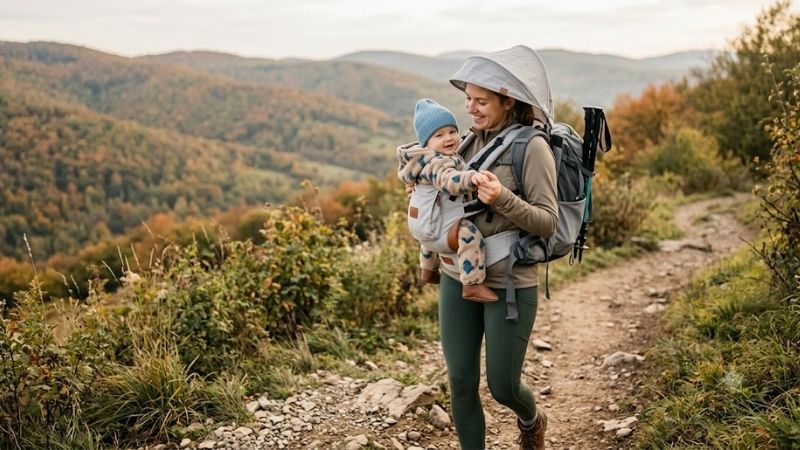
1. Soft Structured Carriers (SSCs)
Soft structured carriers (buckle carriers) keep your baby close to your center of gravity. They are crafted from breathable fabrics, canvas, or technical mesh, utilizing padded waistbands and shoulder straps without rigid metal components.
- Best Developmental Stage: Newborns up to around 12–18 months (or until the child exceeds 25–30 lbs).
- Trail Advantage: Lightweight (typically under 2 lbs empty), easy to pack, and keeps your baby quiet and snug against your chest or back.
- Trail Limitation: Minimal storage space for water and layers; heat can build up quickly where the baby sits against your body.
2. Framed Backpack Carriers
Framed hiking carriers feature an internal or external aluminum frame, an integrated cockpit for the child, load-lifter straps, an adjustable torso harness, and expansive gear compartments.
- Best Developmental Stage: Babies who sit completely unassisted with independent neck and torso control (typically 6 months and older) up to 40–48 lbs total weight capacity.
- Trail Advantage: Superior mechanical weight transfer to the adult hips, built-in sunshades, integrated kickstands for resting, and ample cargo storage for diapers, water, and food.
- Trail Limitation: Bulkier, significantly heavier (typically 6–8 lbs empty), and shifts the center of gravity higher up and farther back.
Essential Safety Rules for Trail Babywearing
Trail safety demands heightened vigilance when carrying a child across uneven and unpredictable terrain. Adhering to airway visibility protocols, monitoring infant core temperatures, and utilizing trekking poles will prevent common accidents. Prioritizing these foundational precautions keeps every backwoods excursion secure and worry-free.
The TICKS Protocol for Trail Use
The established TICKS rule remains the gold standard for babywearing safety, especially under dynamic trail conditions:
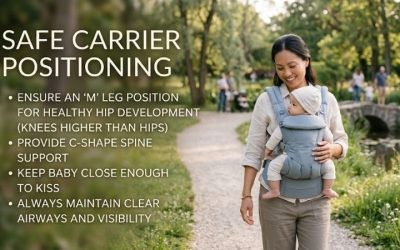
- Tight: The carrier should be snug enough to hold your baby close to your torso. Slumped fabric causes your child to slump, which can restrict breathing.
- In View at All Times: You should always be able to look down and see your baby’s face without moving fabric aside.
- Close Enough to Kiss: Your child’s head should sit close to your chin when front-wearing.
- Keep Chin Off Chest: Ensure there is always a gap of at least one finger-width beneath your baby’s chin to maintain open airways.
- Supported Back: The baby’s spine should sit in a natural, supported curve, with hips in an ergonomic “M-position” (knees spread higher than the bottom).
Thermal Regulation on the Trail
Infants cannot regulate their body temperature as efficiently as adults. Because babies sit passively in a carrier without generating muscle heat through movement, they are prone to hypothermia in cool wind and hyperthermia in direct sunlight.
- Cold Weather: Dress your child in warm, thin, breathable layers (wool or synthetic fleece) rather than bulky snowsuits, which can cause slipping or harness failure.
- Warm Weather: Avoid direct sun exposure. Utilize sun hats with wide brims and UV-rated sunshades. Frequently check the back of your child’s neck for perspiration or cold clamminess.
Center of Gravity and Trekking Poles
Carrying extra weight on front or back changes your pivot mechanics and balance. Using a pair of adjustable trekking poles provides two extra contact points with the ground, reducing knee impact on descents and preventing slips on loose gravel, wet roots, or slick mud.
How to Prepare and Pack for a Babywearing Hike
Proper packing separates an invigorating family trek from a stressful backcountry emergency. Because babywearing shifts your center of gravity, distributing essential supplies evenly between your carrier compartments and partner packs is crucial. Carrying trail essentials without excess weight maintains endurance on extended ascents.
Pre-Hike Preparation Checklist
- Trail Selection: Choose well-maintained, wide trails with low technical difficulty and modest elevation gain for your initial outings. Check recent trail condition reports for washouts or excessive mud.
- Pacing and Timing: Plan your hike around your child’s sleep and feeding schedules. Double the time you normally take to cover a mile to allow for diaper stops, feeding breaks, and hydration.
- Emergency Bailout Points: Select loops or trails that feature early exit paths in case of sudden weather shifts or persistent infant distress.
What to Pack: The Baby Trail Kit
Keep baby supplies organized in waterproof stuff sacks inside your carrier’s cargo area or a companion’s daypack:
- Diapering Kit: 3–4 diapers, biodegradable wipes, a compact changing mat, and sealed zip bags for pack-it-out waste management.
- Nutrition & Hydration: Adequate water for the parent, formula/breast milk bottles or toddler pouches, and high-energy snacks.
- Weather Protection: A dedicated packable rain cover for the carrier, SPF sun hats, lightweight muslin cloths, and an extra complete change of clothes for the baby.
- First-Aid & Navigation: Compact blister treatment, infant-safe bandages, antiseptic wipes, a headlamp, and an offline trail map application.
Top Hiking Carriers for Outdoor Families
Investing in trail-ready baby gear requires evaluating weight capacity, harness adjustability, and ventilation. The following field-tested carriers represent reliable options across soft structured and external framed designs. Each model addresses distinct hiking styles, child developmental stages, and parent ergonomic requirements.
1. Ergobaby Omni 360 All-in-One Carrier
- Best For: Infants to early toddlers on short-to-moderate day hikes.
- Key Features: Breathable Cool Air Mesh construction, lumbar support waist belt, crossable shoulder straps, ergonomic inward and outward carrying positions, and an included UPF 50+ privacy hood.
- Pros:
- Ultra-lightweight and packable in standard backpacks.
- No separate infant insert required (usable from 7 lbs to 45 lbs).
- Highly breathable mesh prevents excessive parent-child heat buildup.
- Cons:
- Lacks integrated cargo storage for hiking supplies.
- Shoulder and back fatigue can develop on hikes exceeding 3 hours.
- Use Case: Woodland trails, state park path walks, and moderate family hikes with infants aged 2 to 14 months.
- Who It’s For: Parents wanting one versatile, compact carrier for everyday neighborhood walking and weekend nature trails.
2. Osprey Poco Child Carrier
- Best For: Dedicated day hikers tackling technical terrain with sitting babies and toddlers.
- Key Features: Rigid lightweight aluminum frame, AirSpeed ventilated suspended mesh backpanel, built-in UPF 50+ sunshade, continuous tensioned hipbelt, and 26 liters of gear storage.
- Pros:
- Exceptional suspension transfers load efficiently to the pelvis.
- Quick-deploy sunshade shields baby completely from direct overhead light.
- Sturdy fold-out kickstand enables safe, stable ground loading.
- Cons:
- Substantial profile; takes up significant trunk space.
- 7.7-pound empty base weight demands strong baseline fitness.
- Use Case: Half-day to full-day alpine hikes, rocky ascents, and backcountry day outings.
- Who It’s For: Active parents carrying children 6 months and older who need independent gear storage and premium trail ventilation.
3. Deuter Kid Comfort Pro
- Best For: Long-distance mountain trekkers needing maximum comfort and integrated gear space.
- Key Features: Aircomfort Sensic Vario mesh back system, pull-forward hip fins, integrated detachable daypack, elevated cockpit cushion, and adjustable stirrups for healthy child leg circulation.
- Pros:
- Highly adjustable back length fits varied parent heights quickly.
- Included removable mini-pack keeps immediate essentials accessible.
- Plush chin pad and ergonomic foot stirrups support sound naps on the move.
- Cons:
- Premium price point.
- Heavier frame construction than minimal daypack carriers.
- Use Case: Rugged mountain trails, prolonged full-day elevation gains, and all-day outdoor excursions.
- Who It’s For: Serious hiking couples sharing carry duty on extended trails with toddlers between 15 and 40 lbs.
Buyer’s Guide: How to Select Your Ideal Hiking Carrier
Choosing between trail-specific designs requires evaluating your typical terrain, trip length, and child development. Balancing immediate comfort against long-term durability prevents unnecessary gear upgrades as your child grows. Understanding these core criteria guarantees that your investment delivers lasting value on every forest hike.
1. Child Development & Age (What & Why)
- What: Assess whether your child possesses complete spinal stability or requires head-and-neck support.
- Why: Young infants lack muscular control to maintain open airways in a seated cockpit, making a structured front wrap or soft-structured carrier mandatory. Older infants with strong neck control benefit from the elevated vantage point of a framed pack.
- Who: Newborns to 6-month-olds require soft carriers; children 6 months to 3+ years thrive in framed backpacks.
- Trade-off: Framed packs last longer through toddlerhood but cannot be used during the initial 6 months of life.
2. Suspension & Load Transfer (What & Why)
- What: Look for rigid hipbelts, lumbar contouring, and load-lifter adjustment straps.
- Why: The adult shoulder girdle is not designed to support 25+ pounds over several miles. Proper suspension transfers 75–80% of total pack weight down to the pelvic bone.
- Who: Parents tackling trails with elevation gains over 500 feet or hikes longer than 90 minutes.
- Trade-off: Advanced suspension systems add structural weight and bulk to the carrier frame.
3. Ventilation & Fabric Performance (What & Why)
- What: Mesh contact points, moisture-wicking backings, and integrated sun protection.
- Why: Direct body-to-body contact generates significant heat, leading to chafing, dehydration, and infant irritability.
- Who: Hikers active during late spring, summer, and early autumn seasons.
- Trade-off: High-airflow mesh back panels slightly increase the distance between your back and the child’s weight, creating a marginal leverage effect on steep inclines.
Frequently Asked Questions About Babywearing on Trails
Parents often navigate common uncertainties regarding trail durations, infant feeding logistics, and safe sleeping postures while hiking. Reviewing answers to these frequent questions helps establish realistic trail routines and eliminates guesswork before heading outdoors. Clear preparation ensures confident parenting on the trail.
How young can a baby be taken on a hike in a carrier?
You can start hiking with a newborn as early as 4 to 6 weeks, provided your pediatrician approves and you use an ergonomic soft structured carrier that supports head, neck, and hip alignment. Keep early outings short (under 45 minutes) on flat, predictable paths.
How do I prevent my baby’s legs from falling asleep in a carrier?
Ensure the carrier seat supports your child’s thighs from knee-to-knee in a deep “M-position” (ergonomic squat spread), rather than dangling straight down from the crotch. For older toddlers in framed carriers, adjust the foot stirrups so their feet rest firmly with slightly bent knees.
Can my baby sleep safely while hiking in a carrier?
Yes, infants can safely nap in soft structured carriers if their airway remains open, chin is elevated off the chest, and their face is visible. In framed backpacks, look for a padded chin pillow that catches their head when they nod forward, preventing airway constriction.
What should I wear when babywearing on a hike?
Dress in technical, quick-drying athletic layers and avoid slick synthetic jackets that cause carrier straps to slide. Remember that your child acts like a personal radiator on your chest or back; avoid over-layering yourself or your baby to maintain mutual comfort.
Summary
Babywearing for hiking opens boundless opportunities to explore natural wonders while building healthy family outdoor traditions. By selecting an ergonomic carrier, respecting trail safety protocols, and packing thoughtfully, you create safe, lifelong memories in the wild. Trust your preparation, start small, and embrace the mountain journey.






Write Your Review
No reviews yet. Be the first to share your experience!