
Key takeaways
- Confusing ring diameter with tail length: A 3-inch ring does not mean the tail should be 3 inches long. It describes the ring opening.
- Measuring the tail while the sling is flat: The worn length changes after the fabric passes through the rings and wraps around the body.
- Buying by width alone: A 30-inch-wide sling can still be too short overall. Check both panel length and width.
- Leaving too much fabric: A 36-inch tail can be attractive, but it may drag, snag, or interfere with walking.
- Cutting before testing: Fabric can shrink, and thick materials consume more space in the ring channel. Wash and stabilize fabric according to its care instructions before final cutting.
- Ignoring construction quality: Correct dimensions do not make an unsafe carrier. Inspect stitching, ring attachment, fabric condition, and the stated child-weight range.
- Using unrelated sling hardware: Accessories for luggage, sports equipment, firearms, or home décor are not automatically suitable for a baby carrier.
What's inside
The Short Answer
For a baby ring sling, the visible tail usually measures about 12 to 24 inches (30 to 61 cm) after the fabric has been threaded through the rings and adjusted around the wearer. A short tail may be closer to 8 to 12 inches (20 to 30 cm), while a long decorative or highly adjustable tail can extend 24 to 36 inches (61 to 91 cm).
There is no single correct tail length. The finished length depends on the wearer’s body size, the sling’s shoulder style, the fabric thickness, and how much extra material is built into the sling. Most complete ring slings use a fabric panel approximately 80 to 90 inches (203 to 229 cm) long and 26 to 30 inches (66 to 76 cm) wide, but the tail is only the portion left outside the rings after fitting.
As an Amazon Associate we earn from qualifying purchases at no extra cost to you. Product prices and availability are accurate as of the date shown and are subject to change.


For most adults, a practical target is a tail that ends around the wearer’s hip or upper thigh. It should be long enough to make small adjustments and provide modest coverage, but not so long that it drags, catches on furniture, or gets underfoot. In 2026, many manufacturers still describe sling sizing by total fabric length or user size rather than publishing one standard tail dimension.
Standard Sizes
The following measurements are useful planning ranges rather than universal standards. Always check the manufacturer’s instructions, especially when buying a finished carrier or sewing your own.
| Part or size | Typical inches | Typical centimeters | What it means |
|---|---|---|---|
| Ring inner diameter | 3 inches | 7.6 cm | Common size for most baby-sling fabric |
| Ring outer diameter | 3.5 to 4 inches | 8.9 to 10.2 cm | Overall ring size, including the metal or nylon material |
| Ring width | 0.25 to 0.5 inch | 0.6 to 1.3 cm | Thickness of the ring itself |
| Finished sling width | 26 to 30 inches | 66 to 76 cm | Top-to-bottom width of the body panel |
| Common sling fabric length | 80 to 90 inches | 203 to 229 cm | Total length before threading and fitting |
| Short finished tail | 8 to 12 inches | 20 to 30 cm | Compact appearance with less adjustment room |
| Standard finished tail | 12 to 24 inches | 30 to 61 cm | Suitable for many average-size wearers |
| Long finished tail | 24 to 36 inches | 61 to 91 cm | More coverage and adjustment range |
| Typical shoulder seam allowance | 2 to 4 inches | 5 to 10 cm | Fabric used in the shoulder construction |
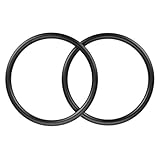
A 3-inch ring refers to the ring’s approximate inside diameter, not the length of the tail. Products such as aluminum sling rings priced around $5 to $10 per pair may work as hardware for a sewing project, but they do not include fabric, padding, stitching, or safety testing. Choose rings specifically made for baby carriers and confirm their load rating. Do not substitute decorative rings, craft rings, or hardware intended for another purpose.
Also distinguish a baby ring sling from unrelated products that use the word “sling.” A 3-inch buttstock sling tail, for example, is an accessory for a firearm sling and has no relationship to a baby carrier’s dimensions or safety requirements. A scope base adapter is also unrelated. When shopping, look for baby-carrier-specific materials, instructions, and weight limits.
How to Measure Your Space
- Measure your torso circumference. Wrap a soft tape around the part of your body where the sling will sit, usually from one shoulder across the chest and around the back. Do not pull the tape tightly. This measurement helps estimate how much fabric will be consumed by the body panel.
- Measure your preferred tail endpoint. While standing, measure from the ring position at your shoulder or upper chest down to your hip, upper thigh, or another preferred endpoint. For many adults, this is approximately 12 to 24 inches (30 to 61 cm).
- Add adjustment allowance. Add about 6 to 12 inches (15 to 30 cm) if you want room to loosen or tighten the carrier, switch between clothing layers, or share the sling with another adult.
- Account for shoulder construction. Gathered shoulders, pleated shoulders, padded shoulders, and extra-wide shoulder caps use fabric differently. A heavily structured shoulder may require more total length even when the visible tail is short.
- Check the ring path. Measure the fabric length along the actual route: across the shoulder, around the wearer’s back and torso, through the rings, and down to the tail. Measuring in a straight line can underestimate the required fabric.
- Test with a temporary setup. If making a sling, use a long strip of inexpensive fabric to test the fit before cutting the final material. Never place a baby in an improvised carrier unless the construction and safety requirements are fully understood.
- Confirm the finished measurement. Measure the tail with the sling worn and empty, then recheck it with the fabric adjusted snugly. A tail can appear several inches longer or shorter depending on tension and fabric thickness.
For a first sling, a total length of about 84 to 90 inches (213 to 229 cm) often provides useful fitting flexibility for an average-size adult. Smaller wearers may prefer roughly 72 to 82 inches (183 to 208 cm), while taller or plus-size wearers may need 90 to 100 inches (229 to 254 cm). These are starting points, not substitutes for the pattern or carrier maker’s specifications.
By Room or Use Case
Everyday infant carrying
A 12- to 24-inch (30- to 61-cm) tail is usually the most versatile range for daily use. It gives the wearer enough fabric to make adjustments without creating a large hanging section. For a newborn, use only the positions and fit approved by the carrier’s instructions. The baby’s face must remain visible, the airway must stay clear, and the fabric must support the baby in the recommended position.
Tall, broad, or plus-size wearers
A longer total sling—often 90 to 100 inches (229 to 254 cm)—may be more comfortable. The finished tail may still be 18 to 30 inches (46 to 76 cm), depending on torso length. Choosing a longer sling is generally more useful than simply accepting an excessively long tail, because the extra fabric is needed around the body as well as below the rings.
Petite wearers and compact storage
A total length of approximately 70 to 82 inches (178 to 208 cm) may reduce excess fabric for a smaller frame. A tail around 8 to 16 inches (20 to 41 cm) can look neater and be less likely to catch on countertops or chair arms. Do not shorten a finished sling by cutting it unless the manufacturer or a qualified sewing professional confirms that the alteration will not affect the shoulder, ring attachment, or structural seams.
Shared family use
If two adults will use the same sling, size it for the larger wearer or select an adjustable model. A standard tail around 18 to 24 inches (46 to 61 cm) offers a useful compromise, but the shoulder and torso fit still need to be checked independently for each person.
DIY conversion projects
When converting suitable woven fabric, budget for hems and construction. A finished panel that is 84 inches long may require 88 to 92 inches of raw fabric, depending on the seam and hem design. Use carrier-rated rings, strong woven fabric, reinforced stitching, and a tested pattern. Retail ring prices of roughly $5.99 per pair cover only the rings, not the complete carrier.
Common Sizing Mistakes
- Confusing ring diameter with tail length: A 3-inch ring does not mean the tail should be 3 inches long. It describes the ring opening.
- Measuring the tail while the sling is flat: The worn length changes after the fabric passes through the rings and wraps around the body.
- Buying by width alone: A 30-inch-wide sling can still be too short overall. Check both panel length and width.
- Leaving too much fabric: A 36-inch tail can be attractive, but it may drag, snag, or interfere with walking.
- Cutting before testing: Fabric can shrink, and thick materials consume more space in the ring channel. Wash and stabilize fabric according to its care instructions before final cutting.
- Ignoring construction quality: Correct dimensions do not make an unsafe carrier. Inspect stitching, ring attachment, fabric condition, and the stated child-weight range.
- Using unrelated sling hardware: Accessories for luggage, sports equipment, firearms, or home décor are not automatically suitable for a baby carrier.
FAQ
Is a 3-inch ring the standard size for a ring sling?
Three inches (7.6 cm) of inside diameter is a common size, especially for medium-weight woven fabric. Some designs use smaller or larger rings depending on the fabric, pleat design, and amount of adjustment required. The rings should be smooth, strong, compatible with the fabric width, and specifically intended for a baby carrier.
How long should a ring sling tail be for a newborn?
There is no separate newborn tail length. A tail of about 12 to 24 inches (30 to 61 cm) is a practical general range, but newborn safety depends on the carrier’s design and fit, not on tail length alone. Follow the manufacturer’s newborn instructions and verify that the baby’s face and airway remain unobstructed.
Can the tail be too long?
Yes. A long tail is not automatically safer or more comfortable. Once it extends substantially below the hip or upper thigh, it can drag, catch on objects, or become cumbersome. If you need more body coverage, choose a sling with an appropriate total length rather than relying on an excessively long hanging tail.
What is the best ring sling length for an average adult?
A finished sling around 84 to 90 inches (213 to 229 cm) long and 26 to 30 inches (66 to 76 cm) wide is a useful starting range for many average-size adults. After fitting, aim for a visible tail of approximately 12 to 24 inches (30 to 61 cm). Adjust that range for body size, clothing layers, fabric weight, and the sling manufacturer’s instructions.






Write Your Review
No reviews yet. Be the first to share your experience!