
Our Top Picks


A good set of sand toys does more than fill a beach bag. For a toddler, scooping, pouring, sifting and molding are early lessons in cause and effect, hand strength and patience, and the right set can hold a small child’s attention far longer than most toys in the playroom. The wrong set, though, cracks at the handle, warps in a hot car, or comes with pieces so small and flimsy that they vanish into the sand within a week.
This guide compares five sand toy sets that suit children from about 18 months to age four. The picks cover the main buying lanes: a recycled-plastic classic, a full starter kit from an established wooden-and-plastic toy maker, and three modern silicone sets that fold flat for travel. Every set below is a bucket-and-tools set rather than a loose play-sand kit, which keeps the focus on open-ended digging and building. Age grades, materials and piece counts are taken from the manufacturers’ own listings, and each set was screened against the federal recall database before inclusion.
As an Amazon Associate, we earn from qualifying purchases.
Quick answer
For most families, the Hape Beach Toy Essential Set is the strongest first purchase: eleven sturdy, BPA-free pieces sized for children from 18 months, in a mesh bag a toddler can carry. The Green Toys Sand Play Set is the simplest, toughest four-piece option. For travel, the RACPNEL set folds three silicone buckets flat, while the BLUE GINKGO and MarcZero silicone sets suit the youngest toddlers.
Green Toys Sand Play Set
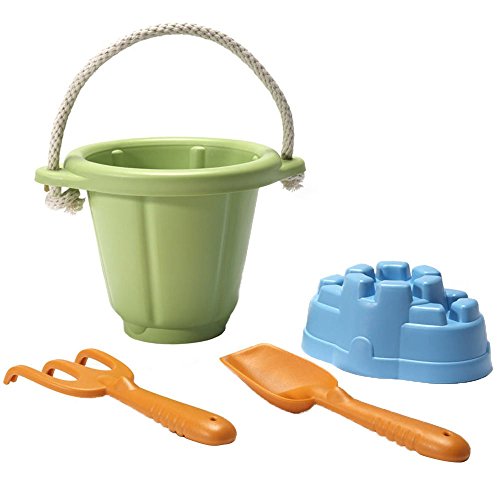
Green Toys keeps this set deliberately simple: a bucket with a rope handle, a shovel, a rake and a sand castle mold. There are no batteries, no moving parts and nothing to assemble, which is exactly right for a child who is still mastering a two-handed scoop. The bucket is sized for small arms to carry when it holds a modest load of damp sand, and the castle mold gives beginners an early win because it releases a clean shape with one firm pat.
The material story is the headline. Each piece is molded in the USA from recycled plastic, mostly curbside milk jugs, and the plastic contains no BPA, phthalates or PVC. The surfaces are smooth with rounded edges, and the whole set can go in the dishwasher after a gritty day, which matters because sand toys tend to live in a damp bag between outings. The manufacturer rates the set for ages 18 months and up.
The trade-off is scope. Four pieces will not satisfy a preschooler who wants a full construction site, and there is no carry bag, so families usually end up threading the rope handle over a stroller hook or dropping the set into a tote. As a first set for a one- or two-year-old, or as the durable core that other toys get added to, it is hard to beat.
Hape Beach Toy Essential Set
The Hape Beach Toy Essential Set, model E8603, is the most complete starter kit in this guide. Its eleven pieces include a bucket, a sifter, a shovel, a rake, a watering can and several molds, so a toddler can dig, pour, sieve and shape in one session. A mesh bag is included for carrying, and it doubles as the storage solution: shake it at the shoreline and most of the sand falls through before the set reaches the car.
Hape builds the pieces from thick plastic with soft, rounded corners, and the set is formulated without BPA, PVC or phthalates. The tools feel noticeably more rigid than bargain-bin alternatives, which helps when a toddler leans real body weight onto a shovel in packed wet sand. Like the Green Toys set, it is rated from 18 months, and the chunkier proportions suit children at the younger end of that range.
Because the bucket is rigid, this set takes up more room in a packed bag than the silicone options below, and eleven pieces are eleven chances to leave something behind at the beach. Families who mostly play in a backyard sandbox will not mind either point; frequent flyers should look at the collapsible sets instead.
BLUE GINKGO Silicone Beach Toys
BLUE GINKGO takes the opposite approach to rigid plastic. The bucket, shovel and four sea-creature molds are all molded from soft, flexible silicone, so the bucket squashes flat in a suitcase and springs back at the beach. The set includes a cotton mesh beach bag, and the four molds are shaped as a dolphin, a starfish, a sea turtle and a shell, which gives younger toddlers clear, recognizable shapes to hunt for in the sand.
The bucket holds about 33.8 fluid ounces, roughly a liter, which is plenty for mold-making and water-carrying but small for serious castle construction. Silicone’s softness is a genuine safety plus for this age group: a swung bucket bends instead of cracking, there are no sharp edges, and the material is BPA-free and easy to rinse clean. The matte finish also grips well in wet little hands.
Older preschoolers may find the flexible walls frustrating when they pack sand hard, since the bucket gives a little under pressure. For babies and younger toddlers, and for parents who travel light, that softness is the entire point. Note that this listing’s ASIN covers the blue colorway; other colors are separate listings.
RACPNEL Collapsible Beach Toys Set
The RACPNEL set is built around sharing. It includes three foldable silicone buckets, plus shovels, sand molds and a mesh bag, so siblings or playdate friends can each claim a bucket instead of negotiating over one. Each bucket holds about 2.5 liters when open and collapses nearly flat when empty, and the silicone holds its shape better than most foldable designs once it is filled with wet sand.
The molds mix castle shapes with sea animals, giving the set enough variety for a long session, and the mesh bag lets sand drain on the walk back to the car. The shovels are sized for children aged three and up, so this set skews slightly older than the Hape and Green Toys picks; the buckets themselves are soft and safe for younger children, but the smaller mold pieces are better kept for the stated age range.
Three buckets also means the set is bulkier in play than a single-bucket kit, even if it packs flatter. For a one-child household that plays mostly at home, a simpler set is enough. For two or more children, or for grandparents stocking a vacation house, the triple-bucket layout solves the most common beach argument before it starts.
MarcZero Silicone Beach Toys Set
The MarcZero set is an eleven-piece silicone kit: a bucket, a shovel, eight ocean-themed molds and a beach bag. The bucket holds about 33.8 fluid ounces, the same travel-friendly scale as the BLUE GINKGO, and the matte, soft-touch finish gives it a calmer look than most primary-colored beach gear. The eight molds are the draw here, with detailed sea shapes that press clean impressions in damp sand.
Because every piece is solid silicone with no small detachable parts, the set works from about 18 months, and the soft pieces tolerate mouthing, chewing and being sat on without damage. The included bag keeps the kit together in a diaper bag or carry-on, and the whole set rinses clean in seconds.
The limits mirror the other small silicone sets: one modest bucket serves one child at a time, and determined four-year-olds building large structures will outgrow it. Within its lane — a compact, gentle first set for a young toddler, especially for travel — it is a polished option. This listing covers the pink colorway; a gray version is sold under a separate listing.
How to choose
Start with age. Sets rated from 18 months use chunkier tools, fewer pieces and softer edges, and they avoid small detachable parts. Sets rated three years and up can include smaller molds and longer shovels, which older toddlers handle well but younger ones may mouth. When a set mixes both, as the RACPNEL does, follow the youngest rating for the smallest piece rather than the headline age.
Material is the second decision. Rigid plastic, especially the thick recycled or BPA-free kind used by Green Toys and Hape, holds a shape in packed sand and survives years of use, but it takes up fixed space in a bag. Silicone flexes, folds and never cracks, and it is the softer choice for babies who still explore with their mouths, but buckets are usually smaller and walls can bow under heavy packing.
Then match the set to where you actually play. Backyard sandbox families can prioritize piece count and rigid tools. Beach families should value a mesh bag, because draining sand before it reaches the car is the single biggest cleanup win, and collapsible buckets if the trip involves a flight or a small trunk. Finally, keep supervision simple: sand play is low-risk, but toddlers should be watched around water, and any cracked or broken piece should be retired before it develops a sharp edge.
Who should skip
Skip these sets if your child has moved past basic scooping and wants working machinery; a dedicated construction-vehicle set with loaders and dump trucks will hold an older preschooler longer than any bucket kit. Skip the small silicone sets if you regularly host three or more children, since a single one-liter bucket becomes a bottleneck. Families who dislike tracking loose pieces should choose the four-piece Green Toys set over the eleven-piece kits. And if your child still puts everything in their mouth and is under 18 months, wait for the age grade rather than buying ahead — even soft silicone molds are not teethers.
FAQ
What age can a toddler start using sand toys?
Most quality sets are rated from 18 months, when toddlers can grip a short shovel and enjoy fill-and-dump play. Choose chunkier pieces and avoid small molds until closer to age three, and always supervise sand play, especially near water.
Are silicone sand toys better than plastic ones?
Neither is universally better. Silicone is softer, folds flat for travel and never cracks, which suits babies and younger toddlers. Thick rigid plastic holds its shape in packed sand and usually comes in larger, cheaper sets, which suits sandbox regulars and older preschoolers.
How do you clean sand toys after the beach?
Shake off loose sand, rinse the set with fresh water and let it dry fully before storing so mildew cannot form. A mesh bag helps because sand drains during the walk back. Recycled-plastic sets like the Green Toys set are also dishwasher safe on the top rack.
How many pieces does a toddler sand set need?
Four to eleven pieces is the practical range. A bucket, a shovel, a rake and one mold cover the core activities; extra molds, a sifter and a watering can extend interest for preschoolers. Beyond that, added pieces mostly add clutter and pieces to lose.
Final verdict
Buy the Hape Beach Toy Essential Set if you want one complete, durable kit for a toddler from 18 months. Choose the Green Toys Sand Play Set for the toughest, simplest option with the cleanest materials story. If travel space decides the purchase, the RACPNEL triple-bucket set serves siblings best, while the BLUE GINKGO and MarcZero silicone sets pack smallest for a single young toddler. Any of the five will outlast the brittle sets sold at beach kiosks, and all five keep the play focused on digging, pouring and building rather than on batteries or screens.
Product and ASIN Reference
| Product | ASIN |
|---|---|
| Green Toys Sand Play Set | B0015466IK |
| Hape Beach Toy Essential Set | B0891J94FP |
| BLUE GINKGO Silicone Beach Toys | B097GD94RR |
| RACPNEL Collapsible Beach Toys Set | B09YCCXZWD |
| MarcZero Silicone Beach Toys Set | B0C6DY38L2 |
FAQ
What age can a toddler start using sand toys?
Are silicone sand toys better than plastic ones?
How do you clean sand toys after the beach?
How many pieces does a toddler sand set need?
More from Amazon
Programs that pair well with the guide above. Offers and eligibility are set by Amazon and may change.
Build one list of everything you need for the new arrival and share it with family and friends.
Create a baby registrySet up recurring deliveries of everyday items on eligible products. Terms and savings are set by Amazon.
Explore Subscribe & SaveFree shipping on eligible items, Prime Video and more. Eligible new members can start with a free trial.
Start a Prime free trialAudiobooks and podcasts to listen to on the go. Eligible new members can start with a free trial.
Try Audible freeAs an Amazon Associate we earn from qualifying purchases.


Write Your Review
No reviews yet. Be the first to share your experience!