
Key takeaways
- How to put on a baby wrap carrier step by step: tie the wrap before the baby goes in, position legs and head, check the fit, and know when to stop.
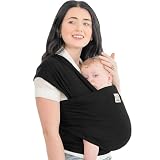
Put a stretchy baby wrap on by tying it around your own body first, with the baby not yet in it, and then slipping the baby into the fabric layers, spreading each layer from knee to knee, and tightening until the baby is held snugly against your chest. The order matters because a loosely tied wrap is far harder to fix with a baby inside. Wrap styles and tying paths differ between makers, so the sequence below is a general pattern, and your wrap’s own instructions come first.
Before you begin
A little preparation prevents most early frustration:
- Check the wrap’s age and weight guidance. Stretchy wraps are commonly marketed from the newborn stage up to a stated maximum weight, but limits differ, so read the label.
- Choose a calm moment and a clear space with a bed or sofa nearby, so you can lay the baby down if needed.
- Wear fitted clothing. Bulky coats and loose scarves interfere with the fabric and add heat.
- Practice first with a weighted doll or a soft toy of similar size.
- Do not wear a wrap while driving or riding in a vehicle, and do not cook near a hot stove or carry hot drinks while wearing the baby.
Put the wrap on before leaving the house. Tying a wrap on a pavement or in a car park, with the baby fussing, is the hardest way to learn.
Step 1: tie the wrap on your body
- Find the center of the wrap, usually marked by a label or by folding it in half.
- Place the center at the middle of your chest, just below the collarbones, and take the two ends over your shoulders.
- Bring the ends behind your back, cross them, and bring them forward around your waist.
- Tie or tuck the ends at the front as your wrap’s instructions describe. Some wraps tie with a knot, and some pass the ends under the front bands.
- You now have a snug band around your torso and two fabric panels or bands running over your shoulders, with no baby inside yet.
Pull the fabric firmly now, because it loosens as you move and as the baby’s weight settles. A rule of thumb is that the base should feel slightly too snug before the baby goes in. If the wrap sags when you move, retie it.
Step 2: place the baby
- Support the baby with one arm under the bottom and the other under the back and neck, and hold the baby upright against your chest.
- Open the front of the wrap so the shoulder bands spread like a pouch.
- Lift the baby’s legs one at a time and place them in a frog position, with the knees higher than the bottom and the legs spread, not hanging straight down.
- Slide one shoulder panel over the baby’s back and up to the base of the neck, then do the same with the other panel.
- Spread each panel from knee to knee under the thighs, so the fabric supports the whole seat rather than a narrow strip.
Hold the baby with one hand throughout this stage until the fabric is tightened. A newborn’s neck needs full support, and a wrap does not substitute for your hands until it is snug.
Step 3: tighten and adjust
Work from the outside in. Tighten each fabric layer by pulling the loose edges toward your body, one at a time, starting at the bottom near the seat and moving up to the shoulders. Smooth any twists. The baby should sit high on your chest, with the head near your chin and the back gently curved, not flattened.
For a newborn, raise the fabric to support the head and neck, taking care not to cover the face. For older babies who control their heads, fold the top edge down below the ears for more breathing and viewing room, following your wrap’s instructions.
The safety check: the TICKS rule
Run through this rule every time you wear the baby, and again after a feed or a position change:
| Check (spells TICKS) | What you should see |
|---|---|
| Tight | Fabric holds the baby close, no slumping when you bend |
| In view at all times | The baby’s face is visible and uncovered |
| Close enough to kiss | The head is high enough that you can kiss the forehead |
| Keep chin off the chest | A finger’s width of space under the chin |
| Supported back | The spine keeps a natural curve against your body |
What can go wrong, and how to fix it
- The wrap sags after a few minutes. The base was tied too loosely. Place the baby on a safe surface, retie more firmly, and try again.
- The baby’s legs dangle straight down. Lift the legs and spread the fabric knee to knee so the thighs are supported.
- Slumped head or chin on chest. Raise the baby higher and tighten the upper fabric. This also lets the airway stay open.
- The baby overheats. Use fewer layers, since the wrap already adds warmth. Check the neck and back for sweat.
- Your shoulders ache. Pull the fabric wider across the shoulders so the weight spreads, and make sure the baby sits high enough.
A simple practice plan
Learning is faster in short sessions than in one long attempt. Here is an example plan with stated assumptions: you have a few spare minutes on three consecutive days and a weighted doll.
- Day one: tie the base only, five times, until it feels automatic and snug. Do not worry about placing anything inside.
- Day two: tie the base, then practice placing the doll with legs spread and panels smoothed knee to knee, then take it out again.
- Day three: repeat with the baby awake and fed, with another adult nearby, and run the TICKS check out loud.
Many people find the wrap becomes easy after a handful of tries. If it still feels wrong after that, a local babywearing group or a certified educator can look at your technique.
Taking the baby out
Support the baby with one hand first, then loosen the knot or fabric layers with the other. Never untie the wrap while the baby is unsupported. Lift the baby out slowly and check skin for marks or flushing. You can leave the base tied on your body and slip the baby back in later, which saves time during a day of naps and errands.
When a wrap is not the right carrier
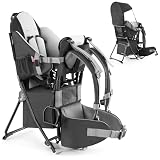
Wraps are warm, soft and well suited to the first months, but they take more tying than buckle carriers and can feel hot in summer. As babies grow heavier, many caregivers move to a structured carrier or, for outdoor trips, a framed backpack. A related guide to infant hiking backpack options compares framed and soft carriers by age if longer outings are on the cards.
When to stop and ask for help
Take the baby out immediately if breathing looks labored or noisy, if the skin looks pale or blue, or if the baby seems unusually quiet or limp. Seek medical care urgently in those cases. Talk to a pediatrician before using a wrap with a premature baby, a baby with a medical condition, or hip concerns. Many communities have certified babywearing educators who can help you check the fit in person, which is often the most useful help of all.
Related guides
- Baby Carrier For Toddlers Over 30 Lbs
- When Can A Baby Face Outward In A Carrier
- Ergobaby Embrace Vs Babybjorn Mini
Frequently asked questions
What age can a baby go in a stretchy wrap?
Stretchy wraps are commonly marketed from the newborn stage, but always follow the weight and age limits printed on your particular wrap. Premature or very small babies, or babies with medical conditions, should be discussed with a pediatrician first. As the baby gets heavier, check the maximum weight regularly, and stop using the wrap once the limit is reached.
How tight should a baby wrap be?
Snug enough that the baby is held close to your body and does not slump when you bend slightly. A loose wrap lets the baby sag, which can cause the chin to fall to the chest and strain your back. If you can fit a hand between the baby and your chest, tighten it further.
Can a baby sleep in a wrap?
Babies often fall asleep while being carried, so keep checking the safety points. Keep the face visible, the airway clear, the chin off the chest, and the baby upright and close. When you arrive, move the baby to a flat, firm sleep surface, rather than leaving the baby in the wrap for a long sleep.
How long can a baby stay in a wrap?
There is no universal limit. Take the baby out when she or he needs a feed, a diaper change, or a break from heat, and give yourself breaks as well. Watch for flushing, sweating or fussiness, which can signal overheating or discomfort, and adjust layers or position. In warm weather, check the baby’s neck and back often.
What is the difference between a stretchy wrap and a woven wrap?
A stretchy wrap is made from knit fabric that gives with movement, making it popular for newborns and easy to pre-tie. A woven wrap is firmer, with less stretch, and often has a longer learning curve. Heavier babies and longer carries are common reasons caregivers move to woven styles or structured carriers, and the right choice depends on comfort and the manufacturer’s weight limits.






Write Your Review
No reviews yet. Be the first to share your experience!