
Key takeaways
- Petite, narrow frame: 65 to 70 inches (165 to 178 cm)
- Petite with average or fuller bust: 70 to 80 inches (178 to 203 cm)
- Petite but usually wearing M or larger: 80 to 90 inches (203 to 229 cm)
- Shared use or plus-size fit: 90 to 100 inches (229 to 254 cm)
What's inside
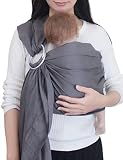
For a petite parent, the best ring sling is usually a short or standard-length sling measuring about 70 to 80 inches (178 to 203 cm) from end to end. The right choice depends less on height and more on your shirt size, bust or chest measurement, carrying position, and how much fabric you want left in the tail. A petite parent who wears XS or S will often find a 70-inch sling easier to manage than a 90-inch one, while a petite parent with a fuller bust or a preference for a long, adjustable tail may need standard length.
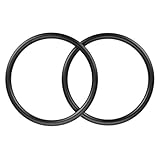
Ring sling sizing can be confusing because sellers may list the ring diameter, the sling length, or a clothing size. These are different measurements. The rings are commonly about 3 inches (7.6 cm) across; that measurement does not determine whether the carrier fits your body. For example, the Accmor aluminium sling rings are listed as 3 inches and priced around $5.99 per pair, while a complete Vlokup cotton ring sling is listed at about $36.95. Always check whether a listing is for replacement rings only or for a finished baby carrier.
As an Amazon Associate we earn from qualifying purchases at no extra cost to you. Product prices and availability are accurate as of the date shown and are subject to change.


The Short Answer
Choose a ring sling around 70 to 80 inches (178 to 203 cm) long if you are petite and typically wear XS or S. A 65- to 70-inch sling can work well for a smaller frame and a front carry, but it leaves less extra fabric for a hip carry or layered clothing. A standard 80- to 90-inch sling is more versatile if you wear M, have a larger bust, share the carrier with another adult, or want a longer tail.
- Petite, narrow frame: 65 to 70 inches (165 to 178 cm)
- Petite with average or fuller bust: 70 to 80 inches (178 to 203 cm)
- Petite but usually wearing M or larger: 80 to 90 inches (203 to 229 cm)
- Shared use or plus-size fit: 90 to 100 inches (229 to 254 cm)
These are starting points, not rigid rules. The sling must create a deep, supportive seat for the child, hold the child high enough to kiss, and allow the fabric to spread from the back of the knee to the back of the other knee. Follow the carrier maker’s instructions for newborn positioning, weight limits, and safe use.
Standard Sizes
Finished ring slings are generally sold by length rather than by a precise clothing size. Measurements can vary by brand, fabric, and whether the seller measures before or after sewing the shoulder and ring section. The table below gives practical size ranges for comparison.
| Ring sling size | Approximate length | Approximate length in cm | Best suited to | Expected tail length on a petite parent |
|---|---|---|---|---|
| Short | 65–70 in | 165–178 cm | XS–S frames, front carries, minimal excess | Short to moderate |
| Petite standard | 70–80 in | 178–203 cm | XS–S frames, most everyday front or hip carries | Moderate |
| Standard | 80–90 in | 203–229 cm | S–M frames, fuller busts, more adjustment room | Long |
| Long | 90–100 in | 229–254 cm | Larger bodies, shared use, bulky layers | Very long |
A 3-inch (7.6-cm) ring is a common hardware measurement for a ring sling, but it is not a “petite” or “large” sling size. Rings should be strong, smooth, and appropriate for baby-carrier construction. Do not substitute decorative craft rings, curtain rings, or hardware with sharp edges. A replacement-ring product priced around $5.99 is not equivalent to a complete carrier priced around $36.95.
How to Measure Your Space
Instead of choosing by height alone, measure the amount of fabric your body and carrying style require.
- Measure your usual clothing size. Note your typical shirt size and your fullest bust or chest measurement. Use the measurement taken over the clothing you expect to wear with the sling.
- Measure your torso. Place a soft tape at the top of one shoulder, cross it diagonally over your chest, and continue to the opposite hip. Add about 8 to 12 inches (20 to 30 cm) for the child’s seat and adjustment area.
- Measure your preferred carry position. A front carry usually needs less length than a hip carry. If you plan to carry on your hip, choose the upper end of your size range.
- Account for fabric weight and thickness. Thick cotton, linen blends, and textured fabrics can take more space through the rings. A very thick sling may feel shorter than a thin sling with the same listed length.
- Allow for the tail you want. A short tail looks tidy and reduces loose fabric. A longer tail gives more adjustment room and can provide additional coverage, but it may hang near your thigh or need to be tucked.
- Check the maker’s measuring method. Look for a finished length in inches and centimeters. Ask whether the length includes the shoulder and ring section, and compare measurements across brands rather than relying only on “small” or “standard.”
For a petite adult, the shoulder area matters as much as total length. A gathered shoulder may feel compact, while a wide shoulder spreads more fabric across the upper back. If you have a narrow shoulder, avoid assuming that a shorter sling automatically offers better support; correct threading and adjustment are more important than the last few inches of tail.
By Room or Use Case
Everyday front carries
A 65- to 75-inch sling is often convenient for a petite parent who mainly carries a newborn or young baby in front. It can reduce extra fabric around the waist and make the tail easier to control in a small entryway, kitchen, or apartment. Choose a longer option if you wear thick sweaters or want a generous tail for coverage.
Hip carries for an older baby
Hip carries typically benefit from 75 to 85 inches (191 to 216 cm), especially when the child is growing and the fabric must spread widely from knee to knee. A petite parent may still use a 70-inch sling, but only if the child’s seat can be adjusted securely without leaving too little fabric in the rings.
Newborn use
For a newborn, prioritize a carrier designed and labeled for newborn use rather than choosing solely by length. A 70- to 80-inch sling is often manageable on a small frame, but safe positioning depends on fabric adjustment, airway visibility, and the manufacturer’s instructions. The baby should remain upright, close enough to kiss, with the face visible and the chin off the chest.
Cold-weather clothing
If you carry over a coat, fleece, or multiple layers, add about 5 to 10 inches (13 to 25 cm) to the length you would choose for summer clothing. Do not place a baby under a bulky coat where the face could be covered. A longer sling can accommodate adult clothing, but the child still needs an unobstructed airway and a properly supported seat.
Sharing with another adult
Choose based on the larger wearer. A 90-inch sling may be excessive for one petite parent but practical for two adults with different body sizes. If the sling is shared frequently, a little extra tail is generally more useful than selecting a short size that fits only one person.
Common Sizing Mistakes
- Confusing ring diameter with sling length: A 3-inch ring does not mean the carrier is 3 inches wide or designed for a particular body size.
- Buying by height alone: Two adults of the same height can need different lengths because of bust, waist, shoulder, and clothing measurements.
- Choosing the shortest possible sling: Too little fabric can make threading and seat adjustment difficult, particularly for hip carries.
- Assuming longer is always better: Excess fabric can drag, bunch, or become cumbersome. It may also make adjustments harder for a first-time user.
- Ignoring fabric type: A dense woven fabric and a lightweight fabric with the same listed length may handle very differently.
- Using unapproved rings: Hardware must be made for baby-carrier use. Smooth appearance alone does not establish strength or safety.
- Skipping a practice fit: Before carrying a baby, practice threading with a weighted doll or folded blanket and verify the manufacturer’s instructions.
FAQ
Is a 70-inch ring sling long enough for a petite parent?
Often, yes. A 70-inch (178-cm) sling can suit an XS or S adult who prefers front carries and a shorter tail. If you have a fuller bust, carry on your hip, wear thick layers, or want extra coverage, 75 to 85 inches may be more comfortable.
What ring size should a petite parent buy?
Ring size is a hardware measurement, not a body-size category. Many carriers use rings around 3 inches (7.6 cm) in diameter. Use the ring size specified by the carrier maker, and buy only rings intended for baby-carrier construction.
Should a petite parent choose a short or standard ring sling?
Choose short length, about 65 to 70 inches, for the least excess fabric. Choose petite standard length, about 70 to 80 inches, for greater versatility. The latter is usually the safer starting point when you are between sizes.
How much tail should a ring sling have?
A practical tail often extends about 6 to 12 inches (15 to 30 cm) below the rings after adjustment, although personal preference varies. If the tail hangs much lower, a shorter sling may be more convenient; if there is barely any tail, move up one size.





Write Your Review
No reviews yet. Be the first to share your experience!