
Key takeaways
- The product has no clear minimum and maximum baby weight.
- Instructions do not explain airway visibility, hip positioning, or age limits for each carry mode.
- The waistband lands directly on your incision and cannot be moved higher or lower.
- Loose straps slip through buckles, stitching is uneven, or hardware feels brittle.
- The baby’s face is covered by fabric or the chin falls onto the chest.
- The carrier requires an infant insert that is sold separately but does not explain its proper use.
- Reviews repeatedly mention broken buckles, missing parts, or difficult returns.
- Marketing promises “hands-free” use without emphasizing supervision and positioning.
Choosing a baby carrier after a C-section is not the same as choosing one for an uncomplicated vaginal birth. The biggest mistake is shopping by appearance first: a soft fabric, a high number of carrying positions, or a low price does not tell you whether the carrier will sit comfortably away from a healing incision. Another common error is assuming “newborn-ready” means it is automatically appropriate for a small baby or a recovering parent.
The right carrier should keep pressure off your lower abdomen, support your baby’s hips and airway, and distribute weight across your shoulders, back, and hips. It should also be easy to put on without repeated bending, twisting, or tightening. Before using any carrier, ask your obstetrician or midwife when babywearing is appropriate for your recovery. Stop if you feel pulling, increased pain, bleeding, dizziness, or pressure around the incision.
Our top picks

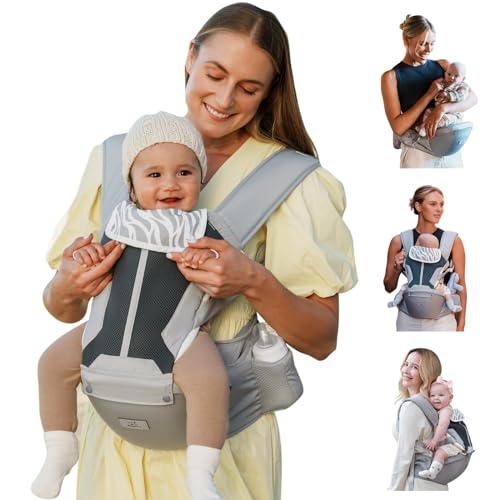


As an Amazon Associate we earn from qualifying purchases at no extra cost to you. Ratings are shown as listed on Amazon.
Decide These 3 Things First
- When will you use it? A carrier for short indoor walks has different requirements from one used for 60-minute errands. If you expect to carry daily, prioritize adjustable support and low-effort buckles over decorative details.
- Where must the carrier sit? During early recovery, the waistband should sit well above or well below the incision rather than directly across it. A wide, flexible waistband is usually easier to position than a narrow, rigid belt, but your incision location and comfort determine the final fit.
- Who will use it? Measure the smallest and largest intended wearer. A carrier that fits a 5-foot parent may not adjust comfortably for someone 6 feet 3 inches tall or for a partner with a substantially different waist size. Look for shoulder straps with at least 10 to 12 inches of usable adjustment and a waist belt that covers the full range you need.
Size and Fit
Fit is the most important feature after a C-section. For the baby, look for a carrier that supports the thighs from knee to knee without forcing the legs straight or allowing the knees to dangle. The seat should be adjustable as the baby grows, with a usable range that starts around 7 to 8 inches for a small newborn and expands to roughly 14 to 16 inches for a larger infant or toddler, depending on the manufacturer’s instructions.
Pay attention to the carrier’s minimum weight. A “newborn” label may mean 7 pounds, 8 pounds, or use with a separate insert. Do not assume an insert makes a carrier suitable for premature or medically fragile babies. A practical target is a carrier with a clearly stated minimum of 7 to 8 pounds and a maximum of at least 25 pounds if you want more than a few months of use.
For the parent, measure your natural waist and compare it with the belt’s actual range. A useful starting target is approximately 26 to 55 inches, although petite and plus-size shoppers may need a narrower or wider range. The waistband should feel secure without requiring maximum tightening. Avoid carriers that leave less than 2 inches of strap tail after adjustment or require the buckle to sit directly over the incision.
Material and Breathability
Fabric affects comfort, cleaning, and how much heat builds up between two bodies. Cotton blends are often soft and affordable, while polyester or nylon blends can dry faster and resist wrinkles. Mesh panels may improve airflow, but they do not guarantee that the carrier will feel cool in hot weather.
For everyday use, look for a fabric weight that feels supportive rather than paper-thin, with breathable panels near the baby’s back and the parent’s torso. A fully structured carrier can weigh about 1.5 to 3 pounds before the baby is added; a wrap-style carrier may weigh less than 1 pound but can require more positioning skill. If you are recovering from surgery, a carrier closer to 1.5 to 2.5 pounds may offer a reasonable balance of structure and manageable bulk.
Check care instructions before buying. Machine-washable fabric is useful when a carrier may be exposed to milk, spit-up, or diaper leaks. Ideally, the carrier should be washable on a gentle cycle and air-dryable without special detergents. Dark colors can conceal stains, while lighter colors may show them sooner but make it easier to spot residue.
Construction and Safety Features
Examine the points that carry weight: waist-belt stitching, shoulder-strap seams, buckles, and the baby seat. Reinforced stitching at major load points is preferable to a single narrow line of thread. Buckles should close with a clear, positive click and remain closed when pulled firmly by hand. They should not require excessive force from a recovering parent.
Look for a carrier that keeps the baby high enough to kiss without bending forward. The baby’s face must remain visible, with the chin off the chest and the nose and mouth uncovered. A useful rule is that you should be able to place two fingers between the baby’s chin and chest. The carrier should hold the baby upright and snugly rather than allowing the torso to slump.
Hip positioning matters, too. Seek instructions showing a supported “M” position: knees higher than the bottom, thighs supported, and hips allowed to spread naturally. Avoid products that encourage forward-facing newborn use, dangling legs, or a narrow seat with no adjustment. Product certification language can be helpful, but it does not replace proper fit or careful use.
Comfort and Carrying Performance
After a C-section, comfort comes from reducing pressure and avoiding awkward movements. A padded shoulder strap measuring roughly 2 to 3 inches wide can spread weight better than a thin strap, provided it does not dig into the neck. A supportive waistband around 3 to 5 inches wide may distribute load more effectively than a narrow belt, but it should remain flexible enough to position away from your incision.
Test the carrier with a weighted object before placing your baby inside. Use a 10-pound household item, such as a small bag of books, and wear it for 10 to 15 minutes. Check for pressure on the incision, shoulder numbness, lower-back strain, slipping straps, or difficulty reaching the buckles. Then practice putting it on while seated, since standing and balancing with a newborn may be uncomfortable at first.
Simple carriers can outperform feature-heavy designs. Two or three useful carry modes may be enough: newborn or inward-facing, outward-facing when developmentally appropriate, and back carry for an older child if the instructions permit it. Six-in-one marketing is not a reason to buy unless each position is clearly explained and practical for your baby’s size.
Price Tiers
Expect to spend approximately $35 to $60 for a basic structured carrier, $60 to $120 for a more adjustable mid-range model, and $120 to $250 or more for premium fabrics, advanced adjustability, or specialized support. Price does not prove safety, and a budget carrier can be a sensible choice when it fits correctly and has clear instructions.
Several example products fall in the lower and middle portions of this range. The MOMTORY 6-in-1 models listed at about $41.96 to $44.95 and the Grownsy 3D Knit model listed at $59.99 illustrate the kind of price spread shoppers may see. Treat those prices as reference points rather than guarantees; colors, promotions, and availability can change.
Budget for useful extras only. A $10 to $25 drool bib, a $15 to $30 storage bag, or a washable liner may be worthwhile. Avoid paying an additional $50 or more for accessories you will not use during recovery.
Warranty and Customer Support
A written warranty of at least 12 months is a reasonable baseline for a structured carrier. Confirm whether it covers broken buckles, torn stitching, and manufacturing defects, and whether normal fabric wear is excluded. A longer warranty of 24 months can be valuable if you plan to use the carrier with more than one child.
Customer support matters because carrier fit is difficult to judge from photos. Look for a company that publishes a complete manual, weight limits, adjustment instructions, and contact information. A return window of at least 30 days gives you time to inspect the carrier and practice with a weighted object. Keep tags and packaging until you have confirmed that the waistband and straps work for your body.
Delivery and Assembly
Most soft baby carriers arrive fully assembled, but some require threading straps, attaching an infant insert, or configuring a newborn seat. The setup should take about 5 to 15 minutes and should not require tools. If a product requires screws, permanent modifications, or complicated strap routing, it is a poor choice for quick changes during postpartum recovery.
Check the package weight and delivery details if you have limited mobility. A carrier package typically weighs under 4 pounds, so shipping weight is rarely a concern, but delayed delivery can matter if you need it for an upcoming appointment or walk. Inspect every buckle and seam immediately after arrival, and do not use the carrier if parts are missing or the instructions conflict with the product design.
Spec Checklist
| Spec | Budget | Mid | Premium |
|---|---|---|---|
| Typical price | $35–$60 | $60–$120 | $120–$250+ |
| Carrier weight | 1–2.5 lb | 1.5–3 lb | 2–4 lb |
| Baby weight range | About 8–25 lb | About 7–35 lb | About 7–45 lb |
| Parent waist range | About 26–50 in. | About 26–55 in. | About 24–60 in. |
| Shoulder strap width | About 2 in. | 2–3 in. | 2.5–4 in. |
| Carry positions | 1–3 practical positions | 2–4 positions | 3–5 positions, if age-appropriate |
| Warranty target | 6–12 months | 12–24 months | 24 months or longer |
Red Flags
- The product has no clear minimum and maximum baby weight.
- Instructions do not explain airway visibility, hip positioning, or age limits for each carry mode.
- The waistband lands directly on your incision and cannot be moved higher or lower.
- Loose straps slip through buckles, stitching is uneven, or hardware feels brittle.
- The baby’s face is covered by fabric or the chin falls onto the chest.
- The carrier requires an infant insert that is sold separately but does not explain its proper use.
- Reviews repeatedly mention broken buckles, missing parts, or difficult returns.
- Marketing promises “hands-free” use without emphasizing supervision and positioning.
FAQ
How soon after a C-section can I use a baby carrier?
There is no universal timeline. Ask your obstetrician or midwife, especially if you had complications or your incision is still painful. Many parents wait until they can walk comfortably, stand upright, and lift the baby without increased pain. Start with short sessions of 5 to 10 minutes and stop at the first sign of discomfort.
Should the carrier waistband cover my incision?
Usually, direct pressure on a healing incision is uncomfortable and may irritate the area. Position the waistband above or below the incision if the carrier allows it. Do not loosen it so much that the baby can slump or the carrier shifts. A firm, correctly positioned fit is safer than a loose fit.
Is a wrap or a structured carrier better after surgery?
Neither is automatically better. A structured carrier is often easier to adjust and can distribute weight consistently, while a wrap may offer more flexibility around the abdomen but requires careful tying. Choose the style you can put on without bending, twisting, or holding your breath. Practice before carrying your baby.
Can I face my baby outward in a carrier?
Only when the manufacturer allows it and the baby has adequate head and neck control, typically around 5 to 6 months, though developmental readiness varies. Newborns and young infants should generally be carried inward-facing with the airway visible and the hips supported. Follow the carrier’s instructions rather than relying on a generic age estimate.


Write Your Review
No reviews yet. Be the first to share your experience!