
Key takeaways
- The manufacturer’s minimum age, maximum weight, and approved carrying positions.
- Whether the seat is intended for a child who can sit independently.
- Whether a back panel or shoulder straps are included or sold separately.
- How the waist belt adjusts for your body and whether it stays level during movement.
- Whether the child’s thighs are supported and their hips are positioned comfortably, without forcing the legs straight together.
The Short Answer
Yes, toddler hip carriers can be safe—but only when your child can sit upright independently, the carrier fits both of you correctly, and you treat it as a supported carry rather than a hands-free device.
A hip carrier, sometimes called a hip seat, uses a padded shelf or seat attached to a waist belt. Your child sits on that shelf while you support their back, torso, or legs with one arm—or with a detachable fabric panel, if the model includes one. This design can make a heavier toddler feel easier to hold, but it does not remove the risks associated with carrying a moving child.
Our top picks

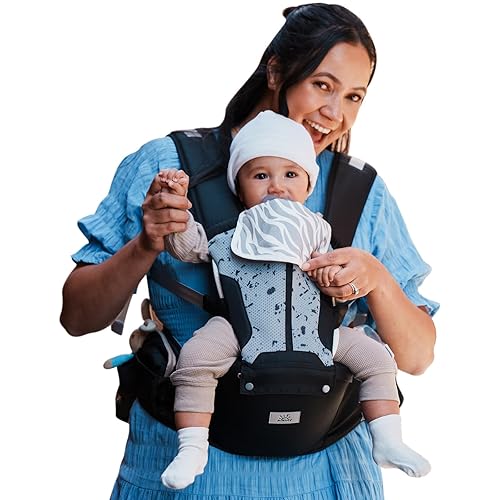 MOMTORY Safety-Certified 6-in-1 Baby Carrier Newborn to
As an Amazon Associate we earn from qualifying purchases at no extra cost to you. Ratings are shown as listed on Amazon.
Safety depends on the specific design and your child’s development. Follow the manufacturer’s age, weight, and position limits instead of assuming every toddler carrier is interchangeable. A carrier rated for newborns is not automatically suitable for every toddler position, and a hip seat without a back panel should not be treated like a fully enclosed carrier.
What You Actually Get
A hip carrier usually includes a wide, adjustable waist belt, a firm padded seat, a safety buckle, and one or more storage pockets. Some models also include a removable back panel, shoulder straps, or a wraparound support that turns the hip seat into a more conventional carrier.
The appeal is mechanical rather than magical: the child’s weight rests partly on your pelvis instead of being held entirely in your arms. That can be useful for a 20- to 35-pound toddler who wants to be picked up repeatedly. It may reduce the strain of gripping under the child’s thighs, especially during short trips through a store, airport, or neighborhood.
However, the seat also shifts your center of gravity. A toddler leaning backward, twisting, or suddenly reaching for something can pull you off balance. The carrier may feel comfortable while standing still but less stable on stairs, uneven sidewalks, wet floors, or crowded spaces.
The Tushbaby Original, listed at about $72.99, is an example of a dedicated hip-seat design with a waist belt, safety buckle, storage, and a supportive seat. The MOMTORY 6-in-1 carrier, listed at about $41.95, is a more versatile carrier-style option with multiple carrying configurations. Prices can change, but these examples illustrate the usual distinction: dedicated hip seats prioritize quick up-and-down use, while multi-position carriers generally provide more containment and adjustment.
Before buying, check five details:
- The manufacturer’s minimum age, maximum weight, and approved carrying positions.
- Whether the seat is intended for a child who can sit independently.
- Whether a back panel or shoulder straps are included or sold separately.
- How the waist belt adjusts for your body and whether it stays level during movement.
- Whether the child’s thighs are supported and their hips are positioned comfortably, without forcing the legs straight together.
Pros
- Less arm fatigue: A hip seat transfers some of the load to your waist and pelvis. That matters when a toddler weighs 25 or 30 pounds and asks to be carried several times in an hour.
- Fast for short carries: You can often place a child on the seat quickly, which is convenient for entering an elevator, crossing a parking lot, or comforting a tired child.
- Easy interaction: The child can face you or, when the instructions allow it, face outward and see what is happening. The open design can feel less confining than a fully enclosed carrier.
- Useful storage: Pockets may hold keys, a phone, a small snack, or a few diapers, reducing the need for a separate bag during brief outings.
- Potentially good for mixed mobility: A toddler who walks part of the time but still needs regular lifts may get more use from a hip seat than from a large stroller.
- Adjustable fit: A properly tightened waist belt can distribute weight more comfortably than carrying a child on one hip with no support.
Cons
- Not automatically hands-free: On an open hip seat, you still need to steady your child. Even models with straps may require a hand on the child, particularly when walking, bending, or riding in busy areas.
- Balance can be harder: The child sits to one side or forward from your torso. Sudden movement can increase pressure on your lower back, hips, and knees.
- Limited protection: A hip seat does not restrain a child like a car seat, shopping-cart strap, high chair, or stroller harness. Never use it as a substitute for any of those systems.
- Heat and bulk: Padding and a wide belt can feel hot in warm weather. The firm seat may also be awkward under a coat or while sitting in a vehicle.
- Shorter useful window: Once a child is heavy enough to make the carrier uncomfortable, the benefit can disappear quickly. A toddler’s weight, not just age, determines how manageable the setup feels.
- Fit varies by adult: A belt that works well for one waist may ride up, dig in, or loosen on another. Adjustability is important, but it cannot guarantee a comfortable fit for every body.
- More parts can mean more errors: Convertible models have additional straps, panels, and buckles. If a configuration is assembled incorrectly or used outside its instructions, the added versatility becomes a liability.
Who Should Buy It
A toddler hip carrier makes sense for an adult who regularly carries a child who can sit upright independently, wants quick in-and-out access, and understands that the carrier requires active supervision. It is particularly useful for short errands, travel days, festivals, playground visits, and situations where a stroller is inconvenient but a toddler is not ready to walk the entire time.
Choose a dedicated hip seat if your priority is speed and occasional carrying. Choose a model with a back panel and shoulder support if you expect longer walks or want more containment. In either case, practice at home first. Start while standing over a clear floor, tighten the belt until it is secure but not painful, and test the carrier with another adult nearby.
Who Should Skip It
Skip a hip carrier if your child cannot sit upright without help, has a medical or developmental condition requiring specialized positioning, or repeatedly tries to climb out. Ask a pediatrician or physical therapist for guidance in those circumstances.
It may also be the wrong choice if you need true hands-free carrying, routinely walk long distances, carry on steep or uneven terrain, or have back, hip, shoulder, or balance problems. A stroller may be safer and more comfortable for extended outings. Never use a hip carrier while driving, cycling, running, cooking over heat, climbing a ladder, or carrying hot liquids.
Cheaper Alternatives
| Option | Cost | Trade-off |
|---|---|---|
| Basic umbrella stroller | $25–$80 | Usually cheaper and more stable for longer outings, but less convenient on stairs and rough ground. |
| Used soft-structured carrier | $20–$60 | Can provide better torso support for less money, but inspect every buckle, seam, strap, and instruction label before use. |
| Secondhand hip seat | $15–$45 | Lowest-cost route, but padding, buckles, and waist elastic may be worn; avoid damaged or recalled items. |
| Child-holding backpack or tote | $10–$30 | Useful for carrying supplies, not a safe substitute for carrying a child. |
A basic stroller is often the best value if the child will be seated for 30 minutes or more. A used carrier can be economical, but do not buy one with missing hardware, frayed webbing, cracked buckles, or an unreadable label. The price difference between a $40 carrier and a $73 hip seat matters less than whether the product fits correctly and remains in good condition.
FAQ
What age is safe for a toddler hip carrier?
There is no single safe age for every model. The child should meet the product’s minimum age and weight requirements and be able to sit upright independently unless the manufacturer specifically approves an earlier configuration. Check the manual, not just the product title. “Toddler” can describe a broad range of sizes.
Can I use a hip carrier hands-free?
Only if the specific configuration is designed for hands-free carrying and your child is securely supported according to its instructions. Even then, keep a hand available when walking, bending, boarding transportation, or moving through crowds. An open hip seat generally requires active support and should not be treated as hands-free.
Are hip carriers bad for a toddler’s hips?
They are not inherently bad for hips when used in an approved position that supports the child comfortably and does not force the legs together or leave the child dangling. Look for a seat that supports the thighs and allows a natural, comfortable leg position. Stop if the child appears distressed, slumps, or develops pressure marks.
Is a hip carrier safer than carrying a toddler in my arms?
It can make carrying less tiring and may give you a more consistent grip, but it does not eliminate fall or balance risks. The safest choice depends on the setting, the carrier’s fit, and your child’s behavior. For long walks, uneven ground, or situations requiring both hands, a properly used stroller or fully supportive carrier is usually the better choice.
In 2026, the honest buying advice remains simple: a hip carrier is a useful tool for short, supervised toddler carries—not a substitute for a stroller, a restraint system, or attentive hands. If the fit is secure and your child is developmentally ready, it can be a worthwhile convenience. If you need reliable containment or hands-free mobility, choose another option.


Write Your Review
No reviews yet. Be the first to share your experience!