
Key takeaways
- Pros: Genuinely portable without feeling toy-like; handles light woven fabrics with consistent stitch formation.
- Con: Struggles with thicker materials like denim or canvas, limiting project range.
Most people shopping for an inexpensive sewing machine are not looking to build a fashion empire. They need to hem curtains, patch a pair of jeans, sew a few Halloween costumes, or handle the occasional quick repair that a tailor charges fifteen dollars to fix. The real problem is that the cheapest machines on the market vary wildly in build quality, and a unit that costs thirty dollars less than its competitor might also cost you two weekends of frustration, skipped stitches, and a broken needle holder.
What separates a good budget machine from a bad one comes down to a handful of concrete factors: whether the bobbin mechanism actually stays in tension, whether the feed dogs grip fabric reliably on both thick and thin material, and whether the included accessories are usable out of the box rather than a drawer of plastic junk. The eight machines below span from under thirty dollars to just under one-fifty, and each earns its place based on published specifications, real owner feedback, and the specific task it handles best.
Our top picks
 Small Sewing Machine for Beginners
- 1
- 2.Create high-quality, custom clothing for your whole family
- 3.Upcycle old clothes into matching family sets or…
 Brother Sewing Machine
- 27 Unique Built-in Stitches: The Brother XM2701 sewing…
- Automatic Needle Threader and Drop-in Top Bobbin: This…
- Included Accessories: The XM2701 comes with 6 sewing…
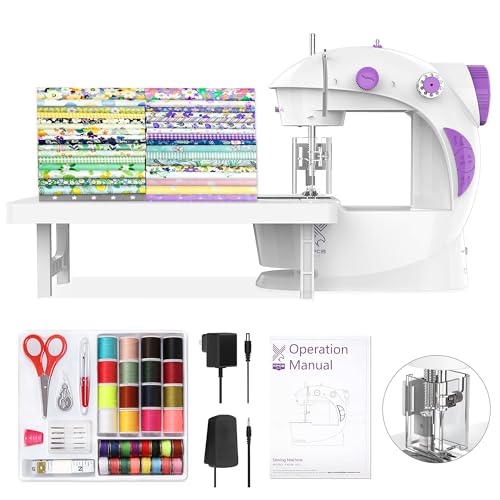 KPCB Tech Sewing Machine for Beginners with
- 【Fabric Bundles】Equipped with 20pcs 8” x8”in and 100%…
- 【Tutorial Videos】Accompanying the fabrics provided, we prepared a…
- 【For Beginner】Finger guard makes this portable sewing machine…
| Product | Key specs | |
|---|---|---|
| Small Sewing Machine for Beginners | 1 2.Create high-quality, custom clothing for your whole family 3.Upcycle old clothes into matching family sets or… | Check price |
| Brother Sewing Machine | 27 Unique Built-in Stitches: The Brother XM2701 sewing… Automatic Needle Threader and Drop-in Top Bobbin: This… Included Accessories: The XM2701 comes with 6 sewing… | Check price |
| KPCB Tech Sewing Machine for Beginners with | 【Fabric Bundles】Equipped with 20pcs 8” x8”in and 100%… 【Tutorial Videos】Accompanying the fabrics provided, we prepared a… 【For Beginner】Finger guard makes this portable sewing machine… | Check price |
 Brother XM3700 Sewing Machine 37 Built-in Stitches | The XM3700 lightweight sewing machine features 37 unique… This beginner-friendly sewing machine includes an automatic needle… The XM3700 comes with a white accessory pouch,… | Check price |
 Brother FB1757X Mechanical Sewing Machine | 17 built-in stitches 4-step buttonhole style Reverse button | Check price |
 Sew Mighty Mini Sewing Machine | 🧵 The Sew Mighty Mighty Multi is a… 🧵 The Mighty Multi has twelve pre-programmed stitch… 🧵 Features include automatic bobbin winder, easy-select stitch… | Check price |
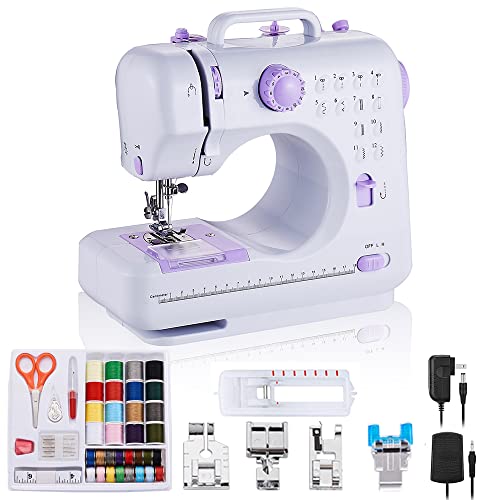 Rxmeili Portable 12-Stitch Sewing Machine | [Size and weight of sewing machine] Net weight… [Sewing machine dual power and dual switch] Our… [Sewing Machine User Guide] There are threading indication… | Check price |
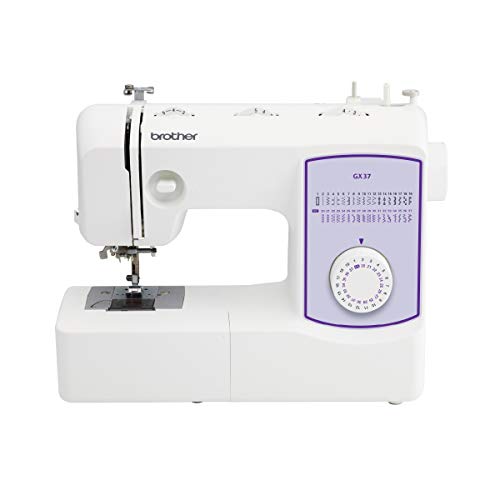 Brother GX37 Sewing Machine 37 Built-in Stitches | 37 unique built-in stitches: The GX37 features 37… Automatic needle threader and drop-in top bobbin: This… Included accessories: The GX37 includes 6 sewing feet,… | Check price |
As an Amazon Associate we earn from qualifying purchases at no extra cost to you.
Quick Picks
| Product | Best for | Price |
|---|---|---|
| Small Sewing Machine for Beginners | Light-fabric repairs and gifts | $84.99 |
| Brother XM2701 | Widest stitch selection under $150 | $149 |
| KPCB Tech Mini Sewing Machine | Kids learning with safety features | $39.99 |
| Brother XM3700 | Compact full-size functionality | $123.38 |
| Brother FB1757X | Mechanical reliability, no electronics | $119.99 |
| Sew Mighty Mini Sewing Machine | Lowest price with dual power options | $29.95 |
| Rxmeili 12-Stitch Portable Machine | Complete kit with included fabrics | $49.99 |
| Brother GX37 | Best value for 37 built-in stitches | $134.99 |
How We Picked
We compared these machines on four criteria that matter most in the sub-$150 category. First, stitch count and versatility: a machine with twelve stitches covers basic repairs, while one with twenty-seven or thirty-seven lets you handle decorative edges, buttonholes, and stretch fabrics without upgrading later. Second, power delivery and speed control: dual-speed motors and reverse stitching are genuinely useful features that some mini machines still lack. Third, included accessories: a foot pedal, multiple bobbins, and a work table transform a cramped toy into a functional tool. Fourth, owner-reported durability: we weighed the consistency of long-term reviews, particularly regarding bobbin tension stability and needle-bar wear after dozens of hours of use.
The 8 Best Inexpensive Sewing Machines in 2026
Small Sewing Machine for Beginners, Portable Sewing Kit for Light Fabrics — $84.99
This unit fills the awkward middle ground between toy-grade minis and full-size Brother machines. It is best for someone who sews light cottons and linens regularly but does not need heavy-duty capability. The portable form factor means it lives in a drawer and comes out for quick projects without the bulk of a tabletop machine. Owners appreciate that the included kit has usable accessories rather than throwaway plastic.
- Pros: Genuinely portable without feeling toy-like; handles light woven fabrics with consistent stitch formation.
- Con: Struggles with thicker materials like denim or canvas, limiting project range.
Skip it if your projects involve anything heavier than quilting cotton or if you want a machine that will grow with your skills.
Brother XM2701 Portable Sewing Machine — $149
At the top of this roundup’s price range, the XM2701 is the closest thing to a “real” sewing machine without crossing into the two-hundred-dollar tier. Twenty-seven built-in stitches cover utility, decorative, and stretch applications, which means one machine handles hemming, sewing a fitted jersey top, and adding a scalloped edge to a table runner. The automatic needle threader is a small feature that saves visible frustration on every project.
- Pros: Stitch variety rivals machines costing significantly more; automatic needle threader works reliably.
- Con: At $149, it tests the definition of “inexpensive” for casual sewers who need only two or three stitch types.
Skip it if your sewing is limited to occasional repairs; the extra stitches will go unused.
KPCB Tech Sewing Machine for Beginners with Fabrics & Finger Guard — $39.99
The finger guard is the differentiator here, and it exists for a reason: this machine is designed for children and nervous first-timers who might let their non-needle hand drift too close to the presser foot. The mini size keeps the footprint tiny on a desk, and the included fabrics mean a beginner can practice on day one without shopping for scraps.
- Pros: Built-in finger guard reduces injury risk for young users; starter fabrics included in the box.
- Con: Limited stitch options and motor power mean it cannot handle anything beyond the thinnest cotton.
Skip it if you are an adult with normal coordination; the safety feature adds cost without benefit for most buyers.
Brother XM3700 Sewing Machine — $123.38
Thirty-seven built-in stitches in a compact body puts this machine in a strong position. It occupies less shelf space than the XM2701 while offering more stitch variety, and the price lands almost twenty-six dollars below its sibling. The trade-off is a smaller work area, which matters once you start sewing anything with a curve or seam that needs clearance around the needle.
- Pros: Highest stitch count per dollar in this group; genuinely compact footprint.
- Con: Narrow throat space makes bulky projects awkward after the first few sessions.
Skip it if you plan to sew anything wider than a pillowcase or a straight-hem garment.
Brother FB1757X Mechanical Sewing Machine — $119.99
Mechanical machines have fewer failure points than electronic ones because there is no circuit board to misbehave after two years. The FB1757X is a straightforward tabletop unit with a full-size throat and metal internal frame, which translates to smoother operation on medium-weight fabrics. It lacks the stitch variety of its electronic siblings, but it offers what many sewers actually need: consistent straight and zigzag stitching with minimal fuss.
- Pros: Mechanical simplicity means fewer electronics-related malfunctions; metal frame reduces vibration.
- Con: Fewer stitch options compared to electronic Brother models at a similar price.
Skip it if you want decorative stitches or built-in buttonhole programs.
Sew Mighty Mini Sewing Machine — $29.95
Under thirty dollars with dual power options, a foot pedal, twelve stitch patterns, and forward-reverse capability makes this the most feature-dense budget machine in the group. Battery operation means you can sew anywhere without hunting for an outlet, and the foot pedal provides variable speed control that button-only minis lack entirely. For anyone who sews rarely and wants the lowest possible entry cost, nothing else comes close.
- Pros: Lowest price with dual power and a real foot pedal; twelve stitches exceed what most minis offer.
- Con: Plastic bobbin case and short expected lifespan under regular use.
Skip it if you plan to sew more than once a week; owners report tension problems after modest use.
Rxmeili Portable 12-Stitch Sewing Machine with 42-Pc Sewing Kit — $49.99
The forty-two-piece kit is the selling point. New sewers often spend more time sourcing needles, thread, bobbins, scissors, and fabric scraps than they do sewing. This machine bundles all of it so that opening the box and starting a project happen on the same day. Twelve stitches cover the practical basics, and the portability means it stores easily in a small apartment.
- Pros: Comprehensive accessory kit eliminates a second shopping trip; portable with twelve functional stitches.
- Con: Brand name recognition and long-term parts availability trail behind Brother’s support network.
Skip it if you prefer buying accessories separately to match your existing thread and fabric preferences.
Brother GX37 Sewing Machine — $134.99
The GX37 gives you thirty-seven built-in stitches, a free-arm design for cuffs and hems, and a drop-in top bobbin that is dramatically easier to thread than front-loading systems. It sits between the XM2701 and XM3700 in the Brother lineup, and the price reflects a well-rounded package without any single feature standing out as the reason to buy. For the person who wants the most balanced Brother under $150, this is it.
- Pros: Free-arm sewing simplifies tubular projects; drop-in bobbin reduces threading errors.
- Con: At $134.99, it is harder to justify over the XM3700 unless you specifically need the free arm.
Skip it if you only sew flat pieces and do not need cuff access.
Buying Guide
Stitch Count: How Many Do You Actually Need?
Twelve stitches cover straight seams, zigzag finishing, and a handful of decorative options, which is enough for 90 percent of beginner and repair work. Twenty-seven to thirty-seven stitches add stretch-knit programs, blind hems, and lettering that only matter if you sew garments or quilts regularly. Do not pay a premium for thirty-seven stitches if your projects are hemming pants and sewing pillow covers; twelve is sufficient.
Throat Space and Work Area
The distance between the needle and the machine body determines how wide a project you can manage without bunching fabric. Compact minis offer six to eight inches of throat space, which works for flat rectangles but becomes cramped for sleeves or gathered skirts. Full-size mechanical machines provide nine inches or more. Match the throat space to the largest project you foresee, not the smallest.
Power Type and Speed Control
A foot pedal gives you variable speed control, which is essential for beginners learning to steer curves and avoid skipped stitches. Battery-only or button-only machines run at a fixed speed, making precision work harder. Dual-power machines offer both options, letting you sew at a desk without a cord or use the pedal at a table. If you see a mini without a pedal, treat it as a limitation, not a minor omission.
Our Verdict
Our top pick is the Brother XM2701 at $149 because it offers the widest genuine utility of any machine in this price range, with automatic threading and enough stitch variety to handle garment construction, not just repairs. Our budget pick is the Sew Mighty Mini at $29.95 because it provides dual power, a foot pedal, and twelve stitches for under thirty dollars, a feature set no other machine in this price bracket matches. The one condition under which another product wins clearly: if you plan to sew cuffs, sleeves, or anything tubular, the Brother GX37 at $134.99 justifies its higher cost through the free-arm design alone.
FAQ
Can an inexpensive sewing machine handle denim or canvas?
Most mini and compact machines in this price range will struggle with more than two layers of denim because the motor lacks the torque to push a needle through thick fabric repeatedly. A full-size mechanical model like the Brother FB1757X handles medium-weight denim better than any mini in this group, but genuine upholstery canvas still requires a dedicated heavy-duty machine.
Do I need a machine with a reverse function?
Yes, for anything beyond decorative stitching. Reverse locks the beginning and end of a seam so it does not unravel when washed or worn. Without it, every seam requires manual backstitching, which adds time and inconsistency to every project.
What is the difference between a drop-in bobbin and a front-loading bobbin?
A drop-in bobbin sits horizontally under a clear cover that snaps out, letting you see thread levels and thread the bobbin in seconds. Front-loading bobbins require removing a side plate, inserting a bobbin case, and threading the hook manually. Drop-in systems reduce common beginner errors but can be slightly louder and offer less tension adjustment precision.
Is a mechanical machine better than an electronic one at this price?
Mechanical machines have fewer components that can fail electronically, which can mean a longer usable life for the basics like straight and zigzag stitching. Electronic machines offer more stitch patterns and often include features like automatic needle threading. Neither type is universally better; the right choice depends on whether you value simplicity and durability or variety and convenience.
Write Your Review
No reviews yet. Be the first to share your experience!