
Our Top Picks


A toddler who spots a puddle is going to step in it, sit in it, and probably splash in it, so the right raincoat is less about fashion and more about how much of your child stays dry underneath. Toddler raincoats split into two camps: hooded jackets that pair with rain boots and pants, and one-piece rain suits that seal a small child from neck to ankle. Within those camps, the details that matter are closure style, lining weight, hood fit, and how the seams are finished. A snap front a two-year-old can manage builds independence, while a fleece or jersey lining decides whether the coat works in spring drizzle or only over a sweater in colder rain. This guide compares five well-known toddler raincoats and rain suits, explains the differences that actually affect a wet day out, and flags the families each style suits least, so you can match the coat to your climate and your child’s patience for getting dressed.
As an Amazon Associate, we earn from qualifying purchases.
Quick answer
For most toddlers, the Columbia Switchback II is the safest all-round pick: a waterproof hooded shell that layers over anything and packs into its own pocket. If your child plays outside for long stretches in real rain, the one-piece Tuffo Muddy Buddy keeps far more water out. Western Chief and Carter’s add fun prints and easy snap fronts for everyday wet walks.
Columbia Switchback II Jacket

The Switchback II is the grown-up rain shell shrunk down honestly rather than a costume version of one. Its nylon shell carries Columbia’s Omni-Shield treatment, which sheds water and resists the stains that playground mud and snack spills leave on lighter fabrics. The hood stows away in the collar when the sky clears, so it is not flapping around during the dry half of the outing, and the whole jacket packs into its own hand pocket, which makes it easy to keep in a daycare bag or under a stroller for surprise showers.
A drop-tail hem covers more of the backside when a toddler sits on a wet bench or slide, and zippered hand pockets keep mittens and found treasures secure. Because it is an unlined shell, it layers over a fleece in cold rain and works on its own in warm summer storms, which stretches its useful season further than a lined coat. Sizing runs through toddler sizes in girls’ and boys’ colorways, and the cut is roomy enough for layering without swallowing a small frame. For families who want one dependable jacket rather than a wardrobe of weather gear, this is the benchmark the rest of this list is measured against.
Tuffo Muddy Buddy Rain Suit
The Muddy Buddy takes the opposite approach: instead of a jacket that covers the top half, it is a one-piece suit that covers nearly everything. For toddlers who attend forest school, play in mud kitchens, or treat every puddle as a seat, that full coverage is the difference between a child who stays out for an hour and one who is soaked to the waist in ten minutes. The nylon suit has dual front zippers, so a caregiver can open it from the top or bottom, and elasticized cuffs at the wrists and ankles plus an elasticized hood keep rain from creeping in at the edges.
All seams are taped, which is what separates a genuinely waterproof suit from a water-resistant one at this level of play. The fit is deliberately generous so it goes over everyday clothes and even a light sweater, and sizes start in the smallest toddler range and run up through preschool. It rinses clean with a hose and dries fast, which matters when it will be needed again the next morning. The trade-off is effort: a one-piece suit is more work for diaper changes and bathroom breaks, and it is warmer than a shell, so it earns its place on properly wet days rather than light drizzles.
Western Chief Kids Character Rain Jacket
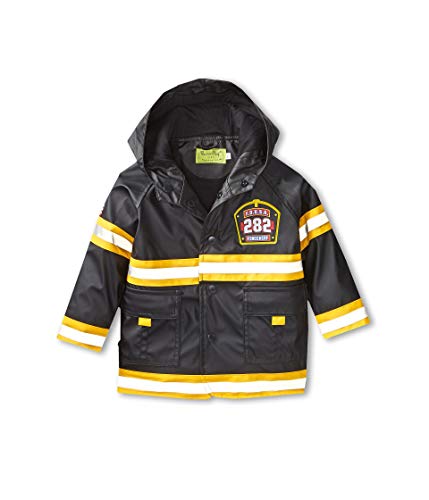
Western Chief has made children’s rain gear for generations, and its character rain jackets are the ones toddlers actually ask to wear. The prints do the persuading: firefighter, frog, dinosaur, and licensed character designs turn a rainy-day chore into dress-up. Under the artwork, the construction is sensible for this age group. The outer is a smooth waterproof polyester with a polyurethane finish, and the inside is lined with a soft polyester and cotton blend that feels like a light shirt rather than plastic against the skin.
The front closes with snaps instead of a zipper, which small hands can push together sooner than they can manage a zip pull, and the hood is shaped to stay up without a drawstring. That last point matters for safety: United States guidelines for children’s outerwear warn against drawstrings at the neck, and a past recall of hooded girls’ raincoats from another brand was issued for exactly that hazard, so a hood that stays put without cords is the right design. These jackets are best for walks, school runs, and moderate rain rather than all-day downpours, and the themed prints mean many families hand them down while they still look new.
Carter’s Girls’ Her Favorite Rainslicker
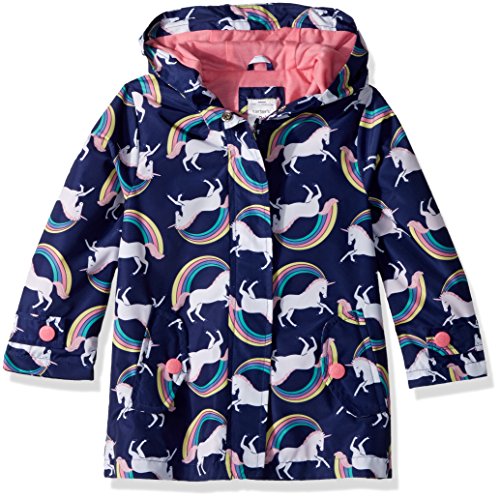
The Her Favorite Rainslicker is the classic shiny raincoat updated for toddlers. Its smooth slicker finish wipes clean in seconds, which parents of enthusiastic puddle-jumpers will appreciate, and the inside carries a soft jersey lining that adds a little warmth on cool, wet mornings. The silhouette is slightly flared, so it moves well over dresses and bulkier outfits, and the hood is roomy enough to fit over a ponytail or a thin hat.
Snaps run down the front, easy for caregivers to fasten quickly at the door and forgiving when a toddler insists on doing it alone. Carter’s sizing is consistent with its other toddler clothing, which removes some guesswork if your child already wears the brand, and the prints rotate seasonally from rainbows and unicorns to simple florals. This is a coat for everyday wet weather: the school run, the grocery trip, the walk to the park between showers. It is not seam-sealed expedition gear, and it is a girls’ line only, so families shopping for boys or for heavy all-day rain should look at the shell and suit options above instead.
Simple Joys by Carter’s Toddler Raincoat
Simple Joys is Carter’s Amazon line, and its toddler raincoat covers the basics at the simpler end of the range. It is a hooded, lightweight coat with a smooth water-shedding outer and an easy front closure, cut generously enough to layer over a sweater. The styling is plain rather than character-led, with solid colors and simple prints that mix easily with whatever else is in the closet, and the lighter build makes it a good spare coat for the car or a grandparent’s house.
Because the line is made for Amazon, the size range focuses on the toddler years, from the smallest sizes up through preschool, and the coats are designed to be machine washable and quick to dry. There is less structure here than in the Switchback II and less coverage than the Muddy Buddy, and the finish is water-resistant rather than fully seam-sealed, so it suits short trips and light rain best. For families who need a backup coat that lives at daycare, or a first raincoat for a child who will outgrow it in a season, it fills that role without overbuying.
How to choose
Start with how wet your child’s typical rainy day gets. For short walks and school runs in light rain, a water-resistant hooded jacket is enough, and it will be lighter and easier to layer. For long outdoor play, forest school, or a child who sits in puddles, look for taped or sealed seams and consider a one-piece suit, because the waist gap between a jacket and pants is where most toddlers get soaked.
Closures matter more than most parents expect. Snaps are the easiest for young toddlers and for quick fastening at the door; zippers seal better and suit older toddlers who can manage them; dual zippers on a suit make diaper changes far less disruptive. Check the hood design as well: an elasticized or well-shaped hood stays on without help, and it should not rely on a neck drawstring, which safety guidelines for children’s clothing advise against because of strangulation risk.
Lining decides the coat’s season. An unlined shell layers over anything and packs small, but needs a fleece under it in cold rain. A jersey or cotton-blend lining adds comfort and a little warmth for spring and fall. A fleece-lined coat is the warmest and the bulkiest, and can overheat a busy toddler in mild weather. Finally, size for layering: measure your child in the clothes they will wear underneath, and if they are between sizes, the larger size with sleeves rolled once usually lasts longer and keeps cuffs drier.
Who should skip
Skip the one-piece rain suit if your toddler is toilet training, because full undressing for every bathroom trip gets old fast, and skip it in warm climates where a suit becomes a sauna. Skip unlined shells if your child runs cold and you do not want to manage a separate fleece layer. Skip character prints if you plan to hand the coat down between children with different tastes, since a plain coat gets worn without negotiation. And skip every option here if you need coverage for a baby under twelve months: these coats start at toddler sizes, and young babies in carriers are better served by a carrier rain cover that keeps both of you dry.
FAQ
At what age should a toddler start wearing a raincoat?
Most toddlers are ready for their own raincoat once they are walking confidently outdoors, usually somewhere in the second year. Before that, a carrier cover or stroller rain shield keeps a baby drier with less fuss. Once a child is walking to the car, the park, or daycare, a coat in the smallest toddler sizes gives them freedom to splash while staying reasonably dry.
What is the difference between water-resistant and waterproof raincoats?
Water-resistant coats shed light rain and drizzle for a while, but water eventually soaks through the fabric and seams in steady rain. Waterproof coats use a coated or membrane fabric with taped or sealed seams, so water cannot enter at the stitching. For short trips, water-resistant is fine; for long outdoor play in real rain, sealed seams are worth it.
How should a toddler raincoat fit?
It should close comfortably over the clothes your child will wear in wet weather, with sleeves reaching the wrist and a hem that covers the hips. A little growing room is fine, but sleeves that cover the hands make gripping rails and toys hard, and a hood should stay up without covering the eyes. If your child is between sizes, choose the larger one and roll the cuffs.
How do I clean a toddler raincoat?
Most toddler raincoats can be wiped down with a damp cloth, and many are machine washable on a gentle cycle; check the care label first. Hang the coat to dry rather than using high heat, which can damage waterproof coatings, and store it fully dry to avoid mildew. Mud usually rinses off slicker and nylon finishes with water alone.
Final verdict
For a single coat that handles most rainy days, choose the Columbia Switchback II: it is properly waterproof, layers across seasons, and packs away when the weather turns. For toddlers who play outside in earnest rain, the Tuffo Muddy Buddy suit keeps the most water out and survives the roughest treatment. Western Chief and Carter’s make the everyday options more appealing with prints and snap fronts that suit school runs and short walks, and the Simple Joys coat is a sensible spare for daycare or the car. Match the coat to your wettest typical day, size it over layers, and avoid neck drawstrings, and rainy-day dressing becomes the easy part of the morning.
Product and ASIN Reference
| Product | ASIN |
|---|---|
| Columbia Switchback II Jacket | B07L522QPK |
| Tuffo Muddy Buddy Rain Suit | B001AHUTCG |
| Western Chief Kids Character Rain Jacket | B00HV2W8GY |
| Carter’s Girls’ Her Favorite Rainslicker | B075GNBNHJ |
| Simple Joys by Carter’s Toddler Raincoat | B09LC5Q4ZQ |
FAQ
At what age should a toddler start wearing a raincoat?
What is the difference between water-resistant and waterproof raincoats?
How should a toddler raincoat fit?
How do I clean a toddler raincoat?
More from Amazon
Programs that pair well with the guide above. Offers and eligibility are set by Amazon and may change.
Build one list of everything you need for the new arrival and share it with family and friends.
Create a baby registrySet up recurring deliveries of everyday items on eligible products. Terms and savings are set by Amazon.
Explore Subscribe & SaveFree shipping on eligible items, Prime Video and more. Eligible new members can start with a free trial.
Start a Prime free trialAudiobooks and podcasts to listen to on the go. Eligible new members can start with a free trial.
Try Audible freeAs an Amazon Associate we earn from qualifying purchases.


Write Your Review
No reviews yet. Be the first to share your experience!