
Our Top Picks
 UNGLINGA 150 Experiments Science Kits for Kids Chemistry8.67 x 11.42 x 3.94 inches11.42 x 8.67 x 3.94 inchesCheck on Amazon
 UNGLINGA 40+ Experiments Science Kit for Kids Chemistry5.7 x 8 x 2.7 inches8 x 5.7 x 2.7 inches0.7 poundsCheck on Amazon
 National Geographic Amazing Chemistry Set with 100+ ExperimentsOne Size8.78 x 3.19 x 11.93 inches1.79 poundsCheck on Amazon
 National Geographic Science Magic Kit with 100+ Experiments100 Tricks and Experiments8.86 x 3.15 x 12 inches1.5 poundsCheck on Amazon
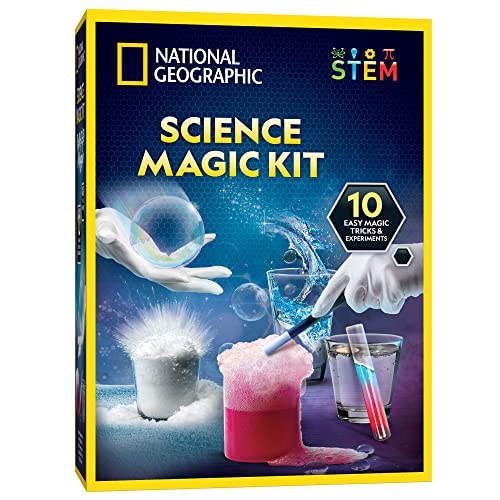 National Geographic Magic Chemistry Set with 10 Tricks10 Tricks and Experiments7.28 x 2.95 x 10.04 inches0.81 poundsCheck on Amazon
 National Geographic Earth Science Kit with 100+ ActivitiesOne Size8.66 x 3.15 x 12 inches2.61 poundsCheck on Amazon
The word “experiments” on a science kit box is the cheapest number in toy marketing. One kit promises 150 activities and delivers a handful of vinegar-and-baking-soda reactions repeated with different food coloring, while another promises 50 and spreads them across crystals, litmus tests, and slime. When your cap is under 50 dollars, the job is judging what a kit really teaches, not counting the claims.
This guide is for parents, grandparents, and teachers shopping for a child between preschool and middle school. Ten kits are compared using only what the listings say: experiment counts, age ranges, themes, and included tools. Because the 2026 school year is when many kits get gifted for science-fair prep, the age label and theme matter as much as the number of activities.
Quick Picks
UNGLINGA 150 Experiments Science Kits for Kids Chemistry Lab S.T.E.MToys | Volcano, Crystal, Magic, Dig, Reation, Physics, Scientist Tools Set, Educational Project for Boys Girls Birthday Gifts Ideas
One of the consumer electronics options compared in this guide.
View on AmazonUNGLINGA 40+ Experiments Science Kit for Kids Chemistry Set STEM Toy | Reaction, Magic, Fun, Educational Toy Gift Idea, for Boys and Girls Birthday, Christmas, S.T.E.M Scientist Learing Toy
One of the consumer electronics options compared in this guide.
View on AmazonNational Geographic Amazing Chemistry Set with 100+ Experiments Ages 8-12 | Crystal Growing, Chemical Reactions, STEM Projects, Hands-On Science Experiments, Science Kit, Birthday Gift
One of the consumer electronics options compared in this guide.
View on AmazonNational Geographic Science Magic Kit with 100+ Experiments for Kids 8-12 | Magic Tricks, Chemistry Activities, Hands-On Science Experiments, STEM Projects, STEM Learning Toy, Birthday Gift
One of the consumer electronics options compared in this guide.
View on AmazonNational Geographic Magic Chemistry Set with 10 Tricks for Kids Ages 8-12 | Science Experiments, STEM Projects, Science Toys, Hands-On Learning, Magic Tricks, Birthday Gift
One of the consumer electronics options compared in this guide.
View on AmazonNational Geographic Earth Science Kit with 100+ Activities for Kids 8-12 | Crystal Growing, Volcano Experiments, Rock Collection, Earth Science Activities, STEM Projects, Birthday Gift
One of the consumer electronics options compared in this guide.
View on Amazon
National Geographic Junior Chemistry Set with 50 Experiments for Kids | 20+ Lab Tools, Early Learning Lab, Hands-On Science Experiments, Chemistry Kit for Kids Ages 4-6, Birthday Gift
One of the consumer electronics options compared in this guide.
View on Amazon
Science Kit for Kids,80 Science Lab Experiments,Scientist Role Play | STEM Educational Learning Scientific Tools,Birthday Gifts and Toys for 8 9 10 Years Old Boys Girls Kids
One of the consumer electronics options compared in this guide.
View on Amazon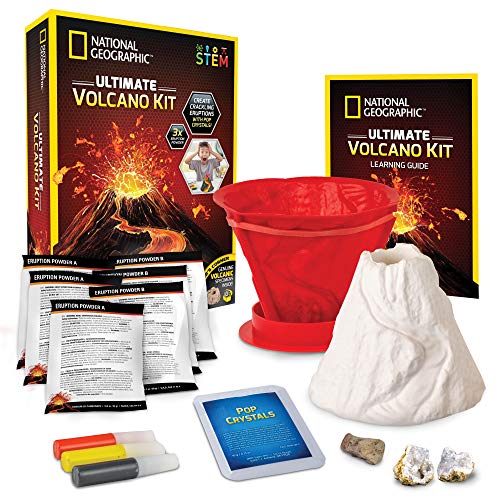
National Geographic Ultimate Volcano Science Kit for Kids Ages 8-12 | 3X More Eruptions, Pop Crystals with Exciting Sounds, Eruption Powder, Hands-On Earth Science, STEM Activity, Birthday Gift
One of the consumer electronics options compared in this guide.
View on Amazon
Doctor Jupiter My First Science Experiments Kit for Kids Ages 4+ | Birthday Gift Ideas for Boys & Girls 4, 5, 6, 7, 8 Year Olds, Science Kits for Kids Ages 5-7, STEM Educational Toys
One of the consumer electronics options compared in this guide.
View on Amazon| Product | Best for | Key spec from the title |
|---|---|---|
| UNGLINGA 150-Experiment Kit | Maximum variety | 150 experiments, volcano, crystal, physics |
| UNGLINGA 40+ Experiment Kit | Simple chemistry gift | 40+ experiments, reactions, magic |
| National Geographic Amazing Chemistry Set | Core chemistry skills | 100+ experiments, ages 8-12 |
| National Geographic Science Magic Kit | Showmanship plus science | 100+ experiments, magic tricks |
| National Geographic Magic Chemistry Set | Short, trick-focused fun | 10 tricks, ages 8-12 |
| National Geographic Earth Science Kit | Rocks and geology fans | 100+ activities, rock collection |
| National Geographic Junior Chemistry Set | Younger lab learners | 50 experiments, 20+ lab tools |
| 80-Experiment Science Lab Kit | Role-play scientists | 80 experiments, scientific tools |
| National Geographic Ultimate Volcano Kit | Eruption obsessed kids | 3X more eruptions, pop crystals |
| Doctor Jupiter My First Science Kit | Ages 4 and up | Beginner experiments, ages 4+ |
How to Choose
Age range over experiment count
A kit labeled 8-12 assumes the child can read multi-step instructions and handle small measured powders. A listing that says ages 4 and up expects an adult beside the child. A seven-year-old fits awkwardly in either group, so read the age band before you read the count.
Theme and repeatability
Chemistry, earth science, magic, and volcano themes each offer a different rhythm. Chemistry kits tend to use up their powders quickly. Earth science kits include durable items such as rocks that last beyond the experiments. Check whether the kit lets you rerun activities with household supplies.
Included tools
Look for beakers, test tubes, pipettes, safety glasses, and a clear guide. Kits that list 20+ lab tools usually include reusable equipment. Skip kits that rely on ingredients you must buy separately, which defeats the point of a boxed set.
Safety and cleanup
Powders and liquids stain. Cover the table, keep an adult nearby, and read warnings aloud. Budget kits sometimes skimp on printed instructions, so confirm the guide is included.
The 10 Best Options
UNGLINGA 150-Experiment Kit
This is the biggest on paper: 150 experiments covering volcano, crystal, magic, dig, reaction, and physics themes, plus scientist tools. A child who likes to flit between topics will find something new each weekend. As with any large count, some entries will be variations of a theme, so treat 150 as a menu rather than a promise of 150 distinct lessons. Families with two or three children can split the list and let each child pick a favorite theme.
- Strength: the sheer variety of themes keeps repeat play fresh.
- Strength: it includes physics and dig activities alongside chemistry.
- Trade-off: a large count can mean thinner instructions for each experiment.
Skip it if you want a recognized brand with a defined age band, or a kit built around one deep topic, such as chemistry only.
UNGLINGA 40+ Experiment Kit
The smaller UNGLINGA set offers more than 40 experiments centered on reactions and magic, framed as a gift for boys and girls. It targets the family that wants a simple chemistry set without 150 pieces to sort and store in the closet. A shorter list is easier for a child to finish, which can feel more rewarding than opening a huge kit and abandoning it.
- Strength: a manageable number of experiments keeps it approachable.
- Strength: reaction and magic themes deliver quick payoffs.
- Trade-off: the listing does not spell out an age range.
Skip it if your child already owns a basic chemistry set and wants something more ambitious, or if you need a listing that states an age range up front.
National Geographic Amazing Chemistry Set
With 100+ experiments, crystal growing, chemical reactions, and STEM projects for ages 8 to 12, this set aims squarely at the core elementary audience. Crystal growing in particular suits patient children, because the results appear over days rather than minutes. It is the most traditional chemistry choice among the National Geographic listings, and a good match for a child who likes following a written procedure step by step.
- Strength: a clear 8-to-12 age band helps with gift decisions.
- Strength: crystal growing teaches patience and observation.
- Trade-off: it overlaps with other National Geographic chemistry sets.
Skip it if your child wants fast, explosive reactions rather than slow crystal growth, since patience is built into the design.
National Geographic Science Magic Kit
This kit blends 100+ experiments with magic tricks and chemistry activities for ages 8 to 12. The pitch is that every experiment doubles as a trick, so a child can perform for family and explain the science behind it. For kids who like an audience, that performance angle sustains interest longer than quiet lab work, and a birthday party or family dinner provides the natural stage.
- Strength: tricks encourage explaining the science to others.
- Strength: 100+ experiments give plenty of material.
- Trade-off: showmanship can overshadow the chemistry for some kids.
Skip it if you want a pure lab-style experience with no theatrical element, or if your child is shy about performing.
National Geographic Magic Chemistry Set
The Magic Chemistry Set is the shortest in the National Geographic group, listing 10 tricks for ages 8 to 12 along with science experiments and STEM projects. Ten tricks keep the commitment low, making it suited to a one-weekend gift or a classroom demonstration. A child can finish the whole set and feel accomplished, which matters for kids who lose interest when a big kit lingers half finished on the shelf.
- Strength: the small scope makes it easy to complete.
- Strength: it ties chemistry to magic for a fun hook.
- Trade-off: ten tricks run out quickly for an eager child.
Skip it if you want months of activities from a single box, because ten tricks will not last through a long winter.
National Geographic Earth Science Kit
The Earth Science Kit offers 100+ activities for ages 8 to 12, with crystal growing, volcano experiments, a rock collection, and earth science activities. The rock collection is what sets it apart, since it leaves the child with physical specimens after the experiments end. It suits a collector more than a mixer of potions, and the volcano experiments keep a little bit of the classic eruption excitement in the mix.
- Strength: the rock collection stays useful long after the experiments finish.
- Strength: it combines geology with a volcano experiment.
- Trade-off: less chemistry than the dedicated chemistry sets.
Skip it if your child wants test tubes, color changes, and beakers above all, since the earth science theme dominates here.
National Geographic Junior Chemistry Set
The Junior set lists 50 experiments with 20+ lab tools and is labeled an early learning lab. Reusable tools such as beakers and droppers give it staying power beyond the included powders. It is aimed at children younger than the 8-to-12 sets, though the listing does not give a specific age range. That makes it worth reading the instructions before gift day to confirm the reading level suits your child.
- Strength: 20+ lab tools add real equipment feel.
- Strength: 50 experiments is a balanced count.
- Trade-off: no explicit age range appears in the title.
Skip it if you need a clear age label, or if your child is already comfortable with the 8-to-12 sets and ready for more demanding procedures.
80-Experiment Science Lab Kit
This unbranded kit lists 80 science lab experiments, scientist role-play, and STEM educational scientific tools, marketed as a gift for kids aged 8 to 10. The role-play angle suits children who want to dress up and run an imaginary lab. The listing sits in the middle of the pack on experiment count and tools, which makes it a safe general-purpose gift for a birthday in that age bracket.
- Strength: role-play elements make it good for imaginative kids.
- Strength: an 80-experiment count balances variety with focus.
- Trade-off: no major brand stands behind the listing.
Skip it if you want a recognized name, a clear support channel, or an earth science theme.
National Geographic Ultimate Volcano Kit
Built around eruptions, this National Geographic kit for ages 8 to 12 promises three times more eruptions, pop crystals with sounds, and eruption powder. It is a single-theme set, so it works best for the child who is already obsessed with volcanoes. The noise from the pop crystals gives it a sensory kick, and the repeated eruptions mean the same cleanup routine can be used again and again.
- Strength: the 3X more eruptions claim emphasizes replay value.
- Strength: pop crystals add sound to the experience.
- Trade-off: it is narrow compared with multi-theme kits.
Skip it if your child wants chemistry, physics, and magic in one box, as the volcano theme is all this kit offers.
Doctor Jupiter My First Science Kit
Aimed at ages 4 and up, this beginner kit is the youngest-oriented option in the group. It frames experiments as an introduction rather than a lab course, so it suits a preschooler or kindergartner with an adult helper. Keep expectations simple: it is a first step, not a complete curriculum, and the parent will be doing a lot of the pouring, stirring, and explaining.
- Strength: the 4+ age range opens science to younger kids.
- Strength: a beginner framing keeps experiments approachable.
- Trade-off: older children will find it too simple.
Skip it if your child is already past the early elementary years and wants a challenge that matches their reading level.
Which One Fits Your Situation
A volcano-obsessed 9-year-old
The National Geographic Ultimate Volcano Kit gives the topic a full box, and the Earth Science Kit extends it to rocks.
A kindergartner with a patient adult
The Doctor Jupiter My First Science Kit is the safest age fit.
A child who loves to perform
The National Geographic Science Magic Kit turns experiments into tricks with an audience.
A gift where variety matters most
The UNGLINGA 150-Experiment Kit offers the widest range of themes in the group.
Common Mistakes
- Choosing by experiment count while ignoring the age band.
- Buying a single-theme kit for a child with changing interests.
- Skipping a covered work surface, then discovering a stained table.
- Expecting a kit to be refillable without checking.
- Handing powders to an unsupervised younger child.
Related guides
- How To Put On A Baby Wrap Carrier Step By Step
- Baby Carrier For Toddlers Over 30 Lbs
- When Can A Baby Face Outward In A Carrier
Frequently Asked Questions
Do I need extra supplies?
Often yes, such as vinegar, water, or a few kitchen items. Read the listing and instruction guide before gift day.
Are bigger experiment counts better?
Not necessarily. Many counts include variations of the same reaction, so theme and age band matter more.
Which kit suits a seven-year-old?
The Junior Chemistry Set or the Doctor Jupiter My First Science Kit are the best fits, with adult help.
Are these kits safe?
They are marketed for children but contain powders and chemicals. Supervise use and follow the included warnings.
FAQ
Do I need extra supplies?
Are bigger experiment counts better?
Which kit suits a seven-year-old?
Are these kits safe?
More from Amazon
Programs that pair well with the guide above. Offers and eligibility are set by Amazon and may change.
Build one list of everything you need for the new arrival and share it with family and friends.
Create a baby registrySet up recurring deliveries of everyday items on eligible products. Terms and savings are set by Amazon.
Explore Subscribe & SaveFree shipping on eligible items, Prime Video and more. Eligible new members can start with a free trial.
Start a Prime free trialAudiobooks and podcasts to listen to on the go. Eligible new members can start with a free trial.
Try Audible freeAs an Amazon Associate we earn from qualifying purchases.
Write Your Review
No reviews yet. Be the first to share your experience!