
Our Top Picks
 Airbition Talking Flash Cards for Toddlers Ages 1‑4224 Words English Blue4 x 4 x 0.1 inchesCheck on Amazon
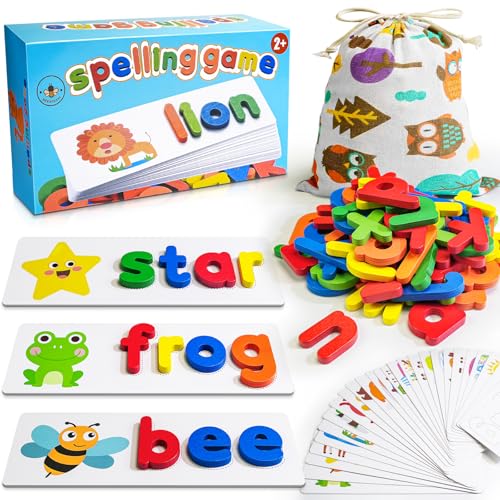 BEESTECH Alphabet ABC Learning Educational Toys for Toddlers3" x 5"2.63 x 14.25 x 9.5 inchesCheck on Amazon
 Montessori Busy Book Color Sorting Toys for ToddlersCompact7.7 x 6.2 x 0.3 Inches0.5 PoundsCheck on Amazon
 Preschool Math Manipulatives Learning Toys for Toddlers 2-4Medium11.8 x 0.3 x 8.66 inches0.85 poundsCheck on Amazon
Educational toys under 50 dollars is a crowded shelf, and most of the words on the box, from Montessori to STEM, say little about what a child will actually practice. The sensible way to shop is by skill: language, letters, counting, color matching, fine motor control, or building. A toy that targets one skill well beats a flashy one that claims to do everything, and the cap leaves room for a couple of different skills in a single gift basket.
This guide is for parents of toddlers and preschoolers, grandparents who want a present with substance, and teachers stocking a play corner. Seven options are compared below, each judged on its listing text alone. They span talking cards, a wooden alphabet puzzle, a magnetic fishing game, a busy book, a take-apart dinosaur kit, and counting blocks, so you can match the toy to the next skill your child is working on in 2026.
Airbition Talking Flash Cards for Toddlers Ages 1‑4,224 Words English Blue | Montessori Language Learning Toys with 224 Words, Pocket Speech Therapy Toys, Sensory Learning Kit, Educational Toys for Kids
Chosen because it specifies 224 Words English Blue and Montessori Language Learning Toys with 224 Words.
View on AmazonBEESTECH Alphabet ABC Learning Educational Toys for Toddlers | Wooden Puzzles, Flash Cards Matching Games for 3 4 5 Years Old Boys Girls, Preschool Activity Spelling Toys
Chosen because it specifies Wooden Puzzles and Flash Cards Matching Games for 3 4 5 Years Old Boys Girls.
View on Amazon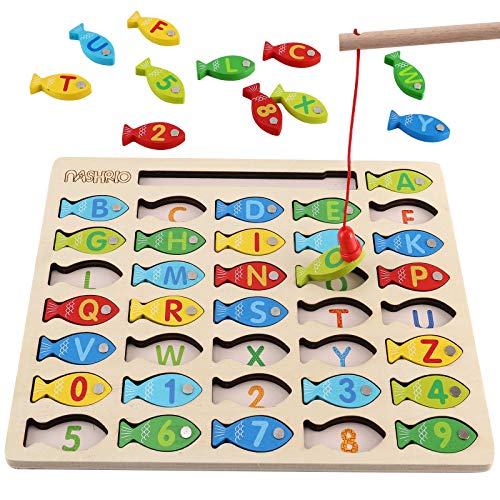
Magnetic Wooden Fishing Game Toy for Preschoolers, Alphabet Fish Catching Counting Games Puzzle with Numbers and Letters, Preschool Learning ABC and Math Educational Toys for 3 4 5 Years Old Kids
Picked as a relevant option in this category.
View on AmazonMontessori Busy Book Color Sorting Toys for Toddlers 2-4 Years | Educational Preschool Learning Activities for Kids, Sensory Fine Motor Matching Games for 3 Year Old Boys Girls Gifts
Chosen because it specifies Educational Preschool Learning Activities for Kids.
View on Amazon
Dinosaur Toys for 3, 4, 5, 6, 7 Year Old Boys, Take Apart Toys with Electric Drill for Kids, STEM Educational Construction Building Toy, Ideal Birthday Christmas Easter Gifts, Incl Tyrannosaurus Rex
Chosen because it specifies 7 Year Old Boys and Take Apart Toys with Electric Drill for Kids.
View on AmazonPreschool Math Manipulatives Learning Toys for Toddlers 2-4 | Montessori Number Counting Block Toys for Kids, Educational Toys for 3-5 Year Old Boys Girls Christmas Birthday Gifts
Chosen because it specifies Montessori Number Counting Block Toys for Kids.
View on AmazonQuick Picks
| Product | Best for | Key spec from the title |
|---|---|---|
| Airbition Talking Flash Cards | Vocabulary for toddlers | 224 words, ages 1 to 4 |
| Aullsaty Talking Flash Cards | Speech practice at home | 224 words, ages 1 to 3 |
| BEESTECH Alphabet Puzzles and Cards | Letter recognition | Wooden puzzles and flash cards, ages 3 to 5 |
| Magnetic Wooden Fishing Game | Letters and numbers through play | Alphabet fish, counting, numbers |
| Montessori Busy Book | Color sorting and quiet time | Color sorting, ages 2 to 4 |
| Dinosaur Take-Apart Toy | Building and tools | Electric drill, STEM, ages 3 to 7 |
| Math Manipulatives Counting Blocks | Early number sense | Number counting blocks, ages 2 to 4 |
How to Choose
Start with the skill, then the age
A one-year-old needs words, textures, and cause and effect. A three-year-old is ready to match letters, count to ten, and sort colors. A five-year-old can start building and following a short sequence. Titles usually list an age range; trust the low end for safety and the high end for how long the toy stays interesting. If your child sits between two listed ranges, choose the younger one for sturdiness and the older one only if the pieces are large. Watching a child for ten minutes with a similar toy at a friend’s house tells you more than any age label.
Check for small parts and batteries
Anything for a child under three should come with no loose pieces small enough to swallow. Talking cards and drill toys often include button batteries, which need a secured compartment. Wooden pieces should have smooth, finished edges. If a toy has dozens of pieces, think about where they will be stored, because missing parts turn a puzzle into frustration.
Judge replay value
The best educational toys can be used several ways. A fishing game can teach letters one week and counting the next. A book of activities gets finished in an afternoon. Look for a toy that grows with a child, with sets of cards, blocks, or parts that support new games as skills develop, and be wary of toys whose only trick is a single song or sound.
Where budget toys cut corners
Lower-cost toys tend to use thinner plastic, louder electronics, and printed labels that wear off. Ignore claims such as therapy toy or autism toy as guarantees; they describe marketing intent, and a child with speech or developmental concerns should be guided by a professional. Prefer clear graphics, sturdy cards, and volume that suits a quiet house.
The 7 Best Options
Airbition Talking Flash Cards
These talking flash cards offer 224 English words for toddlers aged one to four, with a Montessori framing and a pocket-sized design. They suit a parent who wants vocabulary practice built into daily routines, like a waiting room or a car seat. A child hears the word as they see the picture, which is more engaging than a flat card. Because the listing mentions English words and a pocket format, it also works for families who want a little language practice tucked into a bag for outings. Play it together rather than handing it over alone, so the child hears you repeat each word.
- Strength: 224 words give a large vocabulary range.
- Strength: pocket-size device travels easily.
- Trade-off: it depends on a battery and speaker that can break or run out.
Skip it if you prefer screen-free, quiet toys, since the device speaks aloud.
Aullsaty Talking Flash Cards
The Aullsaty version also offers 224 words and a Montessori approach, aimed at toddlers aged one to three and marketed for speech practice and sensory play. For a family working on first words, the repeated audio gives a child something to imitate again and again. The listing frames it as an educational learning toy rather than a replacement for professional support. Parents of late talkers sometimes pair devices like this with a reading routine, though no card set replaces guidance from a speech professional if you have concerns.
- Strength: 224 words aimed at the early talking years.
- Strength: repeat listening supports imitation.
- Trade-off: the age range tops out at three, so it ages out sooner.
Skip it if you already own the Airbition set, since the word count is the same.
BEESTECH Alphabet Puzzles and Cards
BEESTECH combines wooden alphabet puzzles with flash cards and matching games for ages three to five. It is built for preschool letter learning, where a child puts the letter in the right slot and checks it against a card. Wood is sturdy and quiet, and the mix of puzzle and card formats means one box supports a few different games. A sensible way to use it is to start with the puzzle, then bring out the cards for matching once the child recognizes a few letters, keeping sessions short enough that it never feels like homework.
- Strength: wooden puzzles survive repeated play.
- Strength: puzzles and matching games add variety.
- Trade-off: loose cards and pieces are easy to lose.
Skip it if your child is under three and still puts toys in their mouth.
Magnetic Wooden Fishing Game
This magnetic wooden fishing game uses alphabet fish and numbers, designed for preschoolers learning letters and counting. A child catches a fish with a magnetic rod, then names the letter or counts the number. It turns drilling into a game, which is how many preschoolers prefer to learn, and the physical hand-eye coordination adds fine motor practice. Parents can also turn the game into a spelling activity, fishing for the letters in the child’s name, and a sibling can join in as the caller, which keeps everyone engaged.
- Strength: combines letters and numbers in one game.
- Strength: hand-eye practice with the fishing rod.
- Trade-off: small fish pieces need a storage bag.
Skip it if you need a toy for a child under three.
Montessori Busy Book
The busy book focuses on color sorting, sensory work, fine motor skills and matching games for ages two to four. It suits long car rides and quiet time, since the activities live in a single book that is easy to carry. Parents who want less clutter and more calm will appreciate that it replaces many small items with one. It also reduces the clutter of loose pieces, because the sorting and matching items stay with the book rather than scattering across the house, and that makes it easy to hand to a grandparent for babysitting.
- Strength: all activities travel in one compact book.
- Strength: targets color sorting and fine motor skills.
- Trade-off: a child may finish it quickly and need a new activity.
Skip it if your child is rough with paper and soft goods.
Dinosaur Take-Apart Toy
This dinosaur set lets a child take apart a model using an electric drill, and the title brands it a STEM construction toy for ages three to seven. It suits a kid who learns by working with their fingers and prefers tools to flash cards. Taking apart and rebuilding teaches sequencing, grip strength, and early engineering thinking in a way that feels like play. Adult supervision helps the first time, since the drill and screws require a steady hand, and an older sibling can help a younger child follow the build sequence.
- Strength: the drill and parts build tool skills.
- Strength: the wide age range keeps it relevant for years.
- Trade-off: it has many small parts and requires batteries.
Skip it if you want a quiet toy or have a child who chews on parts.
Math Manipulatives Counting Blocks
These preschool math manipulatives are number counting blocks for ages two to four, with a Montessori angle. They are designed for early number sense: matching quantity to numeral, stacking, and counting aloud. For parents who want kindergarten preparation without worksheets, a set of blocks does the job. Try sorting by color first, then counting out groups, and let the child build towers to compare which is taller. A simple parent-led game gets far more value from blocks than leaving them in a bin, and the listing’s wide age range suggests they stay useful.
- Strength: builds early number sense through touch.
- Strength: blocks double as stacking toys.
- Trade-off: it covers only math, with no letters or vocabulary.
Skip it if you want one toy to cover several subjects.
Which One Fits Your Situation
A toddler just beginning to talk
The Airbition Talking Flash Cards or the Aullsaty set give plenty of vocabulary, with Airbition reaching a bit older.
A preschooler learning letters
The BEESTECH Alphabet Puzzles and the Magnetic Wooden Fishing Game both hit letter recognition, with the fishing game adding counting.
A long car trip or waiting room
The Montessori Busy Book packs into a single bag and keeps hands busy during the ride.
A kid who loves tools and dinosaurs
The Dinosaur Take-Apart Toy turns building into the lesson, while the Counting Blocks suit a calmer child who likes stacking.
Common Mistakes
- Buying for the age on the box rather than the child’s actual interest and skill.
- Choosing a toy with dozens of small pieces for a child who still mouths objects.
- Expecting a single toy to teach every subject.
- Treating therapy or autism language on a listing as a clinical claim.
- Ignoring storage, so pieces vanish and the toy loses value.
Frequently Asked Questions
What does Montessori mean on a toy listing?
It generally signals self-directed play with simple, tactile materials rather than flashing screens. The label is not regulated, so judge the toy on its materials, its activities, and whether a child can use it without an adult stepping in constantly.
Are wooden toys better than plastic?
Wood tends to be sturdier and quieter, but quality varies. Look for smooth edges and a finish that does not chip.
How many toys should a toddler have?
Fewer, rotated regularly, works better than a pile, because children go deeper into a toy they have not seen for a week. Two or three skill-focused toys is plenty at one time.
Can talking cards replace reading together?
No. They can supplement it, but conversation with a caregiver is what builds language. Use the cards alongside books and talk, naming the objects in daily life so the words connect to real things.
FAQ
What does Montessori mean on a toy listing?
Are wooden toys better than plastic?
How many toys should a toddler have?
Can talking cards replace reading together?
More from Amazon
Programs that pair well with the guide above. Offers and eligibility are set by Amazon and may change.
Build one list of everything you need for the new arrival and share it with family and friends.
Create a baby registrySet up recurring deliveries of everyday items on eligible products. Terms and savings are set by Amazon.
Explore Subscribe & SaveFree shipping on eligible items, Prime Video and more. Eligible new members can start with a free trial.
Start a Prime free trialAudiobooks and podcasts to listen to on the go. Eligible new members can start with a free trial.
Try Audible freeAs an Amazon Associate we earn from qualifying purchases.

Write Your Review
No reviews yet. Be the first to share your experience!