
Key takeaways
- 72–80 mm: Best for beginners, children, indoor use, slalom, and maneuverability. Expect easier stopping and quick turning, but more effort on long rides.
- 84–90 mm: A useful middle ground for recreational fitness skating and mixed bike paths.
- 100–110 mm: Suited to confident skaters who want efficient distance skating. They are faster and less agile at low speed.
- 125 mm: Designed for experienced speed skaters. The tall setup magnifies balance mistakes and is a poor first purchase.
The best inline skates for most beginners are comfortable fitness skates with an 80 mm wheel, a supportive soft boot, and a reliable heel brake; experienced skaters should choose wheel size, frame length, and boot stiffness according to speed, terrain, and control rather than appearance.
Quick picks by skating situation
| Situation | Best skate type | Useful specification | Why it fits |
|---|---|---|---|
| First-time adult skater | Recreational fitness skate | 80 mm wheels, 80–84A hardness, heel brake | Stable, manageable, and forgiving on smooth paths |
| Beginner who wants extra stability | Low-to-mid-height fitness skate | 76–80 mm wheels, 3-wheel or 4-wheel frame, firm cuff | Lower wheels reduce the feeling of being pushed forward |
| Regular fitness and longer rides | Performance fitness skate | 90–100 mm wheels, ventilated boot, 84–88A wheels | Rolls efficiently while remaining controllable |
| Urban streets and rougher pavement | Urban or freeride skate | 80–90 mm wheels, rigid shell, replaceable parts | Better impact resistance and lateral control |
| Slalom, tricks, and tight turns | Freeride or hardboot skate | 76–80 mm wheels, short 230–243 mm frame | Fast edge changes and precise foot placement |
| Advanced speed skating | Long-frame speed skate | 100–125 mm wheels, low cuff, three-wheel frame | High cruising speed and efficient stride, with less forgiveness |
Wheel size: the most important choice after fit
Wheel diameter changes how the skate accelerates, rolls over cracks, and feels under your feet. Smaller wheels usually make learning easier because they keep the deck lower and respond quickly. Larger wheels maintain speed better and pass over small surface imperfections more smoothly, but they raise your center of gravity and require more balance.
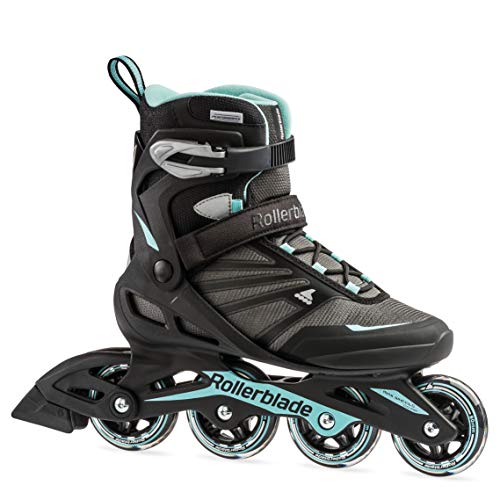
Rollerblade Zetrablade Women's Adult Fitness Inline Skate, Black/Light Blue, US Women's 9
Included for 'Best Inline Skates for Every Skill Level' because the listing specifies Black/Light Blue and US Women's 9, details this guide uses to compare options.
View on Amazon
Roller Derby AERIO Q-60 Men's Inline Skates, Black/Gold, Size 11
Included for 'Best Inline Skates for Every Skill Level' because the listing specifies Black/Gold and Size 11, details this guide uses to compare options.
View on Amazon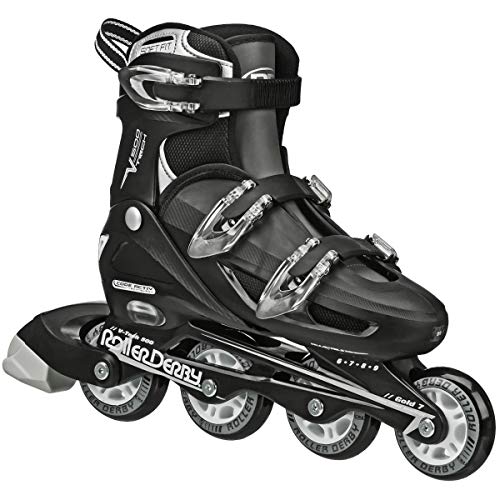
Roller Derby V-Tech 500 Adjustable Inline Skates, Large (6-9), Black
Included for 'Best Inline Skates for Every Skill Level' because the listing specifies Large (6-9) and Black, details this guide uses to compare options.
View on Amazon
Rollerblade Lightning 90 Men's Urban Inline Skate, Anthracite and Taupe
Included for 'Best Inline Skates for Every Skill Level' because the listing specifies Anthracite and Taupe, details this guide uses to compare options.
View on Amazon- 72–80 mm: Best for beginners, children, indoor use, slalom, and maneuverability. Expect easier stopping and quick turning, but more effort on long rides.
- 84–90 mm: A useful middle ground for recreational fitness skating and mixed bike paths.
- 100–110 mm: Suited to confident skaters who want efficient distance skating. They are faster and less agile at low speed.
- 125 mm: Designed for experienced speed skaters. The tall setup magnifies balance mistakes and is a poor first purchase.
Wheel count matters too. Four wheels per skate generally provide a lower, more stable platform and simpler replacement choices. Three-wheel frames can fit larger wheels without becoming excessively long, so they offer speed and maneuverability together. That advantage comes with a higher stance and a more demanding learning curve.
Boot support: soft comfort versus hard control
A soft fitness boot normally uses textile panels, padding, and a molded cuff. It is lighter and often more comfortable for casual skating. It can be a good choice for paved paths, commuting, and sessions of about 30–90 minutes.
A hardboot uses a molded plastic shell with removable liners. It transmits movement more directly to the frame, protects the foot better against knocks, and usually lasts longer in urban use. The trade-off is weight, break-in time, and less ventilation. Hardboots are preferable for jumps, stairs, aggressive turning, and frequent street skating.
The cuff should support your ankle without preventing it from flexing forward. If your ankle rolls inside the boot even when the buckles are tightened, the skate is not supportive enough or the fit is wrong. More buckling is not a substitute for the correct shell shape.
Fit: how to choose the right size
Inline skates should feel snug, with your heel held firmly and your toes lightly touching or nearly touching the front when standing upright. Your toes should pull back slightly when you bend your knees into skating position. A loose skate reduces control and can cause rubbing; an excessively short skate creates pressure that will not reliably disappear with break-in.
- Measure both feet in the socks you intend to skate in, preferably late in the day.
- Measure from the back of the heel to the longest toe, then use the manufacturer’s foot-length chart rather than ordinary shoe size.
- Check width as well as length. A longer size does not always solve a narrow or wide fit.
- Wear the skates indoors for 10–15 minutes. Test heel lift, toe pressure, and ankle movement before removing tags or outdoor hardware.
As a practical example, if your measured foot is 26.2 cm and a brand’s chart places 26.0–26.4 cm in one size, that size is usually a better starting point than moving up to a 26.8–27.2 cm shell. Allow room for normal liner compression, but do not deliberately buy a loose skate.
Braking and control for new skaters
A heel brake is one of the most valuable features for a beginner. It lets you stop without learning a hockey stop or dragging a foot sideways. The brake should be installed on the foot you naturally place forward during a stop, which is often—but not always—the right foot.
Before skating outdoors, practice the basic heel-brake sequence on a flat, empty surface:
- Place the braking foot slightly ahead.
- Bend both knees and keep your weight over the non-braking leg.
- Lift the toes of the front foot while keeping the heel down.
- Apply progressive pressure instead of stamping the brake into the ground.
Do not remove the brake merely because it looks bulky. Remove it only when you can control speed and stop consistently by another method. Check the brake pad regularly: an uneven or heavily worn pad changes stopping distance.
Reliable skate families to consider
Established recreational lines such as the Rollerblade Zetrablade, Rollerblade Macroblade 80, and K2 F.I.T. 80 are examples of the fitness-skate category. They typically emphasize a padded boot, moderate wheel size, and a heel brake or brake compatibility. Exact wheel compounds, frame materials, and size availability vary by model year, so confirm the specification before buying.
For a more protective urban setup, the Rollerblade RB Cruiser and FR Skates FRX 80 represent the hardboot category. These types trade some softness and ventilation for shell support, replaceable liners, and stronger lateral control. For advanced three-wheel skating, the Powerslide Phuzion and Powerslide Next families cover different uses, from fitness-oriented boots to more supportive urban designs.
Typical market pricing is approximately $70–$130 for entry-level recreational skates, $130–$250 for better fitness or urban models, and $250 or more for specialized speed, premium urban, or competition-oriented setups. A higher price does not fix poor sizing.
What wears out first—and the ownership cost
Wheels and bearings are consumables. A frequent skater may flatten the inside or outside edges of wheels before the tread appears completely worn. Rotate wheels in a consistent pattern when wear becomes uneven. Replace wheels when they are badly conical, cracked, or reduced enough to alter frame clearance and handling.
Bearings usually need cleaning only when they become noisy, slow, or contaminated. Wipe dirt from the outside, clean according to the bearing manufacturer’s instructions, and use a small amount of suitable lubricant. Do not soak sealed bearings casually or use household oil, which can attract grit.
After each outdoor session, brush away grit and let liners dry fully outside the boot. Avoid putting wet skates directly beside a heater, since concentrated heat can deform plastic and damage adhesives. Inspect buckles, cuff bolts, frame bolts, and brake hardware every few sessions.
For example, suppose a $160 pair lasts two years with 80 outings, while replacement wheels and a brake pad cost $65 during that period. The ownership cost is ($160 + $65) ÷ 80, or about $2.81 per outing. Skating frequently can make a durable, repairable model more economical than repeatedly replacing inexpensive skates.
Common buying mistakes
- Choosing 110 or 125 mm wheels before learning reliable stopping.
- Buying by sneaker size without measuring foot length.
- Selecting a very soft boot for aggressive urban use.
- Ignoring frame length: a long frame is stable at speed but slower to turn.
- Assuming a high wheel hardness rating is automatically better; softer wheels can offer more grip and comfort on imperfect pavement.
- Removing the heel brake before developing another dependable stopping method.
Final recommendation
For most new adults, choose a correctly fitted 80 mm recreational skate with a firm cuff, a heel brake, and replaceable wheels and bearings. Move to a hardboot 80 mm urban skate if you expect rough pavement, frequent practice, or tricks. Choose 90–110 mm wheels only after you are comfortable stopping, turning, and skating on one foot. The best inline skates are not the fastest ones on the shelf; they are the pair whose fit, support, brake, and wheel size match the way you will actually skate.

Write Your Review
No reviews yet. Be the first to share your experience!