
Key takeaways
- Size 4, 3.6 m (11 ft 10 in): compact back carries for smaller wearers and experienced wrappers
- Size 5, 4.2 m (13 ft 9 in): short back carries, smaller frames, or carries with minimal tails
- Size 6, 4.6 m (15 ft 1 in): common starting point for average-size adults
- Size 7, 5.2 m (17 ft 1 in): extra room for larger clothing sizes, thick fabric, or longer finishes
- Size 8, 5.6 m (18 ft 4 in): high-coverage carries, larger wearers, or multiple layers
What's inside
Choosing the right amount of wrap fabric for a back carry depends on more than your baby’s age. Your clothing size, the carry you want to use, the fabric’s thickness, and whether you need a long finish all affect the ideal length. For a woven baby wrap, the most useful starting point is your “base size”: the shortest wrap that lets you complete a comfortable front wrap cross carry with a secure knot.
The Short Answer
Most parents need a woven wrap measuring about 4.6 to 5.2 meters (15 to 17 feet) for a back carry. That usually corresponds to a size 6 or size 7. A size 6 is often enough for smaller or average-size wearers using a compact back carry, while a size 7 gives taller or plus-size wearers more room to finish securely.
As an Amazon Associate we earn from qualifying purchases at no extra cost to you. Product prices and availability are accurate as of the date shown and are subject to change.



As a quick guide:
- Size 4, 3.6 m (11 ft 10 in): compact back carries for smaller wearers and experienced wrappers
- Size 5, 4.2 m (13 ft 9 in): short back carries, smaller frames, or carries with minimal tails
- Size 6, 4.6 m (15 ft 1 in): common starting point for average-size adults
- Size 7, 5.2 m (17 ft 1 in): extra room for larger clothing sizes, thick fabric, or longer finishes
- Size 8, 5.6 m (18 ft 4 in): high-coverage carries, larger wearers, or multiple layers
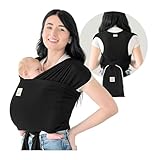
These measurements apply to a long woven wrap, not a stretchy newborn wrap, ring sling, or buckle carrier. Stretchy wraps are generally intended for front carries, and many soft-structured carriers are not designed for back carrying until the child meets the manufacturer’s age, height, and sitting requirements.
Standard Sizes
Wrap labels vary slightly by brand, but the following chart gives practical finished lengths. A wrap may shrink after washing, so check the brand’s care instructions and allow a small margin when comparing measurements.
| Wrap size | Approximate length | Length in feet | Typical back-carry use |
|---|---|---|---|
| Size 2 | 2.6 m / 102 in | 8 ft 6 in | Experienced wrappers only; very short finishes |
| Size 3 | 3.2 m / 126 in | 10 ft 5 in | Compact carries on smaller bodies |
| Size 4 | 3.6 m / 142 in | 11 ft 10 in | Short back carries and small frames |
| Size 5 | 4.2 m / 165 in | 13 ft 9 in | Smaller average-size wearers |
| Size 6 | 4.6 m / 181 in | 15 ft 1 in | Most common base size for average builds |
| Size 7 | 5.2 m / 205 in | 17 ft 1 in | Larger wearers or longer, easier finishes |
| Size 8 | 5.6 m / 220 in | 18 ft 4 in | Plus sizes, thick wraps, and multi-layer carries |
| Size 9 | 6.2 m / 244 in | 20 ft 2 in | Very large base sizes or highly covered carries |
For fabric sold by the yard, a 5.2-meter wrap requires approximately 5.7 yards before hemming and shrinkage. If you are sewing your own wrap, buying at least 6 yards gives you room for hems, washing, and measurement variation. Fabric width matters too: a finished width of about 26 to 30 inches (66 to 76 cm) is common for a woven wrap. Avoid narrow fabric that cannot support the child’s back, seat, and upper legs evenly.
How to Measure Your Space
- Find your base size. Use the shortest wrap that comfortably completes your usual front carry. If you have never wrapped before, a size 6 is a practical reference point for many average-size adults.
- Measure your torso and waist. Wrap a flexible tape around the area where the fabric will be tied, keeping it comfortably snug. Measure from the center of your back, around your sides, and across your front. This tells you how much fabric one pass consumes.
- Account for the child’s size. A toddler usually needs more length than a small infant because the seat must extend from knee to knee and the child’s torso is taller. Add roughly 4 to 8 inches for a growing child when comparing two otherwise similar options.
- Consider the fabric. Thick, dense fabric uses more length for the same knot and can feel shorter than a thin wrap. Linen, heavy cotton, wool blends, and multi-layer jacquards may justify moving up one size.
- Add a finishing allowance. For beginner-friendly tails, allow about 12 to 20 inches on each side after the carry is tightened. If you prefer a short knot under the child, you can use less.
- Measure after washing. Wash and dry the fabric according to its care instructions before taking the final measurement. Natural fibers can change length and width.
- Practice low and supported. Back wrapping should be learned with a spotter, mirror, or qualified babywearing educator. Practice over a soft surface and follow the carrier maker’s instructions.
By Room or Use Case
Everyday back carrying at home
A size 6, approximately 4.6 meters or 181 inches, is the most versatile choice for many average-size wearers. It provides enough fabric for a supportive seat, two shoulder passes, and a secure finish without creating excessively long tails while doing chores or moving between rooms.
Kitchen and quick household tasks
If you want less fabric around counters, chairs, and door handles, consider a size 5 or a compact size 6. A shorter wrap can be easier to manage, but the child must still be positioned high enough for a clear airway and supported from knee to knee. Never cook over an open flame, handle hot liquids, or use a carrier near sharp appliances.
Long walks and outdoor use
A size 6 or 7 usually offers more flexibility for clothing layers and a longer knot. Choose the larger size if you wear a coat, use a thick wrap, or want extra fabric to protect the child’s legs from sun and wind. Fabric weight also matters: a breathable cotton or linen blend may be more comfortable in warm weather than a dense winter wrap.
Toddler back carries
Toddlers often need a size 6 or 7 because their larger seat and torso consume more fabric. If you use a multi-layer carry, have a broad waist, or want substantial leg support, a size 7 or 8 may be easier. Confirm that the wrap’s width and weight rating suit the child; length alone does not determine safety.
Travel and occasional use
For travel, a size 5 can reduce bulk in a suitcase, but only if it is long enough for your preferred carry. A ring sling may pack smaller and can work well for brief hip or front carries, but it is not automatically a substitute for a woven wrap back carry. Products such as the KeaBabies D-Lite ring sling, listed around $27.96 to $29.96, have different wearing methods and sizing considerations.
Common Sizing Mistakes
- Buying by age alone: The child’s age does not determine wrap length. Adult body size and carry technique matter more.
- Confusing carrier types: A buckle wrap carrier, such as an Aerial-style carrier priced around $83.99, has a fixed panel and straps. You do not choose its size by buying several yards of fabric.
- Ignoring width: A long but narrow piece may not provide adequate back and leg coverage.
- Forgetting shrinkage: Unwashed fabric can measure several inches longer than the finished wrap.
- Choosing too much fabric: Extra length can drag on the floor, create bulky knots, and make tightening harder for a beginner.
- Assuming stretch is always better: Stretchy wraps can feel comfortable for newborn front carrying but may not provide the stability needed for a secure back carry.
- Using a back carry too early: Follow the specific carrier instructions and seek hands-on guidance, especially before carrying a young baby on your back.
FAQ
Is a 4.6-meter wrap long enough for a back carry?
For many average-size wearers, yes. A 4.6-meter wrap is commonly sold as size 6 and can handle several standard back carries. If you wear larger clothing sizes, use thick fabric, or want long tails, a 5.2-meter size 7 is safer for fit flexibility.
How much fabric do I need to make a baby wrap?
Plan on 4.6 to 5.2 meters of finished length for a general-purpose back-carry wrap. Buy about 6 yards of fabric for a size 7 project so you can account for hemming and shrinkage. Use fabric specifically suited to babywearing, with reliable seams and no damaged areas.
Can I use a ring sling for back carrying?
Some experienced caregivers use a ring sling for a high back carry, but it requires specific technique and is not the same as wrapping with a long woven wrap. Read the manufacturer’s instructions and get in-person help. A ring sling is often simpler for short front or hip carries.
What size should I buy in 2026?
If you want one versatile woven wrap and do not know your base size, start by comparing a 4.6-meter size 6 and a 5.2-meter size 7. Choose size 6 for less bulk and size 7 for more room, thicker fabric, larger clothing sizes, or beginner-friendly wrapping.







Write Your Review
No reviews yet. Be the first to share your experience!